



How IoT Is Revolutionizing Supply Chains – Part 1: Key Applications
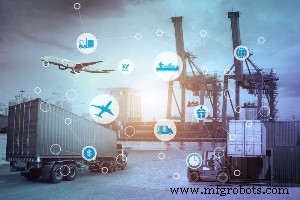
Emerging technologies, especially the Internet of Things (IoT), are reshaping industries from retail to healthcare. Yet, the supply‑chain sector has received comparatively little attention—despite facing complex challenges that IoT is uniquely positioned to address.
Today’s global supply chain is increasingly intricate: globalization, razor‑thin margins, tightening regulations, and heightened security concerns all demand more agile, data‑driven solutions. In 2018, managing these variables was already formidable; by 2023, the stakes are higher than ever.
IDC and SAP predict that IoT adoption can lift delivery and supply‑chain productivity by 15%. Below, Dimitrios Spiliopoulos outlines the most impactful IoT applications that are already transforming logistics.
IoT Applications
- Vehicle Monitoring
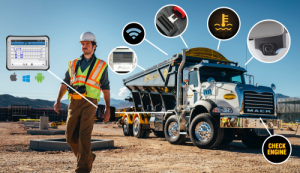
Telematic fleet‑management systems deliver plug‑and‑play solutions that capture real‑time data on vehicle performance and driver behavior. Operational and financial benefits include route optimization, reduced idle time, fuel savings, and accident reduction through proactive driving coaching.
With real‑time insights, companies can implement incentive programs that reward drivers for meeting key performance indicators (KPIs). Additionally, predictive maintenance driven by sensor data lowers repair costs and extends vehicle uptime.
Integrating onboard cameras provides instant HD footage of collisions or incidents, safeguarding operators against fraudulent claims, false accusations, and liability disputes.
Perishable cargo—food, chemicals, pharmaceuticals—faces significant risk during transit. The Food and Agriculture Organization estimates that up to one‑third of food perishes en route each year. IoT sensors in refrigerated compartments monitor temperature, humidity, shock events, and door status, enabling stakeholders to take corrective action before spoilage occurs. Similar sensors can safeguard sensitive goods such as medicines and jewelry.
- Smart Reusable Pallets
Traditional wooden pallets are costly to replace and pose safety hazards. Durable, composite pallets—though expensive—offer longevity and resilience. The challenge of high upfront cost and loss rates is mitigated by adding connectivity: GPS tracking, environmental sensors, and shock detection provide real‑time visibility.
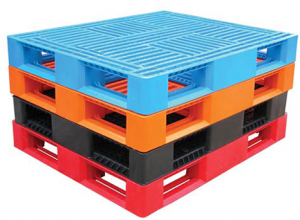
Connected pallets generate valuable data for manufacturers, logistics firms, retailers, insurers, and regulators. These insights drive new service models—such as pallet‑as‑a‑service—shifting capital expenditure to operating costs and leveraging RFID for end‑to‑end traceability.
- Smart Shipping
Beyond simple location tracking, IoT now enables real‑time monitoring of container conditions—temperature, humidity, shock, and weight—to detect losses or breaches immediately. Low‑cost cameras in high‑value containers enhance transparency and reduce post‑arrival testing delays, improving customer satisfaction and insurance outcomes.
- Smart Packaging
Connected packaging—bottles, cartons, and even document folders—provides data on product condition, origin, and environmental exposure. This transparency builds consumer trust and supplies retailers and manufacturers with actionable data to refine product development, inventory management, and targeted marketing campaigns.
- Connected Workers
IoT extends beyond assets to human resources. Wearable sensors track biometric data, stress levels, and fatigue, while location trackers optimize last‑mile routing. Companies like Amazon and DHL already use these tools to enhance safety, productivity, and transparency. Employers must, however, vigilantly manage privacy concerns in light of recent data‑breach incidents.
Why IoT Solutions Are Thriving Now
- Advanced Connectivity & Low‑Cost Sensors

Emerging LPWAN technologies such as NB‑IoT and LTE‑M provide extended battery life, broader coverage, and ultra‑low data costs—essential for a fully connected supply chain. A future mix of Bluetooth, LPWAN, satellite, and legacy 2G/3G/4G networks will enable ubiquitous connectivity.
Simultaneously, sensor prices have plummeted, making widespread deployment economically feasible. Edge computing now offers real‑time analytics directly on devices, while RFID continues to underpin asset tracking and inventory accuracy.
Author: Dimitrios Spiliopoulos
Part 2 continues tomorrow.
About the author:
Dimitrios Spiliopoulos is a seasoned IoT strategist with a passion for leveraging technology to transform businesses and lives. He currently leads the IoT team at O2 (Telefonica UK) in London and mentors IoT startups. Previously, he headed the global IoT team at Vodafone and frequently speaks at industry conferences.
Internet of Things Technology
- IoT-Driven Supply Chain Management: Real-Time Asset Tracking & Fleet Optimization
- Revolutionizing Logistics: How IoT Drives Supply Chain Efficiency
- Securing the IoT Landscape: Key Threats and Strategic Solutions – Part 2
- IoT’s Next Frontier: Future Solutions Shaping the Global Supply Chain
- IoT-Enhanced Warehouses: Overcoming Challenges and Shaping the Future of Supply Chain Management – Part 3
- IoT-Enabled Warehouses: Revolutionizing Supply Chain Management – Part 1
- How IoT is Enhancing Productivity in the Modern Workplace
- IoT: Revolutionizing Modern Manufacturing
- How IoT Is Revolutionizing Supply Chain Management
- How IoT Is Revolutionizing the Electronics Supply Chain: 4 Real-World Examples