



IoT-Enabled Warehouses: Revolutionizing Supply Chain Management – Part 1
The Internet of Things (IoT) is reshaping every sector of the global economy, and supply‑chain management is no exception. Although adoption in warehouses remains gradual, the benefits are already evident.
Jaykishan Panchal, a content‑marketing strategist at MoveoApps, explains how IoT is transforming warehouse operations and what the future holds.
What is IoT?
IoT refers to a network of connected devices—ranging from home appliances to industrial equipment—that communicate data over the internet, enabling seamless human‑to‑human and human‑to‑computer interaction.
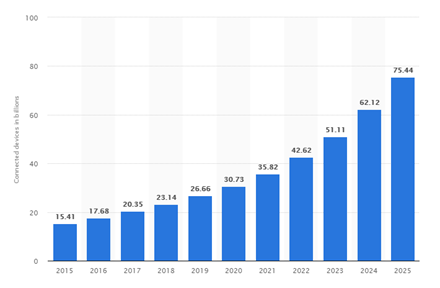
According to Statista, the global installed base of IoT devices is projected to reach nearly 31 billion by 2020 and 75 billion by 2025—an exponential increase that underscores the growing ubiquity of connected technology.
So how does this connectivity translate into tangible advantages for warehouse management?
Benefits of Using IoT
Traditional warehouse management systems often struggle to adapt to the fierce competition and volatile market conditions that erode profit margins. IoT‑driven smart warehouses address these challenges by embedding data‑centric decision making into every process.
- Reduced Costs
IoT enables precise planning across inventory control, maintenance, and labor allocation. By optimizing resource utilization—labor, utilities, and storage space—smart warehouses eliminate waste, lower operating expenses, and boost profitability.
- Next‑Generation Real‑Time Tracking
With IoT sensors, warehouses can monitor the quantity and quality of goods in real time, second by second. This capability is especially transformative for perishable goods, where temperature and location data help prevent spoilage and reduce losses.
- Seamless Workflow
Connected devices provide real‑time visibility into inbound and outbound flows, allowing staff to pinpoint exact storage locations quickly. Autonomous robots can retrieve items instantly, and the aggregated data informs optimal layout design, ensuring continuous, efficient operations.
- Scalability
IoT empowers warehouses to scale efficiently. Historical data guides accurate forecasts of space, infrastructure, and investment needs, while new facilities can be integrated into the existing network with minimal downtime—granting a competitive edge.

- Improved Forecasting Accuracy
Seasonal demand fluctuations—such as the holiday spike in e‑commerce—can be anticipated more accurately. IoT‑enabled warehouses aggregate real‑time inventory data to generate alerts, enabling managers to pre‑emptively adjust capacity and staffing. In the long term, these systems can evolve into self‑regulating ecosystems that adapt storage allocation to market dynamics.
Companies Leveraging IoT in Warehousing
Leading logistics providers and e‑commerce giants are investing in IoT to streamline operations.
- Ocado
British online‑only retailer Ocado operates a highly automated facility in Andover that processes approximately 3.5 million items—or 65 000 orders—weekly, powered by a fleet of over a thousand robot units. An AI‑driven algorithm positions high‑demand items at the top of the storage grid, while less frequent products are placed lower, maximizing retrieval speed. Ocado’s modular design allows easy expansion as order volumes grow.
- Amazon
Amazon’s global footprint includes 493 warehouses covering around 180 million square feet, supported by 100 000 warehouse robots. The company’s acquisition of Kiva Robotics (now Amazon Robotics) in 2012 for $775 million introduced autonomous mobile units capable of carrying up to 750 pounds and following pre‑programmed, 90‑degree pathways.
- Alibaba
Chinese e‑commerce titan Alibaba has also deployed AGVs and advanced automation across its logistics network. Cainiao, Alibaba’s logistics arm, invested more than $15 billion (€13.1 billion) to build a “Future Park” in Wuxi, near Shanghai. The complex hosts a smart warehouse, offices, and retail spaces, leveraging AI, cutting‑edge computing, over 500 AGVs, and Long‑Range (LoRa) IoT connectivity.
Author: Jaykishan Panchal, Content Marketing Strategist at MoveoApps
About the Author
Jaykishan Panchal is a content marketing strategist at MoveoApps, a mobile app development firm. He writes on technology, marketing, and industry trends and is a passionate tech enthusiast.
Internet of Things Technology
- Explore Cutting‑Edge Supply‑Chain Innovations at the 2021 CSCMP Edge Conference
- IoT-Driven Supply Chain Management: Real-Time Asset Tracking & Fleet Optimization
- Revolutionizing Logistics: How IoT Drives Supply Chain Efficiency
- How IoT Is Revolutionizing Supply Chains – Part 1: Key Applications
- IoT-Enhanced Warehouses: Overcoming Challenges and Shaping the Future of Supply Chain Management – Part 3
- How IoT‑Enabled Warehouses Transform Supply Chain Management – Part 2
- The Rising Threat of Kill‑Chain Attacks on IoT Devices – What Businesses Must Know
- How IoT Is Revolutionizing Supply Chain Management
- Optimizing Warehouses for Seamless Supply Chain Efficiency
- Harnessing IoT for Smarter, More Efficient Supply Chain Management