



How IoT‑Enabled Warehouses Transform Supply Chain Management – Part 2
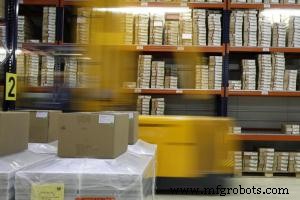
Internet of Things (IoT) blends hardware and software into a tightly‑connected ecosystem that powers modern warehouses. Jaykishan Panchal, a content marketing strategist at MoveoApps, explains how each component—from GPS to artificial intelligence—plays a distinct role in creating a truly smart fulfillment center.
Increasing Goods Visibility with GPS
The Global Positioning System (GPS) is a satellite‑based navigation network that operates reliably in all weather conditions. By equipping vehicles, cargo, and critical assets with GPS trackers, warehouse managers can monitor movements in real time, optimize routing, and reduce fuel consumption. Free access to GPS data makes it an attractive starting point for any IoT deployment.

RFID Tagging for Precise Inventory Tracking
Radio‑Frequency Identification (RFID) tags contain a microchip, memory, and antenna that communicate via radio waves. Unlike barcode scanners, RFID does not require line‑of‑sight, enabling rapid, hands‑free inventory updates. This capability streamlines inventory audits, reduces labor, and enhances accuracy across the supply chain.
Automated Guided Vehicles (AGVs) for In‑House Handling
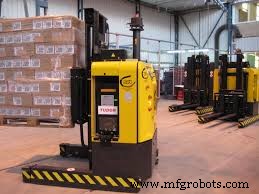
AGVs navigate pre‑defined paths using magnetic tape or laser guidance. They excel at repetitive pallet moves—shifting goods from storage to stretch‑wrapping or outbound docks—while maintaining precision and safety, especially with fragile items.
Warehouse Management System (WMS) – One‑Click Control
A robust WMS consolidates all warehouse functions into a single dashboard. It enables:
- Real‑time documentation and tracking
- Accurate inventory management
- Accelerated daily operations
- Data‑driven analysis
- Clear, actionable reporting
Integration with e‑commerce platforms or legacy accounting software connects demand and supply streams seamlessly.
Automated Picking Tools for Efficient Order Fulfillment
Robotic or semi‑robotic picking solutions can be layered onto an existing WMS, reducing manual labor and minimizing damage. These near‑perfect systems accelerate order processing while keeping costs low.

Complete Warehouse Automation with AICPs
Automated Inventory Control Platforms (AICPs) combine hardware and software to manage diverse goods—from groceries to electronics—without human intervention. Barcode scanners, wireless communication, and central servers coordinate real‑time sorting, storage, and retrieval. For instance, an online purchase of 1 kg of apples triggers the platform to weigh, package, and dispatch the product automatically.
Automated Storage & Retrieval Systems (AS/RS)
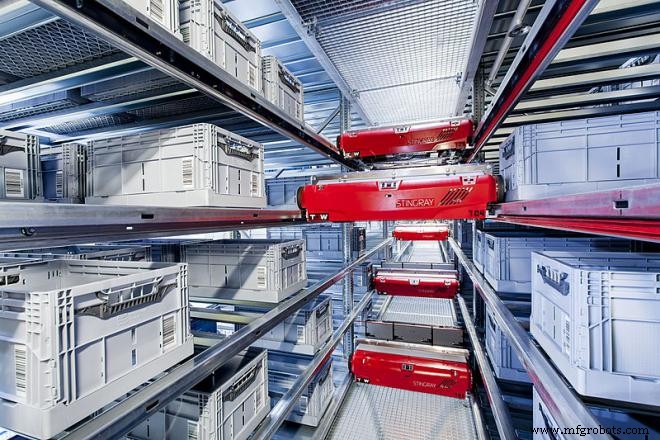
AS/RS technology focuses on automated storage and retrieval while allowing manual packaging and shipping. Deep‑storage capabilities maximize space utilization, and when paired with a WMS, deliver smooth end‑to‑end flow. Common AS/RS types include:
- Fixed‑Aisle Unit‑Load Cranes
- Movable‑Aisle Unit‑Load Cranes
- Mini‑Load Cranes
- Mini‑Load Shuttles
- Carousel‑Based Systems
- Vertical Lift Modules (VLM)
Collaborative Robots (Cobots)
Cobots are engineered to work alongside humans safely. Their programmable nature lets them handle repetitive tasks—like pallet loading or packing—without risking operator injury. Geodis, a leading logistics firm, reported that deploying 30 Locus cobots with seven human workers boosted productivity from 90 units per hour (UPH) in manual picking to 200 UPH with automation.
Artificial Intelligence (AI) – The Intelligent Layer
While sensors and robotics execute predefined actions, AI infuses adaptability. Machine‑learning algorithms analyze continuous data from enterprise systems, smart devices, and IoT sensors to refine demand forecasts, optimize storage, balance labor, and forecast stock levels in real time.

Final Thoughts
Integrating IoT into your warehouse doesn’t require a complete overhaul. Start with the technologies that deliver the most immediate ROI and gradually expand as familiarity grows. In our next and final installment, we’ll explore real‑world adopters, deployment challenges, and future trends.
Author: Jaykishan Panchal, content marketing strategist at MoveoApps
About the author
Jaykishan Panchal is a content marketing strategist at MoveoApps, a mobile app development company. He enjoys writing about technology, marketing, and industry trends, and is a tech enthusiast.
Internet of Things Technology
- Explore Cutting‑Edge Supply‑Chain Innovations at the 2021 CSCMP Edge Conference
- IoT-Driven Supply Chain Management: Real-Time Asset Tracking & Fleet Optimization
- How IoT is Revolutionizing Inventory Tracking
- Revolutionizing Logistics: How IoT Drives Supply Chain Efficiency
- IoT’s Next Frontier: Future Solutions Shaping the Global Supply Chain
- IoT-Enhanced Warehouses: Overcoming Challenges and Shaping the Future of Supply Chain Management – Part 3
- IoT-Enabled Warehouses: Revolutionizing Supply Chain Management – Part 1
- How Blockchain Is Transforming Global Supply Chains
- Optimizing Warehouses for Seamless Supply Chain Efficiency
- Harnessing IoT for Smarter, More Efficient Supply Chain Management