



Architecting Connectivity in the Industrial Internet of Things
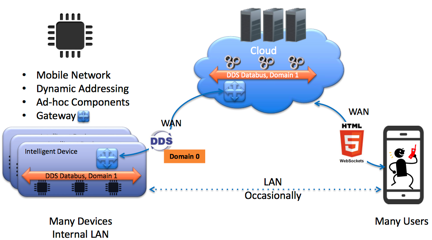
Choosing the right connectivity solution hinges on device location, function, and use‑case requirements. Below are the key scenarios:
- Smart devices (endpoints)
- Device‑to‑cloud connections
- Connectivity within the cloud
- User connectivity (cloud‑to‑user)
Data Distribution Service (DDS) Standard
For device‑to‑cloud (WAN) links, DDS is a proven real‑time data exchange standard that delivers:
- Stateful interactions
- Smart connection handling, automatic reconnection, and selective data retransmission.
- Built‑in bus intelligence that removes application overhead.
- Multiple data‑flow patterns that adapt to current and future needs.
- A publish‑subscribe, data‑driven architecture.
- High scalability, performance, resilience, and robust security.
Inside the endpoint devices, DDS enables reliable, safety‑critical operation—essential for sectors such as healthcare and automotive—while supporting diverse transports and platforms through gateways and routing services.
DDS also thrives in cloud environments, where its flexibility supports a wide mix of connectivity options and extends the longevity of cloud‑based solutions.
When connecting users to the cloud (cloud‑to‑user), traditional web technologies—WebSockets and HTTP—remain the best fit because they offer:
- Stateless, request‑response interactions that are human‑centric.
- Established scalability and security infrastructures.
- Resilient, forgiving performance with easy‑restart capabilities.
- Ubiquitous access from mobile devices and thin clients.
Deployment Flexibility with DDS Domains
DDS domains allow secure isolation of subsystems and tailored data planes, reducing network bandwidth and CPU/memory overhead on gateway connections. Typical domain definitions include:
- Domain 0 – WAN level. Discovery is limited to gateway endpoints and routing services, acting as proxies for local device realms.
- Domain 1 – Device‑to‑cloud level. Full device discovery occurs on the device and cloud buses.
DDS supports a wide array of transports: UDP, TCP, shared memory, OpenSSL (TLS/SSL, DTLS), and low‑bandwidth options. Transport guidelines differ by network type:
- LANs: Prefer UDP (multicast where available) for intra‑cloud or application‑to‑application communication.
- WANs: Use TCP with TLS for device‑to‑cloud links.
Remote access to any DDS data bus is now possible, with DDS managing state for seamless data sharing across cellular and Wi‑Fi networks. Quality of Service (QoS) rules provide resilience during network mobility and switching.
For cloud‑to‑human communication—such as mobile user endpoints or thin clients—continue to use WebSockets and HTTPS over TCP.
Experience remote access from web applications by visiting the RTI Connext DDS Demo site: https://info.rti.com/demo_iot.
Internet of Things Technology
- Industrial Internet of Things (IIoT): What It Is, Why It Matters, and How It Drives Industrial Transformation
- Clearing the Confusion: Navigating Standards in the Industrial IoT Revolution
- Optimizing IIoT Connectivity with the Industrial Internet Reference Architecture
- Revolutionizing Industrial IoT Connectivity: DDS Architecture That Cuts Costs & Boosts Reliability
- Industrial Internet Consortium Celebrates 1 Year: Demo, Keynote & Testbed Insights
- Choosing the Ideal Programming Language for Industrial IoT Solutions
- Unlocking Industrial Growth: How IoT Drives the New Industrial Revolution
- Edge Cloud Computing: The Essential Backbone for IoT’s Rapid Growth
- Top 4 Challenges Facing the Industrial Internet of Things (IIoT)
- Securing Industrial IoT: Practical Strategies for Cyber‑Physical Systems