



How Modern MCAD & ECAD Transform Design: From Legacy Hurdles to Cloud Collaboration
MCAD and ECAD have become integral to the daily workflow of design engineers. While these tools started as niche solutions, they have matured into sophisticated platforms that support the entire product lifecycle. In this article, we trace their evolution and explore how contemporary solutions are reshaping engineering design.
Mechanical Computer‑Aided Design (MCAD) and Electronic Computer‑Aided Design (ECAD) trace their roots back to 1957 with Dr. Patrick Hanratty’s PRONTO system, widely regarded as the father of CAD. Three years later, Ivan Sutherland’s Sketchpad introduced the first graphical user interface, setting the stage for the visual, interactive tools engineers use today. From mainframes to personal computers, the journey of MCAD/ECAD has mirrored the rapid advances in computing power and user expectations.
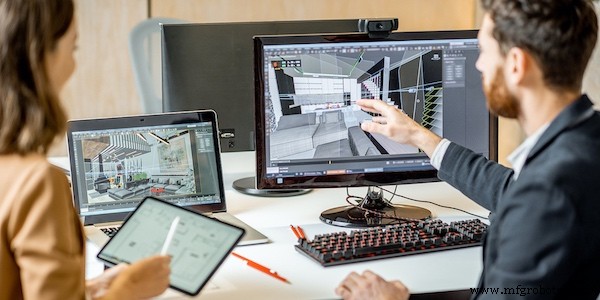
Figure 1. MCAD and ECAD programs accelerate design cycles and improve collaboration.
Early CAD applications were bulky, expensive, and tightly coupled to specific hardware. With the advent of 16‑ and 32‑bit PCs, software such as SynthaVision, ADAM, and AutoCAD brought CAD into the mainstream, democratizing access and setting the stage for the modern CAD ecosystem. Today’s tools combine powerful 3D modeling, simulation, and documentation in a single, cloud‑enabled platform.
Why Engineers Need MCAD and ECAD Today
The push for higher performance, tighter tolerances, and faster time‑to‑market has rendered legacy design methods inadequate. Engineers now work with advanced materials—ceramics, polymers, superconductors, and high‑strength alloys—to create products that integrate electronics with complex mechanical systems. MCAD and ECAD enable rapid iteration, virtual testing, and real‑time collaboration across distributed teams.
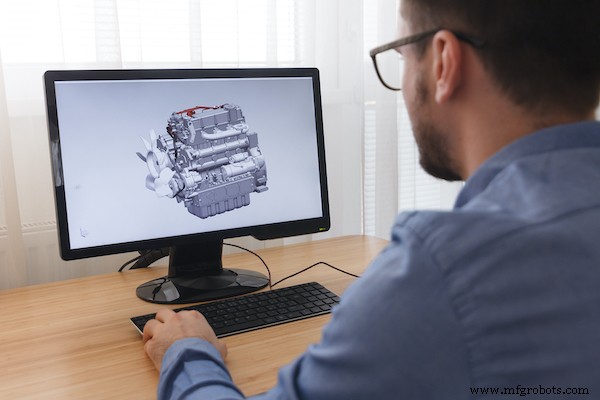
Figure 2. From manual schematics to digital workflows: MCAD and ECAD have transformed how we design.
From Paper to PC
Hand‑drawn schematics and physical prototypes were once the norm, but they introduced significant inefficiencies: difficulty in sharing, high error rates, and limited iterative capacity. The shift to CAD eliminated these bottlenecks, allowing designers to refine models, run simulations, and generate production‑ready documentation without leaving the digital environment.
Modern MCAD/ECAD solutions also support rapid prototyping and additive manufacturing, reducing waste and accelerating product validation. The result is a smoother transition from concept to production, with fewer costly revisions.
The Evolution of MCAD and ECAD
Democratization has been a key theme: prices have fallen, interfaces have improved, and cloud connectivity has broken down geographic barriers. While early systems were locked to on‑premises installations, today’s platforms—such as Autodesk Fusion 360—offer browser‑based access, real‑time collaboration, and integrated simulation.
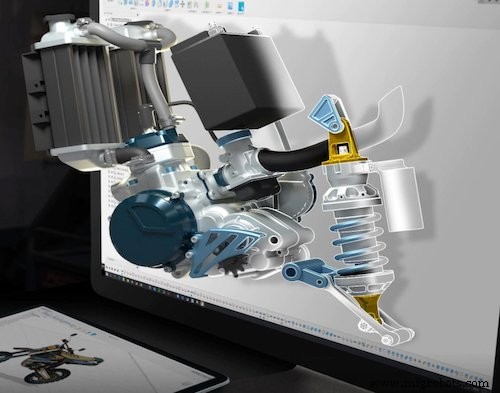
Figure 3. Autodesk Fusion 360 merges mechanical and electronic design in one unified environment.
Cost
Initial licensing fees were prohibitive—an example is Itek’s Digigraphics, priced at $500,000. As the market matured, competition lowered costs and subscription models emerged, making high‑quality CAD accessible to small firms and individual designers alike.
UI and UX
Early CAD tools were technical, with hidden menus and steep learning curves. The introduction of 3D capabilities—starting with Pro/ENGINEER in 1987—transformed how engineers visualized and interacted with models. Today’s interfaces emphasize intuitiveness, context‑aware commands, and drag‑and‑drop functionality, reducing training time and enhancing productivity.
Integration and Flexibility
Legacy systems often operated in silos, forcing manual data export and re‑import across applications. Modern CAD ecosystems provide robust APIs, file interchange standards, and cloud‑based file repositories, ensuring seamless data flow and collaboration. Remote work has become the default, and cloud platforms keep teams connected regardless of location.
Utilizing the Cloud with Fusion 360
Cloud integration is now a cornerstone of MCAD/ECAD, enabling real‑time collaboration, version control, and cross‑disciplinary review. Fusion 360’s unified platform supports:
- Centralized annotations and comments for all stakeholders
- Consistent file management and format standardization
- Collaboration with external partners through secure sharing
- End‑to‑end design iteration, including simulation and testing
- Integrated electronics design and manufacturing workflows
- Automated documentation generation
By consolidating mechanical and electronic design in a single, cloud‑native environment, Fusion 360 eliminates context switching and accelerates the product development cycle.
Modern ECAD and MCAD: A Convergent Future
Today’s products increasingly blend mechanical and electronic functions. Modern CAD tools facilitate this convergence by providing shared libraries, coupled simulation, and co‑design capabilities. Cloud collaboration not only boosts productivity but also supports the rapid iteration required for complex, multi‑disciplinary projects.

Figure 5. Cloud collaboration empowers engineers to design and iterate from anywhere, driving higher productivity.
As MCAD and ECAD continue to evolve, they are becoming more user‑friendly, integrated, and accessible. Engineers can now design smarter, faster, and more collaboratively than ever before, unlocking new opportunities for innovation.
Industry Articles are a form of content that allows industry partners to share useful news, messages, and technology with All About Circuits readers in a way editorial content is not well suited to. All Industry Articles are subject to strict editorial guidelines with the intention of offering readers useful news, technical expertise, or stories. The viewpoints and opinions expressed in Industry Articles are those of the partner and not necessarily those of All About Circuits or its writers.
Cloud Computing
- Cybersecurity in the Cloud: Overcoming Key Threats in a Multi‑Cloud Era
- Cybersecurity in the Multi‑Cloud Era: Overcoming Key Challenges
- Mastering Product Design: Proven Strategies to Overcome Common Challenges
- Generative Design & 3D Printing: Building Tomorrow’s Manufacturing
- Navigating Challenges and Seizing Opportunities in the Aerospace Industry
- 5G & IoT: Driving Next-Gen Supply Chain Resilience
- Gartner Forecasts AI’s Next Chapter: Opportunities, Risks, and Adoption Hurdles
- How Generative Design Meets Traditional Craftsmanship in the New GD Electric Violin
- Metal 3D Printing: Overcoming Key Challenges & Harnessing Emerging Solutions
- Why Current Documentation Is Critical: Benefits and Challenges for Your Business