



LED‑Curable Conformal Coatings: Driving the Green Shift in PCB Manufacturing
Eco‑friendly LED‑curable conformal PCB coatings are rapidly becoming the preferred choice in industries that demand fast turnaround and robust protection—automotive, white goods, and industrial control.
With their rapid curing times and exceptional resistance to harsh environments, LED‑curable coatings offer a truly green alternative to traditional solvent‑based and UV‑curable systems. The following analysis delves into their benefits, technical considerations, and real‑world applications.
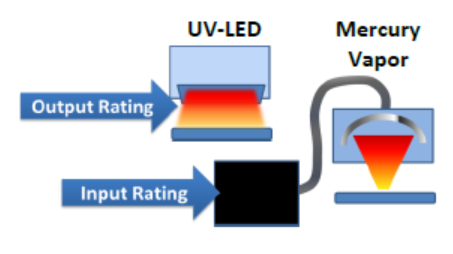
An image showing UV‑LED to mercury vapor. (Source: Nazdar Ink Technologies)
Traditional UV Curing
Before LED‑curable technology emerged, high‑intensity mercury vapor lamps were the industry standard. Compared with older solvent‑borne coatings, UV curing offered several advantages:
- Minimal or no volatile organic compounds (VOCs)
- Rapid, on‑demand curing
- Potential for short cycle times
- Excellent chemical and environmental resistance
However, the drawbacks were significant:
- High energy consumption
- Short lamp life and frequent replacements
- Emission of harmful gases requiring sealed designs
- Air pollution from mercury vapor
- High heat generation leading to thermal stress
- Complicated heat‑cycling procedures
LED‑Curable Conformal Method
LED technology replaced mercury lamps with high‑intensity UVA LEDs (365–395 nm), delivering a cleaner, more efficient curing process. Key benefits include:
- Lower energy consumption
- Continuous light output over the lamp’s lifetime
- Minimal operating temperatures
- No ozone or harmful UVC emissions
- Extended lamp lifespan and reduced maintenance
Unlike mercury lamps that emit UVA, UVB, and UVC, UVA LEDs provide a single, narrow wavelength optimized for polymer cross‑linking.
Why LED‑Curable is Green
LED‑curable coatings embody eco‑friendliness by:
- Being fully solid—no solvent or runoff
- Lightweight formulations that reduce shipping emissions
- Lower energy use compared to heat‑dry ovens
- Virtually VOC‑free processing
Compared to traditional full‑spectrum arc lamps, LED curing requires:
- Less power demand
- Minimal maintenance cycles
- Negligible hazardous or ozone emissions
Key Considerations for Transition
Successful migration from mercury to LED curing hinges on aligning the coating’s spectral absorption with the LED’s output, component tolerances, and production speeds. Partnering with experienced process developers and resin suppliers reduces risk and accelerates adoption.
LED‑Curable Formulations
Most UV‑curable resins use a two‑step cure: a quick UV exposure followed by a secondary moisture or heat cure. LED‑compatible formulations can be:
- Dual‑cure systems that remain flexible for batch processes
- Single‑cure systems ideal for line‑of‑sight, high‑speed production
- Higher‑viscosity variants for thicker, protective layers
When selecting a resin, verify the manufacturer’s recommended wavelength (395 nm is standard; 365, 385, and 405 nm are also available) and whether a secondary cure is required.
Low‑Risk Process Development
Engage suppliers who can provide:
- Accurate technical data sheets and application notes
- On‑site pilot studies or loaned LED units for validation
- Comprehensive training and after‑sales support
- Global service networks for international operations
Equipment Options
When designing your LED curing line, consider:
- Manufacturing rate and board size
- Batch vs. continuous flow requirements
- Conveyor speed and spacing control
- Operating distance flexibility
- Energy consumption and maintenance costs
- Upgrade path—LED array replacement vs. full system overhaul
Applications
LED‑curable conformal coatings excel in:
- Automotive PCBs demanding high reliability and throughput
- White goods such as refrigerators, microwaves, and dryers
- HVAC control panels and electronic safety systems
- Any environment where rapid curing and minimal environmental impact are critical
Conclusion
High‑volume sectors—especially automotive and white‑goods—are increasingly adopting UV LED‑curable conformal coatings for their speed, energy savings, and low maintenance. As the push for greener PCB materials grows, LED curing will play a pivotal role in the industry’s sustainable evolution.
Choosing a reputable conformal coating supplier ensures you receive unbiased guidance, consistent quality, and reliable technical support, ultimately boosting efficiency, cutting costs, and enhancing product performance.
>> This article was originally published on our sister site, Power Electronics News.
Embedded
- Inorganic Antimicrobial Coatings: Science, Applications, and Benefits
- Green Tea: From Ancient Roots to Modern Health
- Arduino’s Evolution: CEO Fabio Violante on Industry Trends and Future Innovations
- Reliability: The Core of Sustainable Manufacturing
- Understanding Machine Screw Design: Shapes, Threads, and Applications
- Surface‑Diffusion‑Driven Morphology Evolution of Pit‑Patterned Si(001) Substrates: A Phase‑Field Study
- How 3D Printing Revolutionized Manufacturing: A Journey Through Its Evolution
- Green Steelmaking: Revolutionizing Industry for a Cooler Planet
- 12 Expert Guides for Selecting the Perfect PCB Conformal Coating
- How 3D Vision Technology Revolutionizes Modern Automation