



Understanding Machine Screw Design: Shapes, Threads, and Applications
What Is a Machine Screw?
A machine screw is a threaded fastener that is either driven directly into a tapped hole or used with a nut. Typical machine screws are small—often around 1/4 inch (6.4 mm) in diameter or less—and come in a variety of drives, such as slotted, Phillips, or square. They are the workhorses of mechanical assemblies, holding components together in everything from household fixtures to industrial machinery.
Thread Fundamentals: Lead, Pitch, and Starts
The performance of a screw is defined by its thread geometry. The lead is the axial distance a screw travels during one full revolution (360°). A smaller lead yields greater mechanical advantage, making the screw easier to turn into a tight position. The pitch is the axial distance between the crests of adjacent threads.
Single‑start screws have one continuous thread, so the lead equals the pitch. Multiple‑start screws incorporate several intertwined threads, making the lead equal to the pitch multiplied by the number of starts. This design is common in bottle caps and ballpoint pens where quick linear motion per rotation is desired.
Thread Types and Angles
To reduce friction and prevent unwinding, most fasteners feature a 60° thread angle. There are seven standard thread geometries used in machine screws:
- V‑thread
- American National (UN) thread
- Whitworth (British Standard)
- Square thread
- Acme thread
- Buttress thread
- Knuckle thread
Handedness: Right‑Handed vs. Left‑Handed
The helix of a screw can twist in either direction. Right‑handed screws tighten when turned clockwise, which aligns with the dominant right‑handedness of most users and allows efficient use of the supinator muscle. Left‑handed screws are used in special applications—such as bicycle pedals or circular saw blades—where the usual rotation of a shaft would otherwise loosen a right‑handed nut.
Common Head Styles
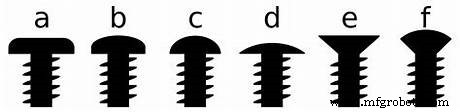
Machine screws come in several head shapes, each suited to a specific application. The most common types include:
- Pan head
- Binding head
- Round head
- Flat (countersunk) head
- Oval head
- Truss head (used in our example)
Case Study: Identifying a Lamp Screw
When the screw in my reading lamp fell out, I took it to a hardware store for identification. A clerk verified it as an M4 by 6 mm long Phillips truss head machine screw—a standard size often used in precision assemblies. If you encounter a mysterious screw, a quick check against these basic parameters can narrow the possibilities dramatically.
Where to Source High‑Performance Machine Screws
Craftech Industries, Inc. in Hudson, NY produces machine screws in over 100 high‑performance plastic materials. For detailed specifications or custom orders, contact their office for expert guidance.
Resin
- What Are Machine Screws? A Comprehensive Guide
- The Beginner's Guide to Machine Screws: What They Are, How They Work, and Key Differences from Bolts
- The Evolution of Boring Mills: From 18th-Century Hand Tools to Modern CNC Precision
- Why Mastering Machine Troubleshooting is Critical for Modern Manufacturers
- Choosing the Right Cleaner: A Practical Guide to Safety and Effectiveness
- The History and Mechanics of the Screw: From Ancient Inventions to Modern Applications
- Top CNC Machine Brands for Precision and Reliability
- Tracing the Legacy of the Lathe: From Ancient Egypt to Modern Manufacturing
- Milling Machines 101: A Comprehensive Guide to Their Function, Components, and Uses
- Unlocking CNC Efficiency: Embrace Connected Control