



Choosing Between Plastic and Metal: Expert Insights for Optimal Material Selection
Key Factors in Selecting Plastic or Metal for Your Product
Deciding between plastic and metal has become a pivotal design decision across industries—from aerospace to consumer goods. With 50 years of experience in both machining and injection molding, Craftech helps manufacturers make data‑driven choices that balance performance, cost, and lifecycle.
Advantages of Plastic
- Lightweight – A plastic component can weigh as little as one‑sixth of its steel counterpart, or half the weight of aluminum, reducing shipping and operating costs.
- Superior Chemical Resistance – Plastics resist corrosion and chemical attack, making them ideal for aggressive environments.
- Easy Machining – Cutting and shaping plastic is faster and requires less tooling wear, shortening lead times.
- Impact & Dent Resistance – Many plastics absorb impact better than metal, reducing damage in high‑contact applications like automotive bumpers.
- No Paint Required – Translucent or colored plastics eliminate secondary finishes, saving time and labor.
- Design Flexibility – Complex geometries, integrated lettering, and textured surfaces can be molded in a single operation.
- Consistent Quality – Injection molds produce near‑identical parts across millions of cycles, ensuring tight tolerances.
- Extended Service Life – In many use cases, plastics outlast metals due to corrosion resistance and material stability.
- Cost Efficiency – Lower raw‑material prices and reduced energy consumption in molding often translate to lower unit costs.
- Quieter Operation – Plastic‑to‑plastic contact generates less noise, beneficial in consumer and medical devices.
- Material Variety – Hundreds of polymers—such as ABS, polycarbonate, and polypropylene—allow precise matching of mechanical and environmental needs.
Limitations of Plastic
- Excessive heat can cause degradation or deformation.
- Higher thermal expansion and shrinkage require careful design for dimensional stability.
- Ultraviolet exposure can deteriorate surface properties unless stabilized with UV inhibitors.
Advantages of Metal
- High thermal and electrical conductivity for heat‑sensitive or electronic applications.
- Superior strength and stiffness for load‑bearing structures.
- Excellent performance across extreme temperature ranges.
Limitations of Metal
- More challenging and costly machining due to hardness and tool wear.
- Secondary operations—polishing, deburring, or painting—are often required, increasing cycle time and cost.
- Susceptible to oxidation and corrosion, especially in humid or chemically aggressive environments.
Weight reduction has historically driven the shift from metal to plastic in aviation and automotive components, yet the best material choice hinges on specific product requirements—strength, durability, chemical exposure, UV stability, and temperature tolerance. Often the solution involves a hybrid approach or selecting from multiple metal or plastic options.
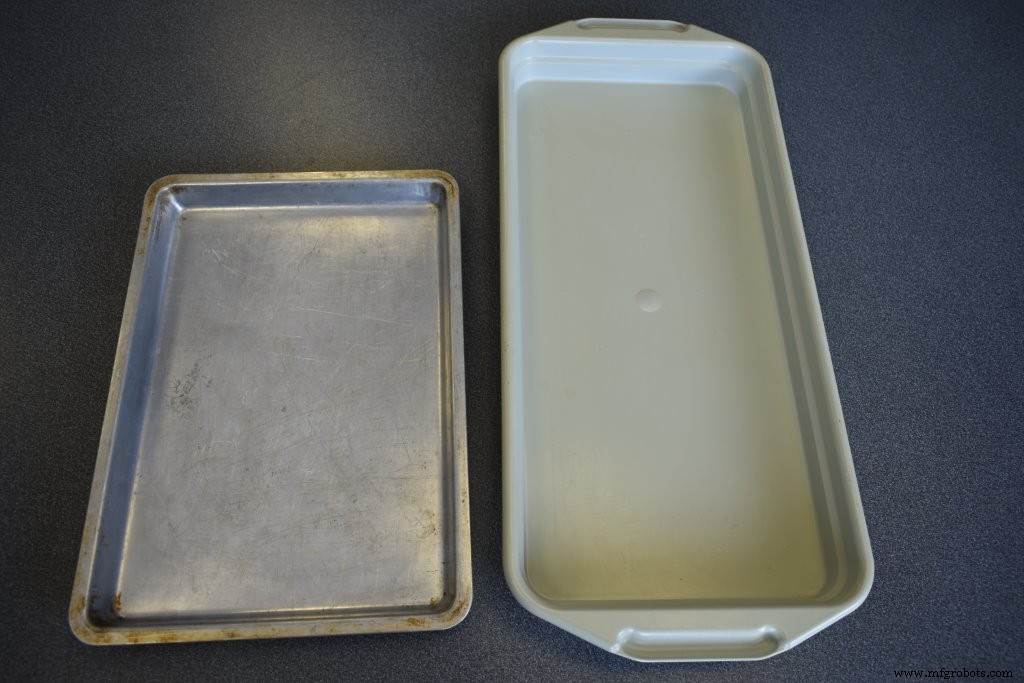 Case in Point: Two heating trays—one steel, one plastic—illustrate why fast‑food restaurants transitioned to plastic: it is lighter, quieter, and color‑coded for easy identification.
For custom parts and fasteners, Craftech offers both precision machining (small volume) and injection molding (large volume) to meet your exact specifications. Our team’s deep expertise across dozens of polymer resins ensures you receive the right material solution for performance and cost.
Learn how Craftech can guide your material selection. Visit www.craftechind.com or call 518‑828‑5001.
Resin
- Acrylic Plastic: Properties, Production, and Future Trends
- Staplers: Design, Manufacturing, and Quality Assurance – A Comprehensive Overview
- Top 5 Plastic Bearings for Metal Surfaces: Phenolics, Nylon, PTFE, Acetal, UHMWPE
- Multi-Material Plastic Hardware Solutions for Industrial & Medical Applications
- Why Plastic Bearings Outperform Metal: 6 Key Advantages
- Optimal Methods for Bonding Metal to Plastic: A Technical Guide
- Polyurethane vs Metal: Why Thermoset Polyurethane Outperforms Traditional Metals
- Cut Costs & Improve Design: Convert Metal Parts to Plastic with Additive Manufacturing
- Reduce Over-Engineering: Switching Metal Parts to Advanced Plastics
- Precision Metal Shearing Solutions for Steel & Aluminum