



Plastic vs. Wood Pallets: Selecting the Optimal Choice for Your Supply Chain
For almost all businesses in the manufacturing industry, pallets are a core component in their supply and distribution network. Pallets are as critical to a manufacturer’s infrastructure as wheels are for the transportation industry. Pallets are everywhere - on loading docks, in the backs of trucks, at the garden supply and sitting wide open on the floors of retail stores. You see pallets going by in bulk returns on the open beds of semi trailers and stacked up outside delivery bays. What you don’t see are the millions of hidden pallets that are nestled, stacked and racked inside the warehouses of America and the entire world.
You even see pallets being recycled at the end of their lifecycle. They’re turned into funky furniture or quirky pieces of art. And you probably think of pallets as being crudely constructed with top and bottom deck boards nailed or screwed across three runners that form cavities where the tines from forklifts insert. If so, you’re thinking of wooden pallets that make up more than 90 percent of all pallets in existence.
So if most are industrial wood pallets, what makes up the remaining less than 10 percent of storage and shipping pallets? Almost all the others are heavy-duty plastic pallets. Plastic shipping pallets might be a minority, but they’re strongly catching favor and are increasingly being used by progressive businesses once they understand the benefits of plastic vs. wood pallets.
Plastic vs. Wood Pallet Construction
Whereas most wooden pallets appear much the same, plastic construction offers a wide assortment of shapes, sizes, strengths and even color alternatives to conventional wood pallets. Plastic is a versatile material that has many benefits which make it an ideal choice for supporting loads for storage and transportation. Plastic shipping pallets are now used in many commercial and industrial situations.
The questions naturally arise, “Why use plastic pallets?” and “Why use wood pallets?” The answer depends on the type of business you’re managing and what the specific application you need a pallet for. You may currently be using wooden pallets for your storage and shipping solution. If so, you’re not alone. But you’re likely curious if switching to plastic for some of or even your entire pallet inventory is worth the expense and hassle.
Changing your type of pallets is a big decision and depends on whether your material handling requirements include pallet dimensions, and whether your industry has specific regulations and standards for pallets. You might require food-grade pallets, hygienic pallets, industrial pallets or strictly controlled export pallets. Different companies have different needs, and that’s why you need to take a good, hard look at the advantages and disadvantages of industrial wood pallets vs. heavy-duty plastic pallets.
Advantages of Wood Pallets
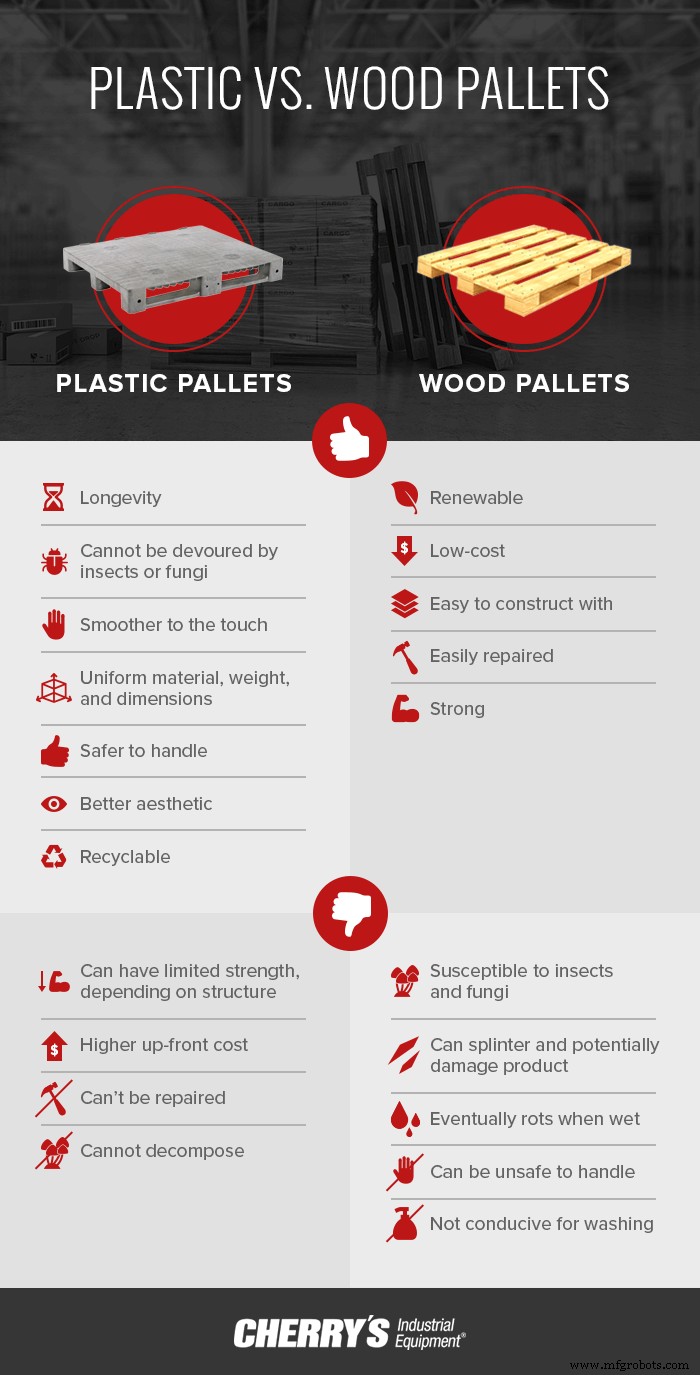
The biggest reason why wood is used for most of the nation’s pallets is because it’s cheaper. Wood pallets cost approximately 33 percent less than plastic pallets. Softwood is also much less than hardwood pallets, metal pallets and some of the composite materials like high-density polyethylene (HDPE) plastic or rarer co-polymer plastic blends.

The very first pallets were built from low-quality softwood boards that were inexpensive by-products sourced from lumber mills and wood manufacturing businesses. Coarse boards were remanufactured into rough pallets that were designed and expected to have a limited and disposable lifecycle. These rough platforms quickly became the pallet industry standard, and remain so today.
If you’re considering why you should use wood pallets, consider these other advantages:
- Wood is a renewable resource. Softwoods like pine, spruce and fir are grown across the country and have excellent rates of growth. A properly managed working forest has an infinite cycle of producing environmentally friendly and non-polluting materials that are extremely economical.
- Wood is low-cost. Softwood lumber may not have the same structural strength as hardwoods like oak, maple and birch, but they are in great supply and readily obtained by commercial pallet-building companies. This low material cost is passed on to the end user and offers significant savings, especially to businesses that use thousands of pallets in an open-loop supply chain where loss and slippage of pallet inventory is a fact of conducting business.
- Wood is an easy material to construct with. Wood pallets are turned out in mass production, with volumes in the thousands per day. Unlike plastic or composite materials, wood pallet building doesn’t require expensive tooling or molds, or the high skill that it takes to work with chemicals. Wood pallet factories hire relatively low-skilled labor that uses inexpensive tools. This straightforward manufacturing process keeps production costs down and pallet costs low.
- Wood is easily repaired. Harsh abuse and high damage happens regularly with pallets. They’re dropped from heights and run over by forklifts and heavy trucks, as well as being used for non-intended roles, like shoring trailers and supporting weights far beyond their intended design limits. Wood might easily fracture or become splintered, but a hammer and nails can quickly patch a broken wood pallet and return it to active service.
- Wood is strong. Pallets made from wood are usually capable of carrying greater weights than other materials such as plastic. This depends on the species of wood used in the pallet frame, but on average, wood is a tough, dependable material for supporting heavy weights and being shunted around by industrial machines like hand trucks and forklifts.
- Wood is recyclable. Wood is one of nature’s miracle building materials. As such, it’s ideal for recycling with a positive environmental impact. Wood pallets are often retired to other purposes like rustic furniture or chipped into landscape mulch. Wood can also be burned as a fuel source or cut into smaller products that take on a new life. Even if wood pallets are discarded to a landfill, they’ll quickly rot or decompose to a harmless, natural state.
Disadvantages of Wood Pallets
When you look at most wooden pallets, you’ll get the impression of dirty, unsanitary materials that belong outdoors – not in a clean warehouse. While this is not always the case, wood pallets are not typically aesthetically pleasing and many are used in industries where cleanliness is not possible or the budget does not allow for higher quality plastic pallets.
Some of the disadvantages to using wood pallets include:
- Wood is not a hygienic material. Wood is easily contaminated by insects, pathogens and chemicals. Being porous, wood easily lets bacteria and harmful substances into its cellular structure that are next to impossible to remove. Wood pallets can be washed and sanitized to some degree, but for clean environments like the food and pharmaceutical industries, wood is a poor choice that might be prohibited by regulators.
- Wood pallets are heavy. Pallets made from wood range in weight depending on the particular species of tree they’re made from, as well as the moisture content they retain. Pallets that sit outdoors in rain or snow may be so waterlogged that they present an uncomfortable weight for the average worker to lift by hand. This creates a dangerous work environment where strains or injuries are an unacceptable risk.
- Wood pallets have higher shipping costs. Some industries charge transportation rates based upon a product’s gross weight, which includes the cost of also shipping the pallet. This is especially true in air freight, where excess pounds can be prohibitively expensive. You can find considerable savings by using plastic pallets in air shipping, and that makes wood a less desirable pallet material for weight-sensitive loads.
- Wood pallets can be unsafe to handle. Aside from their weight that presents ergonomic issues, wooden pallets are made with metal fasteners like nails, screws and straps. These pieces can work loose and also rust. That’s a hazard for workers handling wood pallets, as are the always-present splinters from cracked, rough boards.
- Wood pallets have a limited lifespan. Wood pallets are designed for a limited lifecycle and are meant to be disposable after a certain amount of trips. This means businesses using wood pallets must constantly replace their pallet inventory. That can add up fast in a high-volume, pallet-dependent company.
Although plastic shipping pallets might occupy a small market share of the overall pallet industry, they offer a high rate of return on investment (ROI) in the right situations. Some businesses like food and beverage producers see no advantage to using wood pallets and every advantage to working exclusively with plastics. Larger companies may hold thousands of plastic pallets in their facilities. That’s whether they’re closed-loop factories — where all pallets remain within their walls and are recirculated — or open-loop configurations, which ship products to remote sites on plastic pallets that are difficult to recover.
Pallet recovery can be more of a challenge when using plastic platforms. It depends on the business model and whether the cost of pallet loss is absorbed. It also depends on the framework you’re operating within. If you’re managing a business where weight, cleanliness or strict government regulations are a prime concern, you’ll want to take a serious look at the advantages of switching to plastic pallets.
Advantages of Plastic Pallets
Like wood, plastic has one huge reason why it’s an ideal material for producing pallets – it’s cleaner. Polyethylene plastic has a closed-density surface that prevents contaminants from penetrating into the subsurface. Biodegradable materials like blood and tissue leaked in animal-processing plants or biomass films in other food facilities remain on the outer portion of a plastic pallet. They’re easily hosed off or hygienically cleaned and put back into safe service.

Cleanliness is a major concern in many industries that require pallets to store and transport perishable items that are controlled by tight regulations designed to protect the health of the nation. This is where wooden pallets aren’t suitable. In fact, they may be prohibited, especially in international import and export situations where contamination from foreign insects or plant life is a serious concern.
Plastic pallets have every advantage over wood pallets in the cleanliness and hygiene department. Some industries are so tightly controlled that their clean areas require specialized pallet washing and drying equipment. The plastic pallets can be brought to a sophisticated level of decontamination and prevention of biological growths, which could lead to sickness from diseases like listeria or complications from mold and food-borne pathogens. This simply can’t be done with wooden pallets.
Plastic pallets have other advantages besides the ability to maintain cleanliness. They include:
-
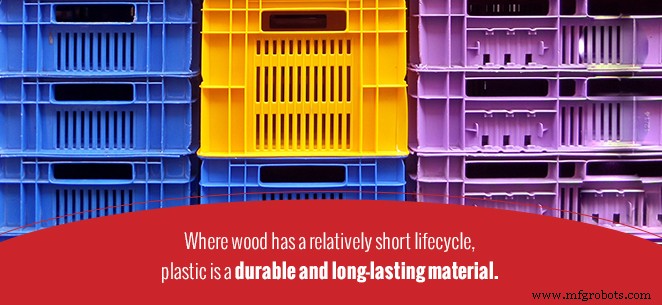
- Plastic pallets have longevity. Where wood has a relatively short lifecycle, plastic is a durable and long-lasting material. Plastic blends that are designed for ultraviolet light resistance have a virtually infinite service life, provided they are properly handled and not abused. Plastic does not break down from water sources such as the biological decomposition forces that rot wood. Plastic is impervious to water and could sit in a submerged state forever.
- Plastic pallets cannot be devoured by insects or fungi. Wood is a cellulose material that provides an excellent food source for all sorts of insects as well as the hundreds of different mold spores that occupy almost all environments. While wood attracts ground-crawling bugs that hide in the cracks and slats of a typical pallet, this never happens when you use plastic pallets.
- Plastic is lighter than wood. Plastic pallets weigh far less than wood pallets when compared on the same dimensions. This depends somewhat on the particular type of plastic versus the species of wood, but overall, the density of plastic is much less than wood, and it reflects in lighter pallets. This benefits you by being easier on workers and cheaper to ship when pallet weight is included in your billing.
- Plastic is a smoother surface. This equates to fewer splinters that threaten pallet handlers, as well as being easier to slide materials on and off the pallet deck. Plastic has less friction, and this results in less required power and better efficiency in transferring loads.
- Plastic pallets are easier to stack. Many plastic pallets come with an optional stacking lip feature that makes for easy stacking and transporting. This can also prevent product slippage when in use, lowering the amount of damaged goods from transportation.
- Plastic is a uniform material. Plastic pallets are made in precise dimensions during a uniform molding Wood is an uneven surface, particularly the wood materials used to build disposable pallets. To keep costs down, wood pallets are made from an assortment of wood products and varying dimensions. Plastic pallets are made from a consistent process and consistent materials. This gives plastic pallets equal-sized surfaces and returns a level, more stable stacking capability.
- Plastic pallets are safer to handle. Plastic pallets are made in one continuous pour, giving them continuity in structure. There are no metal fasteners like nails, screws or strapping in plastic pallets, so there are no irregular, rusty exposures that could injure workers.
- Plastic pallets have much better aesthetic appeal. There’s nothing particularly attractive about a wooden pallet. However, plastic pallets have a uniform and pleasing appearance. They are perfect for retailers and other public displays where bulk packaged goods are put out as part of a marketing strategy. Plastic pallets can even be made in color-coordinated runs to complement a vendor’s needs. Custom embossing and company logos are even available when ordering.
- Plastic is recyclable. At the end of service life for plastic pallets, they can easily be sent to a recycling station where they can be remade into other plastic goods, including new plastic pallets. This is not only good for the environment, but makes excellent economic sense by adding value to a retired product.
There are so many advantages to using plastic pallets, making them a clear choice for most businesses. However, they do not always line up with a business’s needs and goals.
Disadvantages of Plastic Pallets
The biggest apparent disadvantage to using plastic pallets is the up-front investment or purchase cost. On average, an equivalent sized plastic pallet costs about three to five times more than a wood pallet. The exact cost depends entirely on the specific design or specialized purpose of a plastic pallet, as well as the construction of a comparative wooden pallet.

This ROI is quickly demonstrated when you consider that a well-cared-for plastic pallet might last you 10 times longer than a wood pallet. Therefore, the return on your initial investment goes beyond the purchase cost. It is also important to consider the hygienic benefit of plastic pallets for your industry and the necessity of creating a safe and secure work environment for your employees.
While there are a few other perceived disadvantages of buying plastic pallets, you’ll see they are offset by corresponding bonuses. They include:
- Depending on the material and structure, plastic pallets may have limited strength. This may be true compared to some wooden counterparts, but plastic is also a much lighter material. Used in the right application, most plastic pallets have ample strength to hold large-capacity loads up to 1,500 pounds. However, capacity can vary greatly depending on the pallet’s structure and material. Cherry’s offers pallets that can hold up to 33,000 pounds in a static state and 3,800 pounds in dynamic state.
- Plastic pallets have a high loss-to-cost ratio. In cases where open-loop shipping is part of your facility’s structure, having expensive plastic pallets lost due to non-return or forwarding to other businesses is a serious concern. This is easily overcome by implementing a service fee attached that’s reimbursable upon recovery of your pallets.
- Plastic pallets can’t be repaired. It’s not as simple to repair plastic pallets as it is to fix wood ones. Once a plastic pallet is broken, there is usually little that can be done to fix it. This issue can be prevented by choosing plastic pallets for applications where damage is less likely to occur.
In all business procurement and integration decisions, you have to weigh the advantages and disadvantages of wood and plastic pallets to the pros and cons that are specific to your industry and individual company. Consider all the factors and keep in mind that many businesses are switching their pallet inventory to plastic over wood.
Cherry's Material Handling Is a Leading Supplier of Plastic Pallets and Accessories
Smart managers partner with experts in the plastic pallet supply business like Cherry’s Material Handling. Cherry’s has over three decades of experience in supplying industrial-grade plastic pallets and accessories to businesses across America.
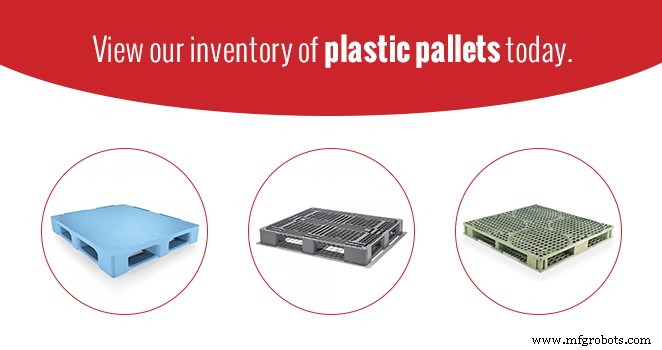
Let us work with you to discuss and identify which type of plastic pallet is right for your business. We handle all sorts of plastic pallet configurations, like stackable, edge-rackable, and nestable models. We also supply industrial pallet accessories such as pallet washers and pallet dryers to further enhance clean working environments. View our inventory of plastic pallets today.
This post was last updated on January 2, 2020.
Manufacturing process
- Professional Wood Stain: History, Types, and Production
- Charcoal Briquettes: From Ancient Fuel to Modern BBQ Staple
- Chopsticks: History, Craftsmanship, and Environmental Impact
- Fiberboard (MDF) Production: Process, Quality, and Future Trends
- Understanding Lumber: Production, Types, and Industry Insights
- Acrylic Plastic: Properties, Production, and Future Trends
- Decorative Plastic Laminate: From Formica to Modern Manufacturing
- Premium Plastic Food Wrap: Preserve Freshness & Seal Odors
- Choosing Between Plastic and Metal: Expert Insights for Optimal Material Selection
- Wood: Key Properties for Construction & Design