



Arduino’s Evolution: CEO Fabio Violante on Industry Trends and Future Innovations
Editor’s Note: The Arduino platform has become a cornerstone for rapid prototyping, pairing its core boards with a vast array of add‑on shields and an expansive support ecosystem. In this interview with our sister publication, EE Times Europe, Arduino CEO Fabio Violante shares his perspective on the platform’s trajectory and emerging industry trends.
Arduino is an open‑source electronics platform built on a streamlined hardware and software stack. Originating in Italy, it has evolved into an icon for its pioneering open‑source boards and an essential tool for makers worldwide.
With Arduino, developers can swiftly create devices that integrate classic electronic components, sensors, servomechanisms, and communication modules. The platform has lowered the barrier to entry in electronics, empowering hobbyists and professionals alike to prototype cost‑effective solutions.
Since the release of the Arduino Uno in 2005, Arduino has become a pillar of the maker movement. Today, the platform’s reach extends far beyond hobbyists, influencing startups, educators, and industrial innovators.

Fabio Violante, CEO @ Arduino
EE Times Europe: I grew up with Arduino. I saw it come to life, grow up, grow up a lot. I saw the emergence of startups with Arduino as the basic element of their prototypes. And now it has a huge community, potentially the largest. What’s Arduino trying to get to?
Fabio Violante: It’s always gratifying to hear how Arduino has shaped the lives of so many creators. Today, we serve over 30 million active community members, many of whom seek the simplicity that made Arduino popular in the hardware market. Our focus now is on extending that simplicity into the Internet of Things. The Arduino IoT Cloud is designed to enable low‑code application development, making it easy to build connected devices. For example, we recently added robust LoRaWAN support, a significant step forward that automates the conversion of sensor data into network packets—an area that previously required manual intervention.
The latest Arduino Portenta aims to give a bigger push in the industrial market. The so‑called “Industrial Makers” are being born. What advantages does this board offer the industrial market, and what are the main applications? What could be the design challenges?
Industrial makers demand components that meet rigorous quality, longevity, and temperature specifications. That’s why the Portenta family was engineered to satisfy these requirements. Partnering with STMicroelectronics on the Portenta H7, we delivered a reliable, dual‑core microcontroller module that also boasts low power consumption—making it the most powerful yet energy‑efficient option on the market. By standardizing on two high‑density connectors, we open the door for partners, design firms, and the ecosystem to build vertical applications that treat the Portenta as the “brain” of their devices. Greater edge computing power enables sophisticated tasks such as signal processing, predictive‑maintenance machine learning, and basic computer‑vision.
We have many MCU‑based boards. FPGA‑based Arduino could be a new way with MKR Vidor 4000. Is there a particular reason to choose a microcontroller instead of an FPGA as the core of the board?
Arduino has long been rooted in microcontrollers, and that expertise remains central to our strategy. While FPGAs offer powerful flexibility, their complexity in development and assembly has limited mainstream adoption within our community. The Vidor 4000 was conceived to bridge that gap by presenting the FPGA as an “infinitely flexible peripheral” on a multi‑core, user‑friendly board. Though the toolchain’s development took longer than anticipated, we are confident we’ve addressed usability challenges and plan to release a beta later this year, followed by full availability once users confirm its effectiveness.
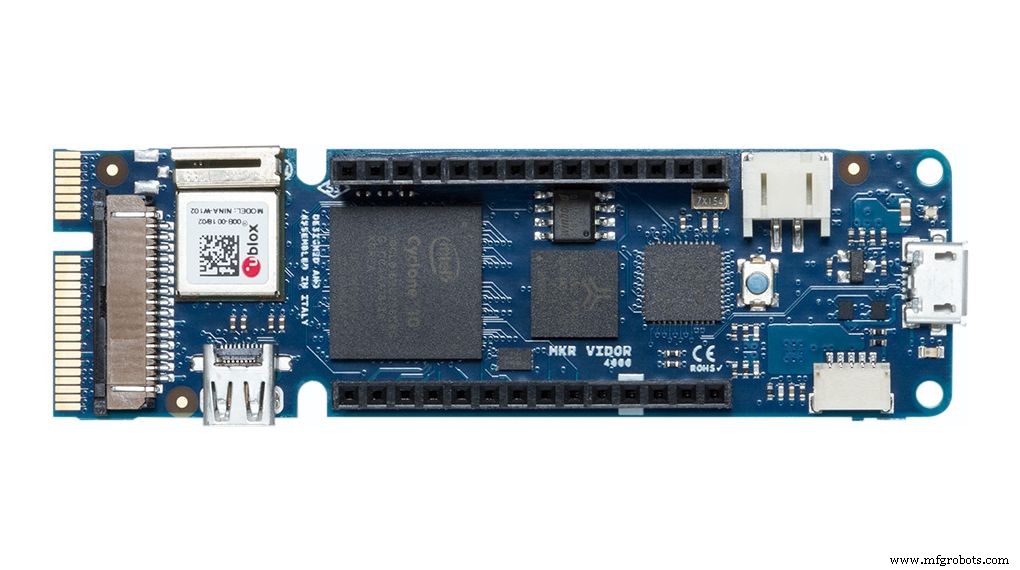
Figure 1: Arduino MKR Vidor 4000
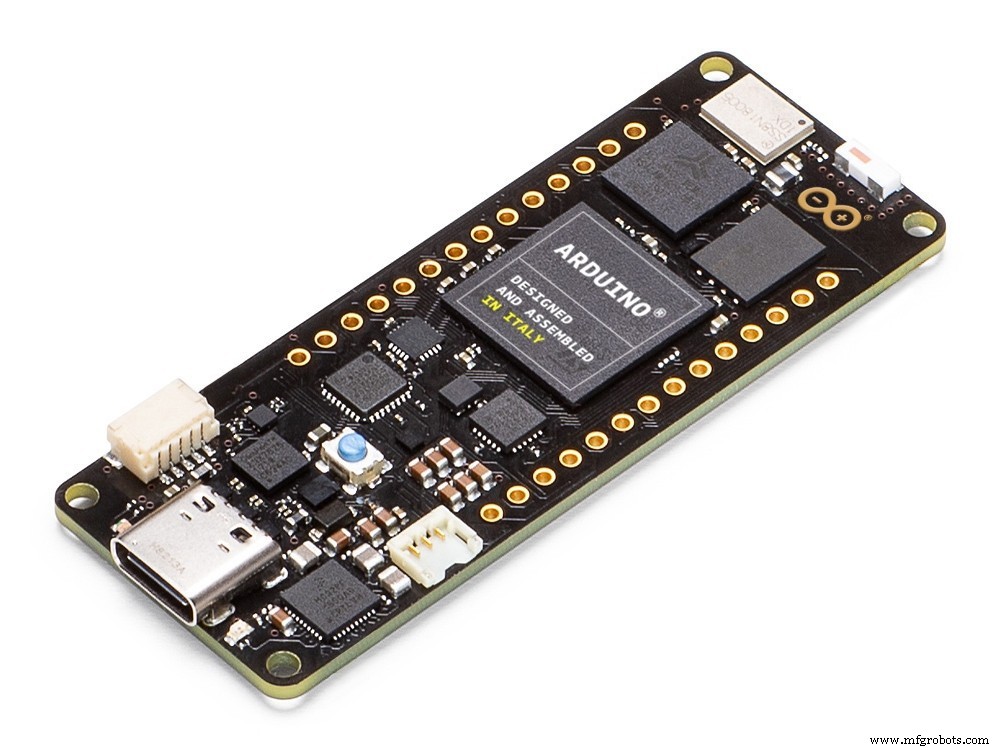
Figure 2: Arduino Portenta
How did you come up with the particular Arduino shield? Its shape could be replaced by the MKR.
The answer is simple: a misplacement of connectors during manufacturing prevented the board from fitting neatly on breadboards, yet we already had a large batch of units. Rather than scrapping them, we focused on reducing part count and complexity—an approach that set the Uno apart from its contemporaries. The concept of stackable shields emerged from the desire to keep the base board lean while enabling rapid expansion. This design philosophy sparked an ecosystem of hundreds of manufacturers producing complementary modules. The name “Shield” was a playful nod by David Cuartielles, who likened the modules to protective gear for the “king” of Italian electronics.
When the Uno’s pin count proved limiting, we introduced an additional connector on the Due/Mega form factors—a solution that remains widespread today. As users demanded smaller footprints, we released the MKR family, which integrates built‑in communication modules into a compact package. The Portenta extends this evolution by adding two high‑density connectors that support up to 160 pins, facilitating a wide array of industrial interfaces.
What are the programs for Arduino IDE?
We remain committed to enhancing the classic Java‑based Arduino IDE, while also launching the more advanced Arduino Pro IDE. Responding to user demand for features like code auto‑completion and debugging, the Pro IDE is now available for alpha testing on the arduino.cc website. Additionally, we’ve built a command‑line interface that implements all IDE backend functions, allowing developers to use their preferred editor while still generating official firmware binaries.
The cloud‑based IDE (create.arduino.cc) has proven popular, boasting more than 1.3 million users to date. It provides an accessible, browser‑based environment for rapid prototyping and collaboration.
Embedded
- How 3D Printing Revolutionized Manufacturing: A Journey Through Its Evolution
- Build a Bluetooth‑controlled Arduino Spybot
- FlickMote: Gesture‑Controlled IR Remote for Smart Home
- DIY Arduino TV B-Gone: Universal Remote for All TVs
- Build a Custom LED Master Clock with Alarm – Viewable from 12 Meters
- Find Me: Smart Item Locator with Arduino and Bluetooth
- Optimized Power Solutions for Arduino Projects
- Arduino Tic Tac Toe with MAX7219 LED Matrix and Cardboard Enclosure
- Build a Smart Arduino Quadruped Robot: Step‑by‑Step Guide
- Build a Custom Arduino Joystick Steering Wheel for Gaming