



Lynx MOSA.ic Enhances Management of Hybrid IT/OT Mission-Critical Systems
Lynx Software Technologies has expanded its LYNX MOSA.ic framework, giving operators of critical IT and OT infrastructure the flexibility to deploy, monitor, and manage multiple interconnected mission‑critical systems with unprecedented ease.
The new management model supports IT and OT operators across on‑premise, cloud, and hybrid environments. Whether overseeing factories, energy grids, aircraft, drones, or autonomous vehicles, the framework blends the best of embedded and edge technologies—providing safety, security, and real‑time capabilities within familiar edge‑management paradigms.
Operators can now run cloud‑managed workloads, real‑time controls, and local analytics on a single node, creating “systems of systems” that enforce strict air‑gap and data‑protection boundaries on each device. This isolation separates IT from OT and cloud services, allowing diverse assets to coexist without compromising existing infrastructure.

Endpoints handling sensitive or classified data can be equipped with isolated security functions and protected workloads, while complex tasks such as conditional boot‑up are fully automated.
Recent research by Lynx shows that nearly one in five (19%) U.S. executives believe their companies have become less secure since the pandemic, and fewer than 69% feel prepared to defend against external threats.
“With these new LYNX MOSA.ic capabilities, mission‑critical operators gain complete control and flexibility,” said Pavan Singh, Vice President of Product Management at Lynx. “Every heterogeneous device or compute node—whether in a pipeline, factory, or refinery—can be treated as an isolated cluster of OT, IT, and security workloads, managed from diverse infrastructure options that eliminate vendor lock‑in.”
LYNX MOSA.ic acts as a unifying framework that merges Lynx’s technologies with a growing ecosystem of partner and open‑source tools. The latest updates enhance capabilities across industries, including LYNX MOSA.ic for avionics, LYNX MOSA.ic for industrial environments, and LynxSafe for enterprise IT.
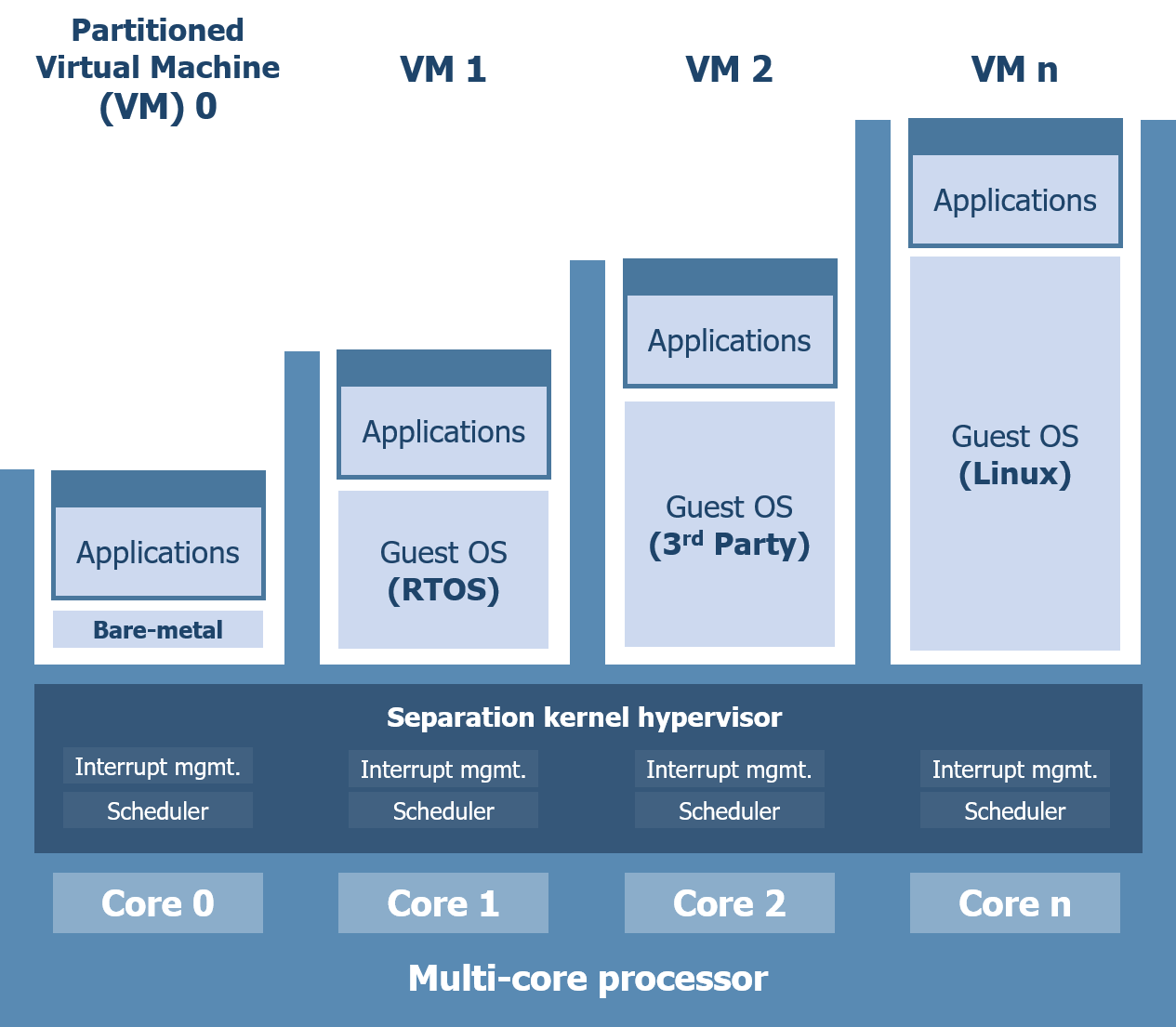
The LynxSecure separation‑kernel hypervisor—an efficient platform that allocates hardware resources via an intuitive information‑flow modeling language—forms the foundation of the LYNX MOSA.ic framework. It meets real‑time, high‑assurance computing standards used in military and industrial settings, such as NIST, NSA Common Criteria, and NERC CIP.
Two new components have been added to the management libraries that run atop LynxSecure:
- Lynx Node Manager (LNM): Deployed on the device (e.g., gateway, server blade, or drone), LNM offers management APIs, a Lynx messaging service, and elastic compute. It enables a control plane to monitor, update, and execute operational tasks securely, preserving availability and performance.
- Lynx Management Center (LMC): Operated in the cloud or on‑premise, LMC collaborates with LNM to give operators a holistic “systems‑of‑systems” view. It can be integrated with cloud‑based frameworks such as Azure Device Twin, and serves as a starting point for organizations building custom management controllers.
“Virtualization and containerization are accelerating at the mission‑critical edge,” said Chris Rommel, EVP at VDC Research. “Providing manageability alongside workload isolation, security, and hardware allocation will build operator confidence and accelerate digital transformation.”
The enhancements broaden applicability across multiple sectors:
- Avionics & Defense: Coordinate diverse systems to deliver advanced battlefield capabilities.
- Enterprise IT: Offer tamper‑proof, immutable laptops and edge servers that receive continuous security patching.
- Cloud Providers: Deploy cloud services without hardware concerns or legacy system disruptions.
- Hardware Vendors: Open avenues for strategic partnerships by providing a comprehensive software, hardware, and digital‑transformation offering.
Additional benefits of the new LYNX MOSA.ic include:
- Lightweight: The same platform runs on heterogeneous hardware—Arm, Intel, and beyond.
- Open: Multiple integration paths are available, from hardware vendors using their own packaging to Azure customers leveraging the integrated Device Twin, or system integrators customizing services for clients.
Embedded
- 7 Key Advantages of Computerized Maintenance Management Systems (CMMS)
- Ensuring Reliable Timing in Safety‑Critical Multicore Embedded Systems
- Advantech & Lynx Deliver Mission‑Critical Edge Starter Kits for Secure IT‑OT Convergence
- Cervoz Military‑Grade SSD: Rugged Storage for Mission‑Critical Defense and Aerospace Applications
- Axiomtek CAPA310: 3.5‑inch Embedded SBC for Mission‑Critical Applications
- Understanding Battery Management Systems (BMS): Core Concepts and Key Components
- Meet the IT/OT Hybrid Professional: Bridging Data Centers and Industrial Automation
- Secure IT/OT Interconnection: Bridging Cyber Threats in Industry 4.0
- Four Essential Benefits of Inventory Management Systems
- Digital Tool Management: Unified, Customer‑Centric Solutions for Modern Manufacturing