



Cut Factory Valve Monitoring Costs by 90% with Wireless IoT Sensors
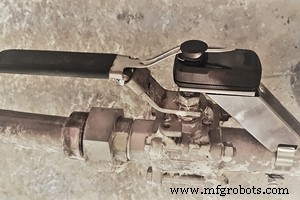
In sectors ranging from chemical processing to wastewater treatment, thousands of hand‑operated valves form the backbone of plant operations. Traditional retrofit monitoring solutions have been effective, yet they remain costly, slow to deploy, and fragmented across different valve types.
Industry‑grade wireless sensors and Industrial IoT (IIoT) technologies now offer a game‑changing alternative, reducing retrofit investment by up to 90%. This article explores how the solution delivered by Haltian’s Smart Factory division transforms valve monitoring.
Interviewed by global IIoT specialist Pertti Kujala, director of Haltian’s Smart Factory business, this piece explains the mechanics, benefits, and economic impact of wireless valve monitoring.
What is Remote Valve Monitoring?
Process plants rely on extensive pipeline networks controlled by manual valves. Remote monitoring captures valve position in real time, feeding data into SCADA, mobile devices, and analytics platforms. As Industry 4.0 accelerates, this capability is essential for improving efficiency, reducing downtime, and enhancing safety.
Key Benefits for Factories and Plants
Remote valve monitoring delivers a suite of advantages, including:
- Significant cost savings across CAPEX and OPEX
- Rapid process recovery following maintenance
- Enhanced plant safety and accident prevention
- Reduced errors and quality deviations
- Insightful analytics that help avoid unplanned downtime
With a CAGR of 4.5%, the remote monitoring market is projected to reach $27 billion (€24.5 billion) globally by 2023.
Challenges of Traditional Retro‑Fitting
Deploying monitoring on thousands of valves can be prohibitive due to:
- Vendor‑specific sensors that increase hardware costs and procurement time
- Multiple industrial communication protocols requiring costly software customisation
- Heavy, wired installations that add cable costs and extend deployment to months or years
- Over‑engineered designs that inflate prices without matching the actual field conditions
These obstacles slow market adoption, despite the clear economic upside.
Wireless Angle Sensor – A Game‑Changing Solution
Haltian, in partnership with a leading process‑industry client, has introduced an industry‑grade wireless angle sensor. By eliminating cabling and simplifying integration, it cuts retrofit costs by up to 90% compared to conventional systems.
Sensor Features and Operation

The sensor attaches directly to a valve lever with a simple clip and to the pipe via a clamp. Inside, magnetic and mechanical sensors detect position with one‑degree accuracy. Once powered, the device automatically joins a Wirepas Mesh network, routing data hop‑by‑hop to the central control system without the need for base stations or wired infrastructure.
Key attributes include:
- No cabling – rapid, low‑cost installation
- Compatibility with ball, butterfly, and other rotary valves from any manufacturer
- Plug‑and‑play API integration, eliminating protocol customisation
- Battery‑powered operation lasting several years
- Automatic optimisation of radio power and frequency band
Business Impact
Over a multi‑year horizon, the wireless angle sensor delivers:
- Fast, cost‑effective deployment across thousands of valves
- Reduced hardware and procurement complexity
- Immediate visibility of valve positions, enabling quicker process optimisation
- Improved safety and reduced environmental risk by preventing accidental releases
- Digital capture of operator knowledge for long‑term process improvement
- Comprehensive data for end‑to‑end analytics and predictive maintenance
Conclusion
Remote valve monitoring is a critical lever for modern plants, yet traditional retro‑fitting has kept it out of reach. The new wireless angle sensor from Haltian offers a robust, scalable, and remarkably affordable path forward—potentially slashing investment by up to 90% while delivering measurable safety, efficiency, and cost benefits.
Author: Pertti Kujala, Director of Smart Factory Business, Haltian
About the author
Pertti Kujala serves as Director of Thingsee Smart Factory solutions at Haltian. Joining the company in 2012, he has led multiple IoT initiatives. Prior to Haltian, Pertti held roles at Nokia (2003) and Vertu (2007‑2009) in the UK, focusing on mechanical design and concept development. He holds an M.Sc. in Mechanical Engineering from the University of Oulu, Finland, and is passionate about architecture.
Haltian has delivered world‑class design and engineering services since 2012. Its Thingsee IoT platform accelerates large‑scale deployments. In 2018, Gartner recognised Haltian as a Cool Vendor for IoT services, and in 2019 it became an AWS Advanced Technology Partner. Notable products include the Oura health ring and the Specim IQ hyperspectral imaging device, which earned a Red Dot Design Award in 2018. For more information, visit Haltian or click here.
Internet of Things Technology
- Redpine Signals Unveils RS9116N‑DBT: An All‑in‑One IoT SoC with Dual‑Band Wi‑Fi, Bluetooth 5, Thread, and Built‑In AI Engine
- IoT Sensors Revolutionize Air Pollution Monitoring and Public Health
- Bridging the Gap: How ERP and MES Systems Adapt to the Industrial IoT Revolution
- Choosing the Right IoT Platform: Expert Guidance for a Saturated Market
- Maximize IoT ROI with Advanced Performance Monitoring
- Cut Valve Monitoring Costs by 90% Using Wireless IoT Sensors
- Smart IoT Propane Tank Level Monitoring – Reliable Wireless Solution
- Revolutionize Fleet Management with IoT-Enabled Monitoring
- Revolutionize Dairy Management with IoT-Enabled Milk Level Monitoring
- How Energy Monitoring Can Transform Your Business Profits