



Choosing the Right IoT Platform: Expert Guidance for a Saturated Market
In the IoT landscape, new platforms launch almost daily, each claiming to bridge devices and applications seamlessly. Vendors routinely assert that their solutions outperform competitors, but how can buyers objectively assess the flood of options?
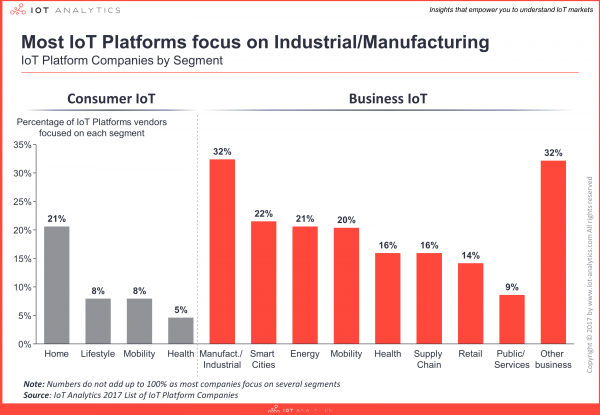
According to IoT Analytics’ Global IoT Platform Companies List, the number of active platforms has risen to 450 worldwide—a 25% increase from last year. Among the 13 sectors examined, the top verticals are Industrial/Manufacturing (32%), Smart City (21%) and Smart Home (21%), indicating a shift from the earlier Smart‑Home dominance.
Making Sense of a Fragmented Landscape
To help enterprises cut through the noise, IoT Network has launched IoT Pilot, a free, analyst‑driven assessment tool developed in partnership with research firm Beecham Research. IoT Pilot evaluates platforms against 25 independent criteria—including market experience, partner ecosystem, system‑integrator usability, advanced application development, security posture, and edge analytics capabilities.
Users input their specific needs—such as device purpose (monitoring, predictive analytics, autonomous operation), data storage preference (on‑premises, cloud, hybrid), and integration requirements with existing enterprise systems—and the tool generates a curated list of suitable platforms with key strengths highlighted.
No Single Market Leader
Unlike the mobile world, where iOS and Android set the standard, the IoT market currently lacks a dominant platform. Vendors tend to specialize by industry, region, or device function, differentiating on security levels, market maturity, or customer support. This fragmentation makes objective evaluation essential.
Key Challenges in Platform Selection
Security remains a top concern. Developers often face a maze of guidelines—unsure which standards to adopt or whom to trust. Edge analytics is another evolving frontier: determining how much intelligence should reside on the device versus the cloud is a critical design decision.
Data privacy and ownership are also pressing issues. While the European General Data Protection Regulation (GDPR) touches IoT indirectly, it offers only limited guidance. Industry‑wide dialogue is needed to clarify responsibilities and ethical considerations around device data.
Why Independent Analysis Matters
With more than 30 companies from the 2016 list no longer operating—either closed or acquired—predicting which platforms will thrive in the next decade is vital. Independent tools like IoT Pilot provide clarity, helping businesses avoid costly missteps and identify solutions that align with their strategic goals.
As connected devices proliferate, the demand for transparent, unbiased platform assessments will grow. Future research and pilots from multiple independent sources will be essential to keep pace with the evolving IoT ecosystem.
Internet of Things Technology
- Assessing Your Industrial IoT Readiness: Are You Ready for Industry 4.0 Success?
- How IoT Drives Climate Action: Turning Connectivity into Carbon Savings
- ZTEsoft 6th Annual Summit in Nice: Driving Transformation in Telecom and IoT
- Harnessing IoT for HVAC Big Data: Optimizing Energy, Comfort, and Air Quality – Part 2
- Cloud‑First SD‑WAN Simplifies IoT Adoption
- How IoT Enhances Accessibility for People with Disabilities
- How IoT Empowers Children with ASD to Learn, Play, and Thrive
- Harnessing IoT to Protect the Planet: Proven Success Stories
- IoT Market Remains Fragmented, Yet Offers Hundreds of Choices for Businesses
- Leveraging Industrial IoT for Oil & Gas Fleet Monitoring: Boost Efficiency and Cut Downtime