



5 Common Metal 3D Printing Issues—and How to Resolve Them
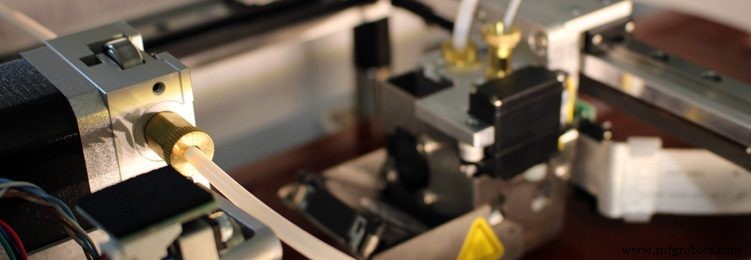
Metal 3D printing has evolved rapidly, enabling the creation of lightweight, highly complex components for aerospace, automotive, and medical industries. While the technology offers unprecedented design freedom, it also presents a set of recurring challenges that can compromise part performance. In this guide, we break down the five most frequent problems and provide proven strategies to overcome them.
Metal 3D Printing – An Overview
Metal additive manufacturing (AM) encompasses several distinct processes, each suited to different materials and design requirements. The primary categories are:
- Powder Bed Fusion (SLM, EBM) – A laser or electron beam selectively melts a thin layer of metal powder spread across a build plate.
- Direct Energy Deposition (DED) – Metal feedstock (powder or wire) is melted on‑the‑fly by a laser or electron beam and deposited layer by layer.
- Metal Binder Jetting – A liquid binder fuses powder layers, after which the part is typically infiltrated with a secondary metal to increase density.
Each technique offers unique strengths, but common failure modes arise across the spectrum. Addressing these issues is essential for delivering parts that meet industrial standards for strength, fatigue life, and surface finish.
5 Common Problems to Watch Out For
1. Porosity
Porosity manifests as microscopic voids that reduce density and weaken mechanical properties. It can result from sub‑optimal powder quality or insufficient/over‑excessive energy input during printing.
Solutions:
- Source powder from reputable suppliers and verify particle size, shape, and contamination levels.
- Fine‑tune laser power, scan speed, and hatch spacing to ensure complete fusion.
- Apply post‑processing such as hot isostatic pressing (HIP) or infiltration to close residual pores.
2. Density
High density (typically >98% for SLM/EBM) is critical for components subjected to cyclic loading. Lower density increases the likelihood of crack initiation.
Improvement tactics:
- Use spherical powders that pack tightly and reduce inter‑particle gaps.
- Optimize build parameters (particle size distribution, layer thickness, laser power) based on material‑specific guidelines.
- Validate part density with micro‑CT or X‑ray computed tomography before deployment.
3. Residual Stress
Rapid heating and cooling create thermal gradients that generate residual stress, often concentrated near the build plate interface. Excessive stress can cause distortion or premature failure.
Mitigation strategies:
- Employ predictive thermal modelling to select optimal scan strategies and layer thickness.
- Use support structures and optimize part orientation to distribute stress.
- Preheat the build platform or powder bed to reduce temperature spikes (more effective for EBM).
- Apply “island” or “broken‑scan” patterns to limit continuous scan lengths.
4. Cracking and Warping
These are the most visible consequences of residual stress. Cracking can occur when the metal fails to fully melt or cools unevenly, while warping results from differential contraction.
Preventive measures:
- Preheat the build platform to create a more uniform temperature field.
- Design adequate support structures, especially around thin walls and overhangs.
- Post‑process with annealing or thermal treatments to relieve built‑in stresses.
5. Post‑Processing and Surface Roughness
After printing, metal parts typically require support removal, powder cleaning, and surface finishing. Common obstacles include:
- Difficulty removing supports from tight geometries, which may necessitate secondary machining.
- Surface roughness caused by layer‑by‑layer deposition and incomplete melting.
Approaches to improve finish:
- Print with finer layers to reduce inherent roughness, balancing build time.
- Adjust laser power to ensure complete fusion and a smoother surface.
- Apply post‑processing steps such as grinding, machining, or polishing to achieve the required tolerance.
Conclusion
Understanding and proactively managing these five challenges is the key to unlocking the full potential of metal 3D printing. As the technology matures, industry adoption will continue to grow, bringing high‑performance metal components to a broader range of applications.
3D printing
- Top 3D Printing Workflow Bottlenecks & Proven Fixes
- Beyond Prototypes: Real‑World Innovations Made with 3D Printing
- Metal 3D Printing: Revolutionizing Production with Speed, Cost Savings, and Design Freedom
- Avoid Costly Mistakes: 7 Key Pick-and-Pack Errors and Proven Fixes
- Quick & Reliable Fixes for Common Warehouse Door Issues
- CNC Machine Tools: 10 Common Problems & Expert Fixes – A Practical Checklist
- 9 Welding Issues You’ll Encounter – Expert Fixes & Prevention Tips
- Top Rotary Valve Issues and Proven Fixes for Reliable Performance
- Common Lithium‑Ion Battery Issues & Practical Fixes
- Common 3D Printing Issues & Expert Solutions