



Industrial Retrofit Revolution: How Smart Upgrades Drive Efficiency & Profitability
In 2008, ArcelorMittal confronted a pressing financial dilemma while planning a major upgrade of its 1940s‑era iron ore complex in Nova Scotia.
The mining and metals conglomerate aimed to lift annual output from 16 million tons to 26‑30 million tons. A sudden plunge in iron prices, coupled with the reality that the port—carved directly from bedrock—could not be easily retrofitted for larger vessels, put severe budgetary pressure on the project, notes IoT analyst Michael Kanellos of OSIsoft.
Undeterred, ArcelorMittal adopted what could be called an “Extreme Makeover: The Industrial Edition.” Rather than pursuing capital‑intensive construction, the company focused on synchronising mining, grinding and logistics to extract maximum efficiency from existing assets.

By 2015, the Mines Canada facility was producing an extra 10 million tons annually—an additional $120 million (€110 million) in revenue. One year alone, output rose from 23 million to 26 million tons through process fine‑tuning, delivering a 13 % increase that would have cost up to $75 million (€68.8 million) if achieved via new capital, according to director of systems Michel Plorde.
ArcelorMittal’s success is echoed across industry. Paper mills such as Verso and Fortress are transforming 1960s‑era plants into high‑value packaging hubs, while pasta producers, chemical reactors and other legacy equipment receive solid‑state drives and Wi‑Fi modules to breathe new life.
“We need to make the existing grid more efficient to expand capacity,” said Richard Glick, commissioner for the Federal Energy Regulatory Commission, at the ACORE Renewable Energy Grid Forum. “There’s strong congressional interest in incorporating grid modernization into an infrastructure bill.”
The retrofit trend is driven by four key factors:
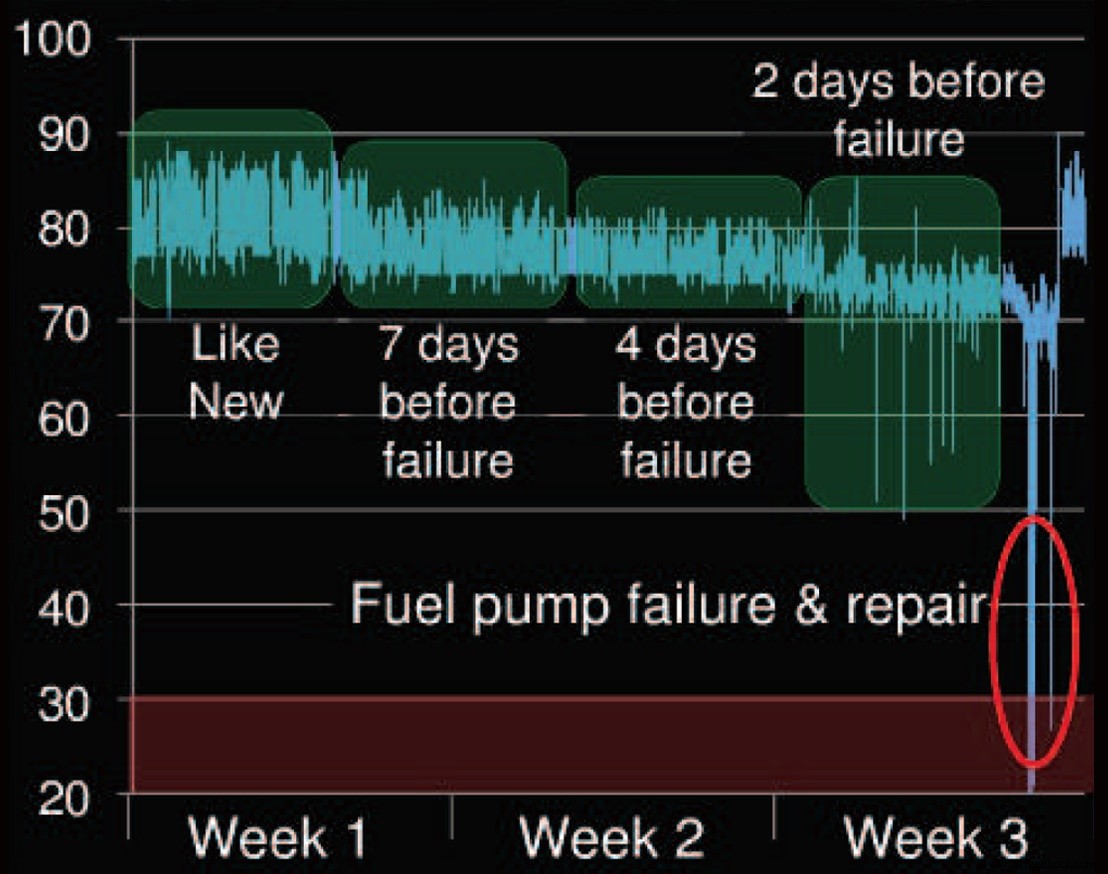
1. Technological Advancement – Moore’s Law keeps processors, sensors and other hardware rapidly decreasing in price while boosting performance. This trend underpins improved uptime and predictive maintenance. For instance, a pitch‑bearing that aligns wind‑turbine blades can trigger costly failures costing $150,000 (€137,593) or more when they occur. By monitoring performance in real time, Sempra Energy estimates a 90 % reduction in downtime and repair costs, while Ørsted has cut offshore turbine service trips by half, saving €20 million annually.
2. Customer Savings & Manufacturer Revenue – Retrofitting saves operators money and creates new revenue streams for equipment makers. Caterpillar’s CAT Connect services, for example, saved a shipping line $1.5 million (€1.3 million) per vessel per year by transmitting fuel‑consumption data and operational recommendations, boosting both customer and dealer earnings.
3. Financial Prudence – Investors prefer rapid return on investment. Software upgrades to legacy assets often deliver faster ROI than purchasing entirely new equipment, aligning with conservative capital‑allocation strategies.
4. Proven Longevity – Older assets still perform admirably. The average transformer on the U.S. grid is now over 40 years old, with thousands valued between $2 million (€1.8 million) and $7 million (€6.4 million). Finding a 40‑year‑old data‑centre facility—or even a component—is exceedingly rare.

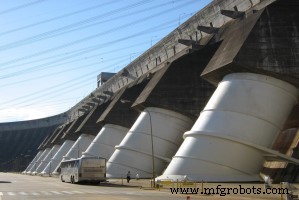
Itaipu, the world’s largest renewable‑energy complex, generated 103 terawatts in 2016 with a hydroelectric dam built several decades ago. To extend its lifespan, the plant invested in sensor systems that detect mechanical and structural issues early and optimise output.
Smaller‑scale successes abound. J.D. Irving chose not to replace a 1970s saw that cut 60‑foot spools into six‑inch rolls of toilet paper, but instead installed a wireless gateway and related technology to gather data from the legacy system, achieving a quick, inexpensive upgrade.
While retrofits are not a panacea—new equipment often delivers higher energy efficiency—the strategy provides a practical entry point for many operators.
“When in doubt, don’t throw it out,” I live by this maxim.
The author is Michael Kanellos, IoT analyst, OSIsoft
Internet of Things Technology
- How Industrial Maintenance Has Evolved: From Reactive to Predictive
- The Fourth Industrial Revolution: How Industry 4.0 Is Reshaping Manufacturing
- IoT and Industry 4.0: How the Fourth Industrial Revolution Is Shaping Manufacturing
- Elevating Manufacturing Excellence with Industry 4.0: The Rise of Quality 4.0
- How to Cut Failure Rates in Industrial IoT Projects
- Why Now Is the Best Time to Be an American Manufacturer
- 4 Expert Tips for Selecting the Right Industrial Equipment
- From Steam to Smart Factories: The Evolution of Industrial Manufacturing 1.0 to 4.0
- Understanding the Fourth Industrial Revolution: Transforming Modern Manufacturing
- The Fourth Industrial Revolution: Transforming Industry with Smart Automation