



LoRaWAN: The Immediate Bridge to 5G‑Ready IoT Connectivity

Sergiy Seletskyi, IoT practice leader and senior solution architect at Intellias, explains how LoRaWAN can bridge the gap until 5G is fully deployed.
According to Gartner, 5.8 billion enterprise and automotive IoT endpoints were projected for 2020—an increase of 21 % from 2019. The surge will soon strain existing telecom networks.
Industry analysts view 5G as the future standard for IoT, promising real‑time connectivity and low latency. However, Ericsson estimates that by 2025 only two‑thirds of the global population will have access to 5G.
While 5G garners headlines, many overlook the mature low‑power wide‑area network (LPWAN) solution—LoRaWAN—that has been operational for five years. In many scenarios, LoRaWAN can serve as a stop‑gap until 5G reaches global coverage.
Why 5G is the focus—and its hurdles
5G’s appeal lies in its exceptional speed and signal reliability, potentially delivering data at 50 % faster rates and larger payloads. This capability could transform sectors from healthcare to automotive.
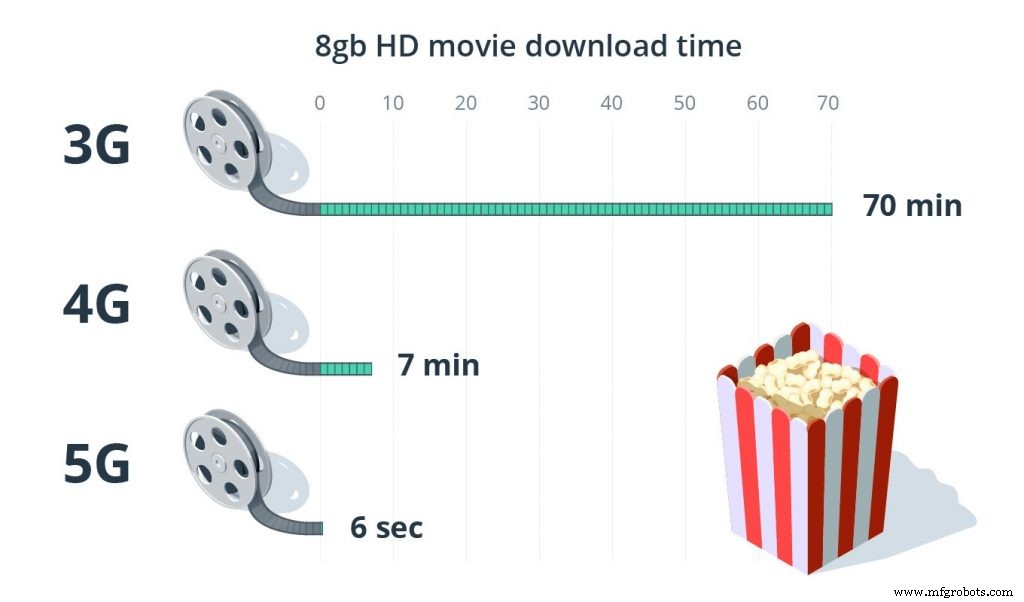
In healthcare, 5G will enable robotic surgery with high‑definition video and instant device response. Emergency services could deploy city cameras and drones that report incidents to control centers within seconds. Remote industrial operations—especially in challenging terrains—will benefit from real‑time monitoring. Autonomous vehicles rely on 5G to communicate with infrastructure and adapt to traffic conditions.
5G deployment challenges
Building a 5G network requires new antennas, fiber backhaul, and additional base stations—far beyond what 4G infrastructure offers. The European Commission estimates that deploying 5G across all European cities will cost around €500 billion.
Consumer enthusiasm is low. A recent GSMA survey found that only 30 % of Americans and 11–23 % of Europeans would immediately upgrade to a 5G phone when available.
LoRaWAN: A practical interim solution
LoRa/LoRaWAN can perform many of the same tasks as 5G, albeit at lower speeds—between 0.3 kbps and 27 kbps. This makes it unsuitable for high‑bandwidth media but ideal for lightweight telemetry such as temperature, humidity, vibration, and lighting data.
LoRa was originally engineered for industrial IoT sensors, transmitting short payloads (≈240 bytes) without an IP stack. The technology operates on LPWAN principles, delivering long‑range connectivity with minimal power consumption.
LPWAN devices can connect over many kilometers, even when separated by buildings, and a single battery can last up to ten years—compared to a few hours for 5G‑enabled devices.
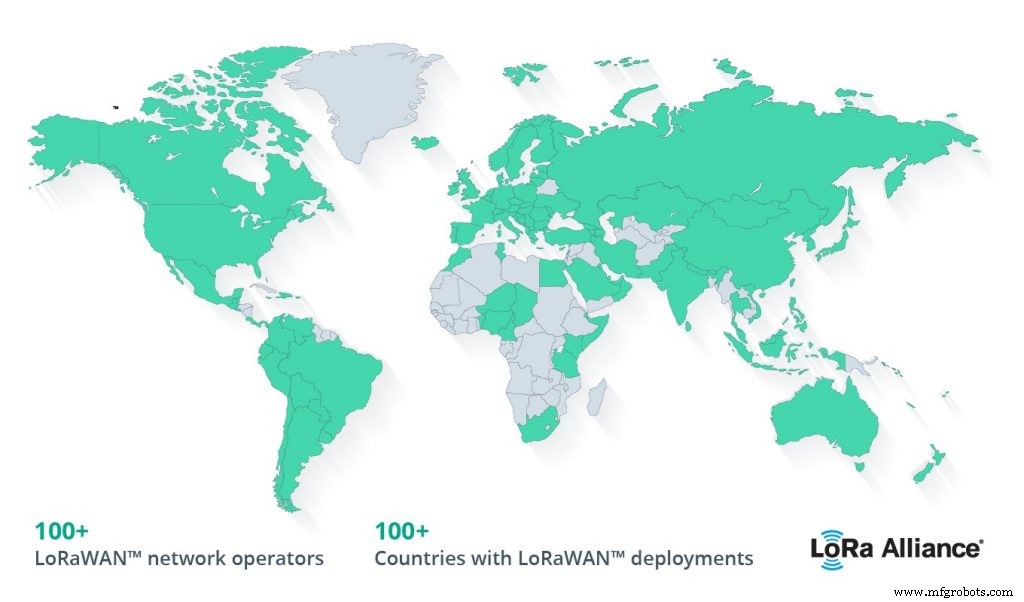
LoRaWAN global coverage (Dec 2018)
Unlike 5G, LPWAN does not demand extensive infrastructure. LoRa sensors range from $0.20 (€0.16) to $0.50 (€0.41), whereas 5G sensors start at $30 (€24.60). A typical LoRa base station costs around $40 (€32.80) and can support thousands of devices within a 15 km radius. In contrast, a 5G base station costs $60,000 (€49,199) with a 2 km range and roughly 1,000 connections.
Since its 2015 inception, the LoRa Alliance—a non‑profit consortium—has grown to over 500 members. Key milestones:
- LoRaWAN deployment in 100+ countries in 2019, up 60 % from 2018.
- Approximately 80 million devices connected globally.
- About 75 % of IoT applications rely on LPWAN; only 25 % need the high throughput and low latency that cellular technologies provide.
Smart meter non‑cellular LPWA connections by type
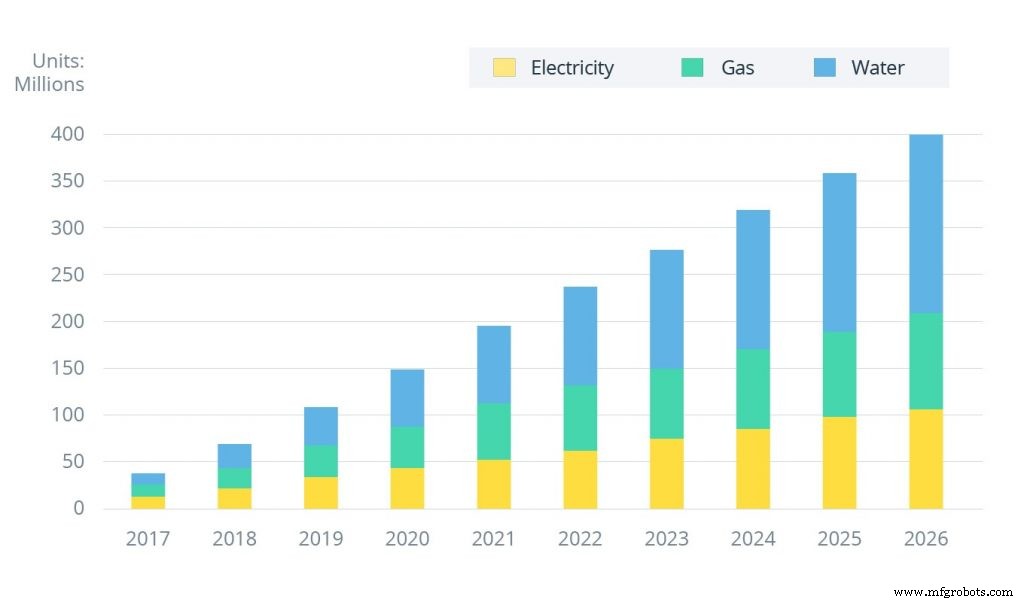
Source: ABI Research
Real‑world LoRa deployments
LoRa is applied across sectors—from vending machine management to hospital infrastructure, agriculture, and smart cities. In 2016, Samsung, Semtech, and SK Telecom launched Korea’s first nationwide LoRaWAN. Seoul now plans the S‑Net—up to 1,000 gateways by 2022—enabling smart parking, emergency‑alert street lights, dementia monitoring, and more.
The global LoRa vision
British satellite provider Lacuna Space aims to blanket the globe with LoRaWAN. In July 2020, its CTO confirmed reception of LoRaWAN messages from a vessel in the middle of the Atlantic.
A worldwide LoRa network would encourage developers to create more LoRa‑driven applications, securing its future.
For IoT enterprises, adopting LoRa/LoRaWAN now offers a cost‑effective, low‑power path until 5G is widespread—and may remain a preferred option even thereafter.
What about NB‑IoT?
Some LoRa devices also connect via Narrowband IoT (NB‑IoT), a cellular LPWAN standard developed alongside 4G/5G protocols. NB‑IoT:
- Complements LoRaWAN.
- Runs on existing 4G networks.
- Will persist alongside 5G for the foreseeable future.
Compared to LoRa, NB‑IoT offers higher bandwidth but requires more power and relies on hop‑by‑hop encryption, which is less secure than LoRaWAN’s end‑to‑end scheme. Thus, LoRa remains the superior interim replacement for 5G.
Conclusion
This overview highlights 5G and LoRa as complementary technologies. While 5G will eventually dominate high‑throughput, low‑latency use cases, LoRa’s affordability, long battery life, and extensive coverage make it a valuable bridge—just as cars didn’t eliminate bicycles or trains.
Author: Sergiy Seletsky, IoT practice leader and senior solution architect at Intellias.
About the author
Sergiy Seletsky is an IoT practice leader and senior solution architect at Intellias, guiding companies in selecting the right IoT stack to scale and future‑proof their operations. A strategic thinker with deep industry knowledge across diverse innovation domains.
Internet of Things Technology
- 4 Reasons Retailers Are Phasing Out Barcodes
- 5 Key Wireless Standards Powering IoT Connectivity
- Choosing the Right Connectivity Solution for IoT Networks: 5G, Wi‑Fi, Bluetooth, and LPWAN Options
- How Health Insurers Can Embrace IoT in Three Strategic Steps
- IR Sensor 2.0: Driving the Next Wave of IoT Innovation
- Internet of Things: A Catalyst for Business Outcomes, Not a Standalone Market
- Blockchain: A Powerful Partner for IoT Innovation
- Senet & SimplyCity Expand LoRaWAN IoT for Smart Farms, Industry, and Urban Sustainability
- Why IoT Is Essential for Asset Management: Top 3 Benefits
- IoT Technology Revolutionizes the Energy Sector