



IR Sensor 2.0: Driving the Next Wave of IoT Innovation

IR Sensor 2.0 is thinner, more flexible, and significantly cheaper to produce than earlier models, unlocking broader IoT applications.
The rapid evolution of IoT and connected services is astonishing. Just a decade or so ago, few could have imagined the pervasive connectivity that now spans consumer devices, industrial systems, and everyday infrastructure, says Robert Ekström, CEO of JonDeTech.
IoT has become a ubiquitous term on gadgets and industrial products that touch our daily lives. The trajectory is clear: any device capable of connectivity will eventually be connected.
Sensors are the linchpin of this ecosystem, translating physical stimuli into digital data that can be stored, accessed, and analyzed—particularly when the sensors are small and cost‑effective.
Small, cheap and flexible sensors can be a driver of IoT
McKinsey Consulting identifies compact, affordable sensors as one of the most critical catalysts for IoT growth. Why? Because lower cost and smaller form factors enable mass deployment across diverse devices, from smartphones to industrial controls.
While temperature sensors have long been embedded in mobile phones, traditional contact‑based units struggled with lag and inaccuracies when removed from the user’s pocket. IR Sensor 2.0, built on nanotechnology, offers contactless temperature measurement, delivering instant, accurate readings in a compact package.
Improved thermopile sensor key to IoT improvement
At the heart of IR Sensor 2.0 lies an advanced thermopile—a series of thermocouples that convert infrared radiation into electrical signals. The new vertical, plastic‑matrix design eliminates fragile ceramics or silicon, allowing flexible, robust manufacturing at a fraction of the cost.
These sensors can detect absolute temperature, relative heat flow, and presence, making them ideal for flame detection, motion sensing, heat‑sensitive process control, and plumbing diagnostics.
The vertical structure also provides a rapid time constant, enabling real‑time monitoring of heat flux changes—a feature critical for smart building and energy‑management applications.
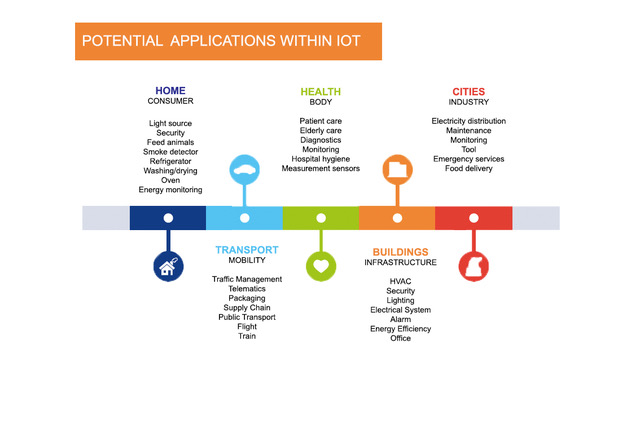
The perfect sensor for the expanding IoT world
Production estimates show that IR Sensor 2.0 units can cost as little as one‑tenth of conventional sensors when manufactured at scale. Its versatility opens doors across multiple sectors:
- Healthcare: Low‑cost, Wi‑Fi/Bluetooth patches can continuously monitor core body temperature, providing real‑time data to caregivers and clinicians.
- Facility management: Smart windows equipped with the sensor adjust light and heat transfer to maintain consistent indoor climates, reducing energy spikes.
- Building efficiency: Standard windows can relay radiative heat data to HVAC systems, enabling proactive adjustments and lower energy consumption.
- Smart offices and public spaces: Presence detection turns devices on only when occupied, cutting power usage and extending battery life.
- Biometric security: Triggering fingerprint or facial scanners only upon detection reduces idle energy drain in security systems.

The IoT landscape is expanding rapidly. With IR Sensor 2.0, developers and manufacturers can unlock unprecedented opportunities, driving smarter, more connected solutions across industries.
Author: Robert Ekström, CEO of JonDeTech
About the author
Robert Ekström is the CEO of Swedish IR sensor producer JonDeTech. With two decades of leadership in the global IT sector—including roles as head of EMC in Sweden and senior positions at Servicenow, Fujitsu, Dell, and Xerox—he spearheaded JonDeTech’s public listing on Nasdaq First North Stockholm in 2018.
Internet of Things Technology
- How 5G Will Transform Industrial IoT: Boosting Automation, Reliability, and Connectivity
- Raspberry Pi & HDC2010: A Complete I2C Temperature & Humidity Sensor Setup Guide
- How IoT and Robotics are Transforming Healthcare: Opportunities, Risks, and Real-World Impact
- How AI Enhances IoT Operations: From Fast, Dumb Responses to Intelligent, Automated Management
- LoRaWAN: The Immediate Bridge to 5G‑Ready IoT Connectivity
- Harnessing IoT to Protect the Planet: Proven Success Stories
- How IoT Will Revolutionize Cold Chain Logistics
- eSIMs Revolutionizing IoT: Faster, Safer, and Smarter Connectivity
- Revolutionizing Mobile Healthcare with Blockchain: Enhanced Data Ownership & Security
- The Future of Cruising: How IoT Is Transforming the Passenger Experience