



Data: The New Oil – How Refineries Turn Raw Information into Business Value
For enterprise teams, data is everywhere—ready to unlock insights that drive business goals forward. We spoke with two of Nokia’s leading IoT experts, Marc Jadoul, Director of IoT Market Development, and Denny Lee, Head of Analytics Strategy, about turning data into the “oil” that powers growth.
ReadWrite: The phrase “data is the new oil” has surfaced at conferences and in discussions, but what does it really mean for businesses and their clients?
Marc Jadoul: From a value perspective, think of data like crude oil. Just as a barrel of crude is refined into high‑value jet fuel, raw data must undergo a similar transformation to unlock its full worth. The more refined the data, the more sophisticated the applications it can power.
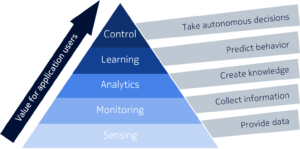
Picture a pyramid: the base represents raw sensor data. The next tier involves monitoring and discovery—identifying anomalies or trends. This analysis yields critical information that supports data‑driven decision making (DDDM). If you add a learning layer through cognitive analytics, the data not only informs decisions but also predicts future behavior. At the apex, fully refined data becomes knowledge that enables autonomous decisions by machines and applications.
In this value chain, data moves from raw input to insight, then to knowledge, ultimately automating processes. The refinement analogy—rather than the lubricant metaphor—highlights how increased refinement amplifies value.
Denny Lee: When the “new oil” phrase surfaced, it reminded me of the 1970s, when oil control meant economic control. Data plays a similar role: mastering it lets you steer your industry and market. Data is often called currency, but it is raw. Insights and intelligence are what businesses truly need, and that distinction matters.
RW: When consulting a client on data‑driven innovation, what should they ask first?
MJ: Start by understanding your own business and the challenges you face. Don’t chase a solution before you know the problem. As Simon Sinek says, begin with “why” rather than “how” or “what.”
DL: Business outcomes matter, but you must also consider the audience within the organization. CEOs see a broad sandbox, while other stakeholders focus on narrower domains. Map their context, then work backward to identify the data that will solve their specific problem. This approach aligns analytics with business objectives.
Cross‑organizational collaboration is critical—valuable insights often emerge only when barriers are broken.
RW: Who is the typical champion in an IoT‑driven data initiative, and how do you align goals across the enterprise?
DL: In IoT, the organization splits into OT (operations technology) and IT. The OT champion controls infrastructure, while the IT champion manages information flow. For example, a predictive‑maintenance focus may involve only a specific budget, whereas a manager may seek broader, cross‑functional impact.
MJ: Data analysts play a pivotal role. They “refine” data, bridging the gap between raw input and business insight. Their skill set blends mathematics, statistics, algorithms, and domain knowledge—essential for translating data into actionable decisions.
RW: Is it risky to overwhelm a client with too many data options, especially if they lack in‑house talent?
MJ: It depends on the solution. For instance, a temperature sensor on a refrigeration unit only requires monitoring anomalies; filtering at the source prevents data overload. Intelligent data collection and early preprocessing are key.
DL: Think of data intelligence as a stack, similar to the human brain: the lowest layer handles rapid, autonomous decisions; higher layers provide augmented intelligence for human oversight. In an IoT factory, the bottom layer powers robotics, while upper layers offer strategic insights.
MJ: Edge computing is the modern equivalent of a reverse CDN. By processing data close to its source—whether for video or IoT—you reduce latency and avoid shuttling massive volumes to the cloud. This mirrors the caching strategy that made streaming viable.
RW: Can you give examples of data‑driven processes that unlock both cost savings and clear decision pathways?
MJ: Our video‑analytics solution is a prime example. Thousands of CCTV cameras generate continuous streams, but only a fraction require human attention. By analyzing video in real time, the system flags anomalies—wrong‑way traffic, security breaches—allowing rapid response with a fraction of the manpower, saving costs while improving safety.
DL: Other use cases include predictive maintenance, next‑best action recommendations, automated root‑cause analysis, customer‑centric AI, and operational optimization. These applications move beyond siloed data, delivering enterprise‑wide value.
This article is produced in partnership with Nokia and is part of a series exploring data analytics, security, and IoT platforms.
Internet of Things Technology
- Ensuring Continuous Health of Your IIoT Systems
- Unlocking IoT Data: How Business Rules Management Drives Enterprise Value
- Cloud Misconception #3: The Cloud Is Not an Irresponsible Business Choice
- How IoT Will Transform Your Business
- Third‑Generation Stream Processing: Turning IoT Data into Real‑Time Action
- Turning IoT Data into Business Value: A Practical Guide
- Why Oil Analysis Is Crucial for Equipment Reliability
- Integrated Predictive Analytics: Transforming Maintenance into Proactive Strategies & New Business Models
- Why Accurate Real‑Time Data Is Critical for Business Success
- Why Service Is the New Profit Engine for Businesses