



Democratizing the Internet of Things: Next‑Gen Satellite IoT Brings Universal, Affordable Connectivity

Alastair Williamson, CEO of Wyld Networks
What progress has been made in “democratizing” the Internet of Things (IoT), and how will next‑generation satellite solutions unlock truly affordable, universal access? Alastair Williamson reports.
Discussions around IoT democratization abound, but the term carries different meanings depending on context. The common thread, however, is the promise of inclusive, widespread connectivity that empowers individuals, businesses, and governments worldwide.
Efficiency and Streamlining
In recent years, IoT has emerged as a cornerstone of the 21st‑century digital economy. By embedding IoT modules into everyday objects—from health monitors and streetlights to industrial equipment and environmental sensors—devices can communicate with each other and with people, streamlining processes and generating actionable data.
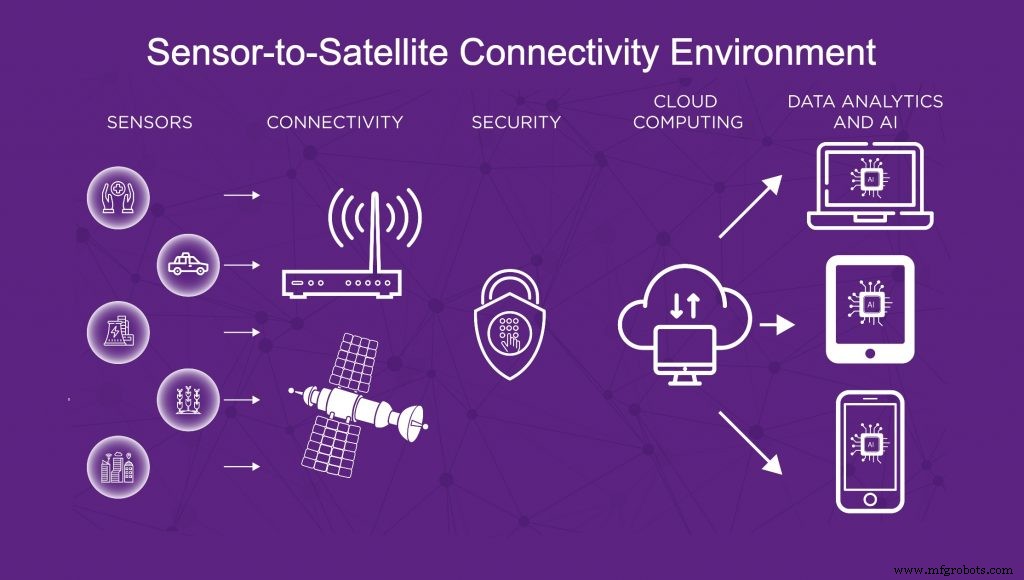
Recent technological advances now enable these interactions to occur with minimal human intervention. The enablers can be grouped into five key areas:
- Objects: Low‑cost, low‑power sensor technology that makes physical devices affordable and energy‑efficient.
- Connectivity: New low‑power wireless protocols—both long‑ and short‑range—that support device provisioning, data collection, and remote monitoring.
- Security: Mandatory encryption and device hardening to protect data and prevent insecure devices from becoming network weak points.
- Cloud Computing: Scalable, on‑demand compute resources that eliminate the need for on‑premises infrastructure.
- Data Analytics & AI: Platforms that aggregate, curate, and interpret data, turning raw information into predictive insights and automated decision‑making.
Each of these layers contributes to the democratization of IoT by lowering barriers to entry—whether that be cost, power consumption, or technical complexity.
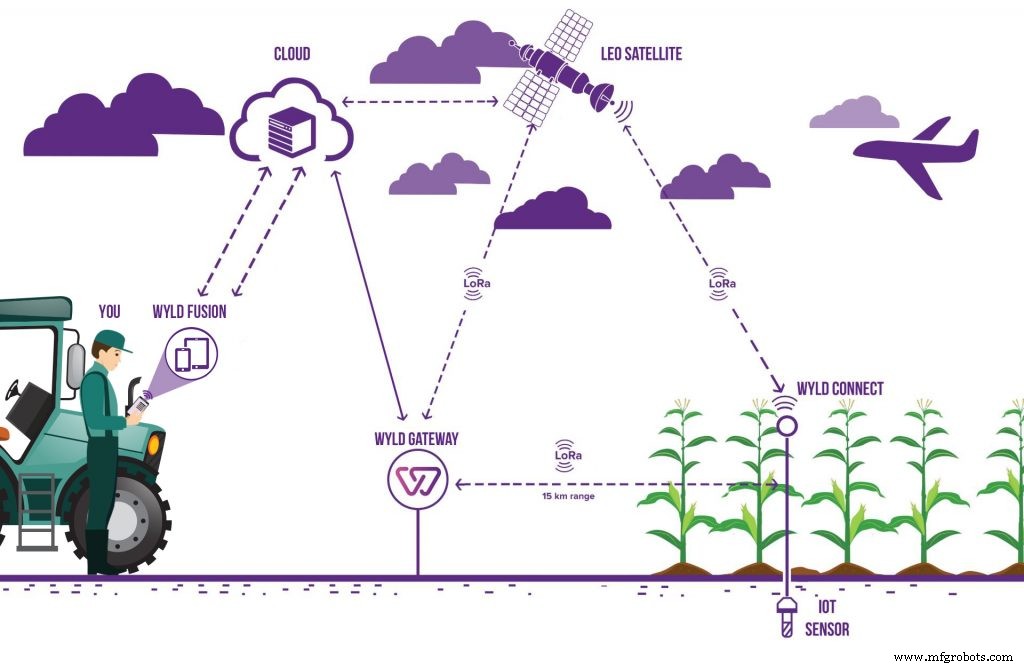
While sensor data can now be shared via user‑friendly dashboards, and automation can trigger alerts and actions, the industry still faces a fundamental limitation: connectivity. About 3.5 billion people lack internet access, and mobile networks cover only roughly 20 % of the planet’s surface. Low‑cost broadband covers merely 1 %. Without reliable connectivity, the full potential of IoT remains out of reach for the majority of the global population.
IoT Still Not Democratized
Universal, low‑cost access to the wireless networks that underpin IoT is essential for true democratization. According to McKinsey, IoT adoption in agriculture could add US$500 billion to global GDP by 2030—boosting productivity by 7–9 %—if connectivity bottlenecks are resolved.
In practice, a farmer in Colombia or Sudan could increase yields by deploying affordable sensors linked to low‑cost internet access. An OnFarm study found that IoT-enabled farms saw a 17.5 % yield increase, cut energy costs from $13 to $7 per acre, and reduce irrigation water use by 8 %. In the United States, where IoT penetration is highest, cereal yields average 7,340 kg per hectare compared to the global average of 3,851 kg per hectare.
Retailers in Indonesia can use IoT to track fleets, inventory, and supply chains, making data‑driven decisions that enhance competitiveness. Remote healthcare providers in Brazil can upload patient data from wearable biometric devices for real‑time analysis and predictive health insights. Moreover, billions of environmental sensors could monitor climate change, enabling proactive policy responses.
Next‑Generation Satellite: The Great Enabler
Satellite systems are poised to transform IoT in agriculture, energy, construction, and public safety. Current satellite services already provide global coverage for Earth observation and weather monitoring, but they lack the granularity and affordability needed for mass IoT deployment.

Next‑generation Low Earth Orbit (LEO) constellations paired with inexpensive satellite IoT modules—using license‑free Low Power Wide Area Network (LPWAN) protocols—promise to deliver data uplink at a few dollars per node per year. Sensors powered by low‑voltage batteries or small solar cells can operate for years, enabling truly ubiquitous IoT coverage—even in remote or underserved regions.
The cost of these satellite IoT modules is expected to drop more than 100‑fold compared to traditional solutions, breaking the twin barriers of global coverage and affordability. This breakthrough positions satellite IoT as the technology that can finally democratize the Internet of Things.
Author: Alastair Williamson, CEO of Wyld Networks.
About the Author
Alastair Williamson brings over 25 years of experience in the software and telecommunications sector. He previously served as CEO of the startup Ranplan Group, where he led the development of a software wireless planning tool, and has held senior sales leadership roles at Lucent, Alcatel Lucent, Cambridge Broadband Networks, and Krone.
Internet of Things Technology
- How IoT’s Surge is Driving the Shift to Edge Computing
- How IoT Data Management Drives Innovation: 4 Key Benefits
- Ensuring Data Compliance in the Internet of Things
- How Industrial IoT Sensors Drive Modern Factory Efficiency
- Smart Data: Navigating the Next Frontier of IoT and Big Data
- Top 3 Challenges in Preparing IoT Data for Industrial Success
- Unlocking the Value of IoT Data: Secure, Insight‑Driven Strategies
- Three Powerful Ways Cloud Computing Enhances IoT Deployments
- Unlocking Real-Time Value: Why Your Business Must Embrace IoT
- Harnessing Cloud Power for IoT: Unlocking Seamless Connectivity & Data Insights