



Ensuring Continuous Health of Your IIoT Systems
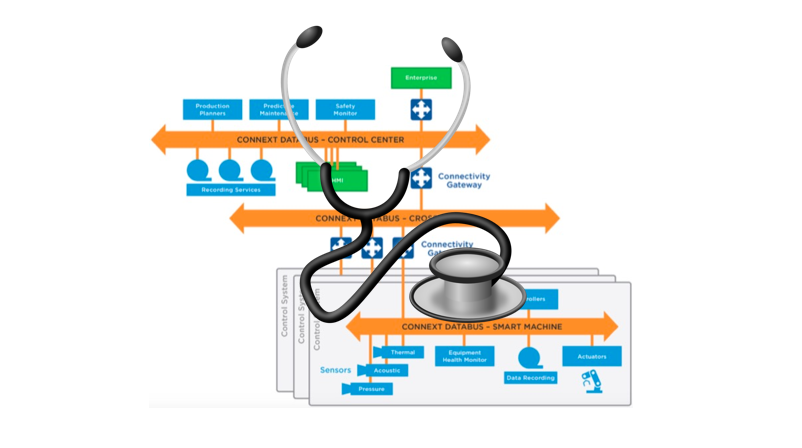
Why Continuous Monitoring Matters
When your IIoT network is up and running, it can still suffer from hidden issues: network latency, node failures, or unexpected changes from software upgrades and new deployments. These problems degrade application performance, but without ongoing observation, pinpointing the root cause becomes difficult.
The Three Pillars of Operational Monitoring
Effective monitoring relies on three core components:
- A reliable data‑collection engine
- A scalable storage system for time‑series data
- A visualization platform that turns raw metrics into actionable insights
InfluxData’s TICK Stack: The Time‑Series Backbone
We selected the TICK stack from InfluxData to power our monitoring pipeline:
- Telegraf – a plugin‑driven agent that gathers metrics. It ships with over 100 built‑in plugins and can be extended with custom plugins.
- InfluxDB – the core time‑series database. Key features include SQL‑like queries, built‑in time‑series functions, automated retention policies, a schema‑less model, continuous queries for down‑sampling, and high‑availability clustering (commercial edition only).
- Chronograf – a web interface that visualizes the data.
- Kapacitor – a rule‑engine that triggers alerts based on user‑defined conditions.

InfluxData’s TICK stack delivers an end‑to‑end solution for collecting, storing, and visualizing monitoring data.
Designing a Robust Monitoring Architecture
Our architecture is split into two layers:
- Management Services Layer – software that runs on each node to collect health metrics. In our proof‑of‑concept, the user applications were OpenFMB simulations, but the layer is agnostic to any DDS application.
- Administration Layer – software that ingests the collected time‑series data, stores it, and provides visualization and alerting.

Key Metrics Captured
- Node metrics – CPU, memory, and network utilization at the host level.
- Container metrics – the same set of statistics for individual containers.
- DDS metrics – discovery statistics, protocol usage, and events such as liveliness loss, sample lost, and sample rejected.
Telegraf’s existing plugins extracted node and container data from the OS and container engine. DDS metrics were harvested using RTI’s Monitoring Library.
From Local Collection to Remote Analysis
An intelligent bridge transforms locally collected data into a format suitable for the monitoring bus. It can filter out noise, reduce bandwidth usage, and enrich payloads (e.g., adding the hostname as a tag). On the administration side, we used a Telegraf instance equipped with a DDS plugin to subscribe to the bus. To enable this, we developed a Go binding for RTI Connector, available at GitHub.
Visualization & Alerting with Grafana
Grafana provides flexible dashboards and alert rules tailored to your system. With the collected data, you can create real‑time visualizations and set up thresholds that trigger notifications.
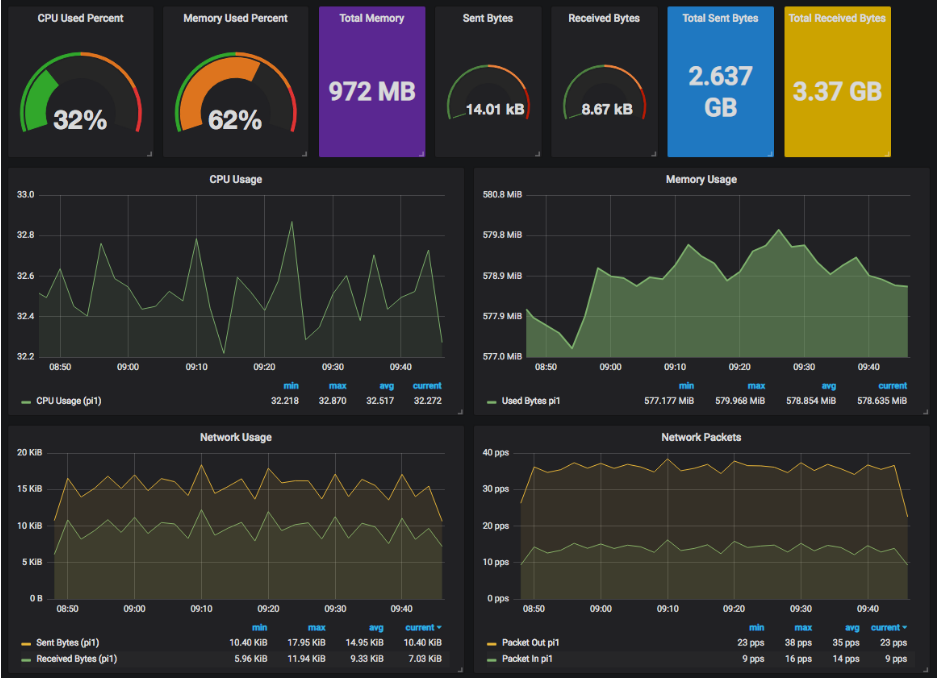
Grafana empowers you to design system‑specific dashboards that surface the metrics most critical to your operations.
Try It Yourself
We demonstrated this end‑to‑end monitoring solution using our energy‑system simulations. The full case study and source code are available on our Case + Code page. Reach out if you’d like to experiment with the architecture or share feedback.
Next Steps
In our upcoming post, we’ll dive deeper into InfluxDB integration, share sample code, and walk you through setting up your own monitoring stack.
Internet of Things Technology
- Connext DDS 5.3 Now Live: The First Connectivity Platform for Industrial IoT Systems of Systems
- A Practical Taxonomy for Industrial Internet of Things (IIoT) Systems
- Optimizing IIoT Connectivity with the Industrial Internet Reference Architecture
- Why Adopt IIoT in Your Factory: 4 Key Benefits
- Unlocking IoT Data: How Business Rules Management Drives Enterprise Value
- How Industrial IoT Sensors Drive Modern Factory Efficiency
- Meeting Your Clients’ IIoT Demands in Manufacturing: A Practical Guide
- How to Seamlessly Integrate the Industrial IoT: A Practical Guide
- 3 Keys to Successful Industrial IoT Deployment
- Maximize Efficiency: How Compressor Monitoring Boosts Reliability & Longevity