



Boosting Machine Autonomy with Strategic Preventive Maintenance
Autonomous maintenance is a concept followed in various industries where actual machine operations are involved at the ground level of manufacturing. Essentially, this type of maintenance works by the machine detecting the potential cause of failure and completing the necessary maintenance itself.
While there can be a debate between the importance of predictive and preventive maintenance, autonomous maintenance enables the operator to perform both predictive and preventive maintenance activities.
Autonomous maintenance strategy does not relieve maintenance personnel of their responsibilities. It does, however, allow them to perform more complex and advanced activities instead of common and basic functions.
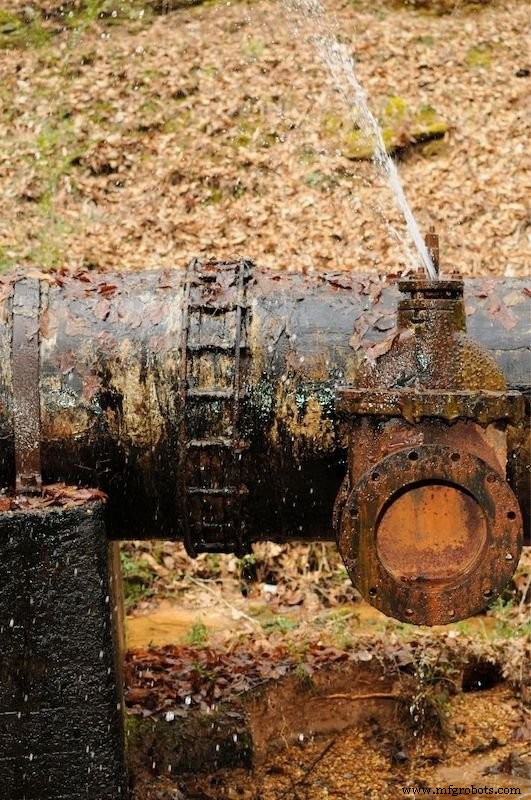
Figure 1. A cracked gate valve can lead to leaking.
Some of these basic-level activities and functions that need to be carried out daily include:
- Monitoring oil (and other liquid) levels
- Monitoring of sensors and their wiring
- Checking for cracks or leaks in the mechanical or attached piping network
- Checking for any loosing in the attached systems
How to Implement Autonomous Maintenance
The autonomous maintenance approach creates an environment in which both the operation and maintenance departments collaborate to increase productivity by identifying and eliminating the causes of threats to productivity in an efficient way.
There are seven steps used for autonomous maintenance implementation:
- Increase operator capabilities
- Consistent cleaning
- Remove contamination sources
- Set standards for monitoring, cleanliness, and oiling
- Inspection and monitoring
- Visual maintenance management
- Continuous improvement
Let’s look at what each of these steps involves.
Step 1: Increase Operator Capabilities
Running a machine for a whole shift does not necessarily mean that the operator is a master and expert of their machine.

Figure 2. Operators and maintenance crew working together helps improve autonomous maintenance efforts.
For autonomous maintenance to be successful, machine operators need to be knowledgeable about the basic machine workings and identify the purpose of different subsystems. The maintenance department gives this training. Some of the basic training includes:
- Understanding the purpose of the machine’s basic components
- Knowing what different problems look like (i.e., loosing, vibration, and abnormal temperature)
- Setting expectations of what task levels they can perform
- Identifying types of problems (i.e., mechanical, electrical, instrumental)
Step 2: Consistent Cleaning
The purpose of this step is to have the machine stay in as ideal of a condition as possible, much like it was when newly purchased. This includes basic tasks like:
- Removal of any dirt accumulated on the visible parts of the machine
- Elimination of any cracked, leaking, or broken parts
- Fixing loose wiring in electrical or instrumentation components
- Proper lubrication
Step 3: Remove Contamination Sources
Consistent cleaning is a waste of time if the source of contamination is not removed. Removing contamination sources is achieved with the following measures:
- Installation of barriers and sealing desired components
- Improving and increasing cleanliness in areas most vulnerable to contamination
Step 4: Set Standards for Monitoring, Cleanliness, and Oiling
Maintenance activity is most successful when it is regularly monitored. The easiest way to do this is by setting timelines for these activities. Setting timelines prevents deviation in steps and procedures. Basic tasks that a maintenance timeline standard should cover include:
- Activity frequency
- What to include in these checks
- How to perform these checks
- Proper recording of any deviation found to further improve standards
Step 5: Inspection and Monitoring
Transferring control to the operator without monitoring by the maintenance department will not yield the desired results. Performing inspections on a routine basis will not only keep the activity in the right direction but will also enhance operator confidence.
As the operator performs the basic functions of oiling, cleaning, and visual checks, these activities should not be overlapped by the activities performed by the maintenance department.
Step 6: Visual Maintenance Management
Visual maintenance management refers to the method of representing the function of a component by visual methods, such as marks or signs. This helps identify and understand proper functioning, which is sometimes overlooked due to the hustle of work activities.
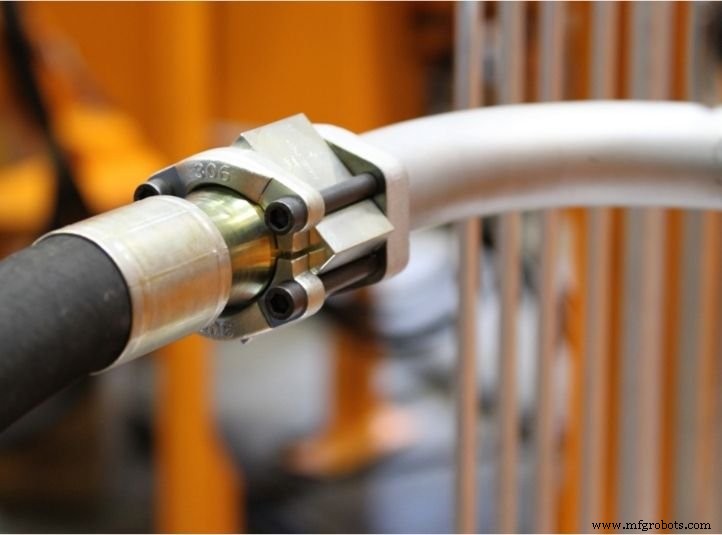
Figure 3. A hydraulic, pneumatic pipe connection.
For example, pipes can be colored differently for steam, pneumatic, and water. Similarly, the direction of rotary movements can be indicated by the direction of arrows, and open and closed states of the actuators can also be identified.
Step 7: Continuous Improvement
As the name implies, this refers to establishing ways of continuously improving the system by working collaboratively with all the stakeholders, including operators, maintenance personnel, and upper management.
In this step, any shortcoming that any stakeholder has identified is evaluated. Any change in the system or process is carried out at this stage, and further evaluation is scheduled for further improvement.
Why Use Autonomous Maintenance in Industrial Manufacturing?
Every implemented change has its advantages, and the same is the case with the different maintenance strategies. While increasing productivity and reducing breakdown time is the core requirement, autonomous maintenance has some unique advantages that ultimately increase overall efficiency.
First, it reduces the burden on the maintenance staff, allowing them to perform other critical functions. Involving machine operators in basic machine maintenance saves the energy and resources of maintenance personnel, so they can concentrate on other higher-level tasks of machine operation or issues.
Second, it guarantees satisfactory cleanliness and lubrication. Sometimes smaller, more basic functions are left behind due to large maintenance repairs of a machine. Autonomous maintenance ensures that these basic tasks are regularly implemented.
Finally, it provides enhanced operator efficiency and engagement. By giving necessary training, the skills of the operator are enhanced. This increases the efficiency and confidence of the operator, increasing machine performance. Moreover, this culture increases the sense of responsibility in the operator, because they don’t always have to wait for the maintenance staff in the case of a machine breakdown.
Internet of Things Technology
- How Industry 4.0 Transforms Preventive Maintenance in Manufacturing
- Preventive Maintenance: How Proactive Care Drives Reliability & Saves Costs
- Preventive Maintenance: A Comprehensive Guide to Reliability, Cost Savings, and Equipment Longevity
- Understanding Maintenance Types: A Practical Comparison for Industrial Success
- Revolutionizing Asset Reliability: Machine Learning for Predictive Maintenance
- Smart Equipment Care: Predictive Maintenance Strategies & Timelines
- Preventive Maintenance: A Path to Higher Asset Availability & Lower Costs
- Preventive Maintenance Software: Boost Asset Longevity & Reduce Downtime
- CNC Machine Preventive Maintenance: Boost Reliability & Reduce Downtime
- Mastering Preventive Maintenance: Boost Equipment Lifespan & ROI in Manufacturing