



Understanding Maintenance Types: A Practical Comparison for Industrial Success
Types of Maintenance
Every year, organizations lose billions to unplanned downtime and sub‑par asset quality. To combat these losses, companies deploy a mix of maintenance strategies—each designed to protect critical equipment and minimize production loss. Although the terminology varies across sectors, the core concepts remain the same.
Maintenance practices broadly fall into two pillars: preventive and corrective. Preventive maintenance (PM) involves proactive inspections and scheduled tasks that stop failures before they happen, while corrective maintenance (CM) restores an asset to service after a failure has already occurred. Some organizations adopt a run‑to‑failure approach, intentionally letting equipment operate until it fails and then repairing it—an often‑used strategy for non‑critical or disposable parts.
Below is a closer look at the most widely used maintenance approaches in manufacturing and process industries.
-
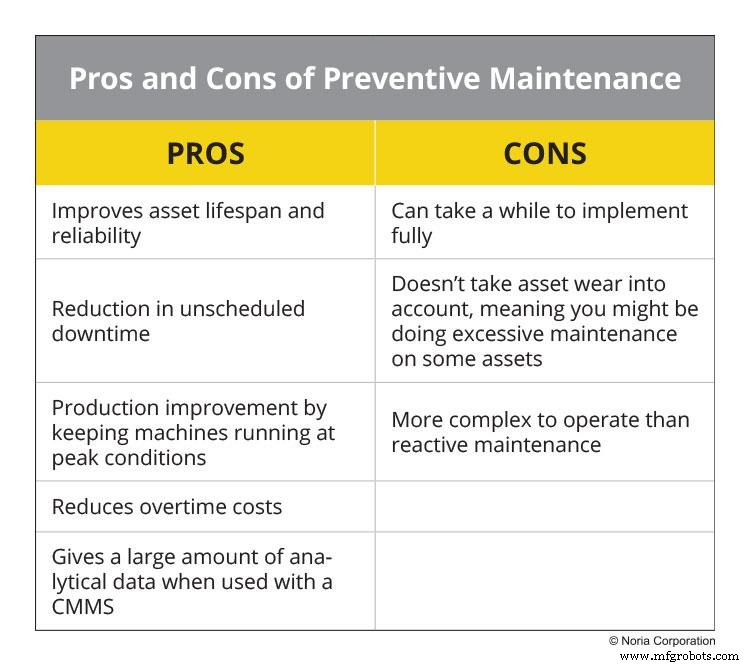
Preventive Maintenance – A systematic routine of inspecting equipment, detecting early signs of wear, and fixing them before they evolve into major issues. PM’s ultimate aim is zero downtime, achieved through three objectives: extending equipment life, reducing critical breakdowns, and minimizing production loss.
PM can be subdivided into:
- Usage‑Based Maintenance: Triggers maintenance based on actual asset usage recorded by monitoring devices.
- Prescriptive Maintenance: Similar to PM but leverages AI, machine learning, and IoT to recommend the optimal maintenance schedule.
For a detailed guide on designing a PM program, tools, and best practices, click here.
-
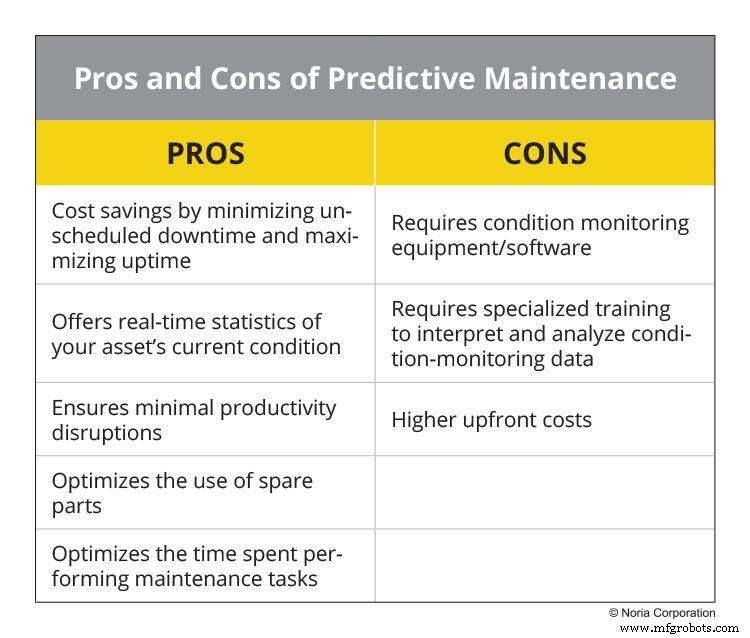
Predictive Maintenance – Combines real‑time condition monitoring with data analytics to forecast failures before they occur. Often viewed as an extension of PM, predictive maintenance relies on sensors such as infrared thermography, vibration analysis, and oil testing to detect anomalies.
Key differences from PM:
- PM schedules work regardless of condition; predictive maintenance schedules only when data indicates a risk.
- Predictive maintenance uses condition‑based monitoring technologies.
According to the latest Reliable Plant survey, 76% of firms use preventive maintenance, while 65% also employ predictive methods.
See our full predictive maintenance overview for technology insights.
-
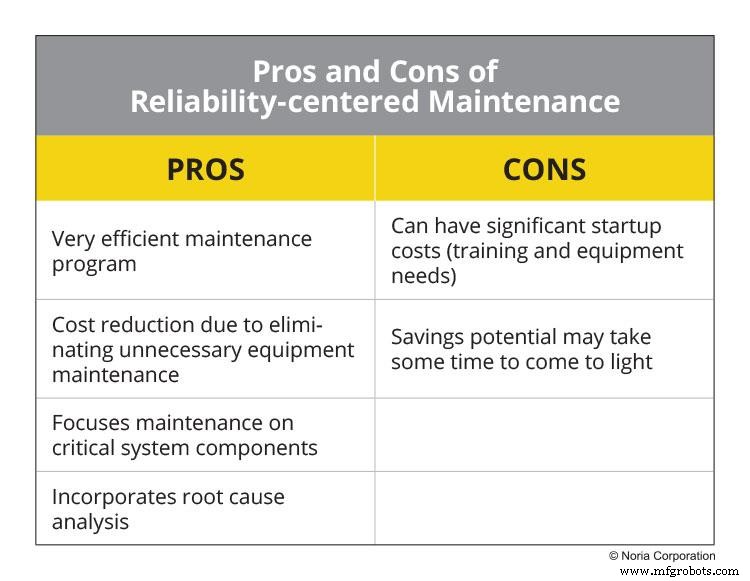
Reliability‑Centered Maintenance (RCM) – A structured approach that evaluates each asset’s failure modes, causes, and impacts to tailor a maintenance plan that maximizes reliability and cost efficiency.
RCM’s four‑step workflow:
- Choose the asset
- Evaluate the asset
- Determine the maintenance type
- Repeat the process
RCM asks seven critical questions, from performance expectations to corrective actions when preventive tasks are unavailable.
Learn more about RCM implementation and case studies here.
-
Total Productive Maintenance (TPM) – A holistic methodology that engages all employees in maintaining and improving equipment and processes, aiming to boost Overall Equipment Effectiveness (OEE).
TPM’s eight pillars include autonomous maintenance, focused improvement, planned maintenance, quality maintenance, early equipment management, training, safety, and administration.
Implementing TPM involves five phases: pilot area selection, equipment restoration, OEE measurement, loss reduction, and planned maintenance rollout.
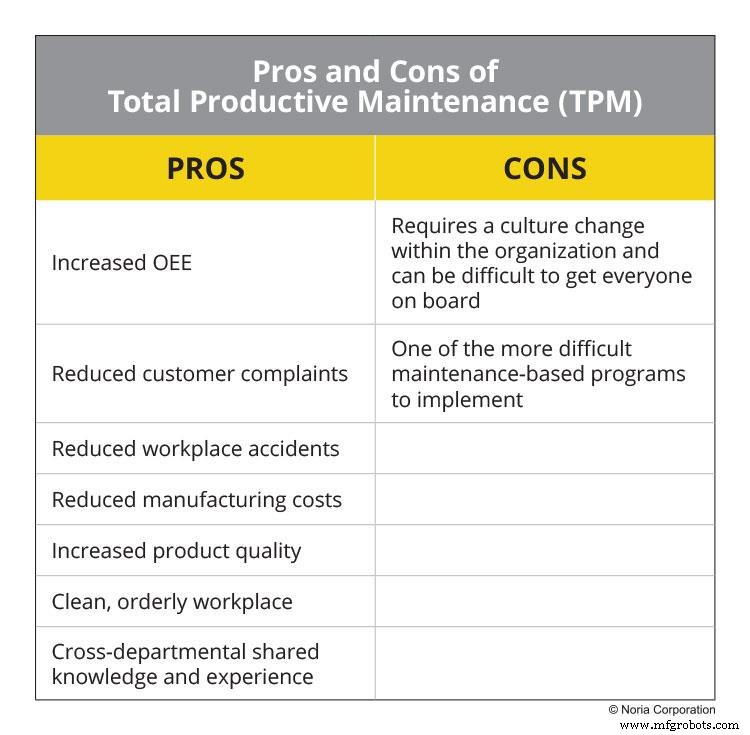
Explore TPM pillars and implementation strategies here.
-
Autonomous Maintenance – Empowers machine operators to perform routine upkeep, reducing reliance on maintenance technicians for minor tasks.
Core principles: prevent deterioration through proper operation and keep equipment “like new” through proactive care.
Implementation steps include operator training, initial cleaning, contamination removal, lubrication standards, inspection, visual maintenance, and continuous improvement.
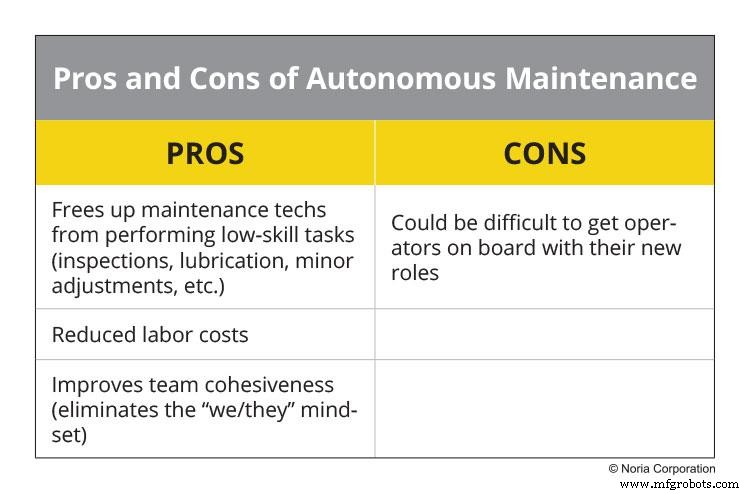
Discover autonomous maintenance best practices here.
-
Run‑to‑Failure Maintenance (RTF) – A deliberate strategy for assets that are inexpensive to replace or rarely fail. RTF is most effective when assets are well understood and spare parts are readily available.
Proper execution requires skilled judgment to decide when a failure warrants repair versus replacement.
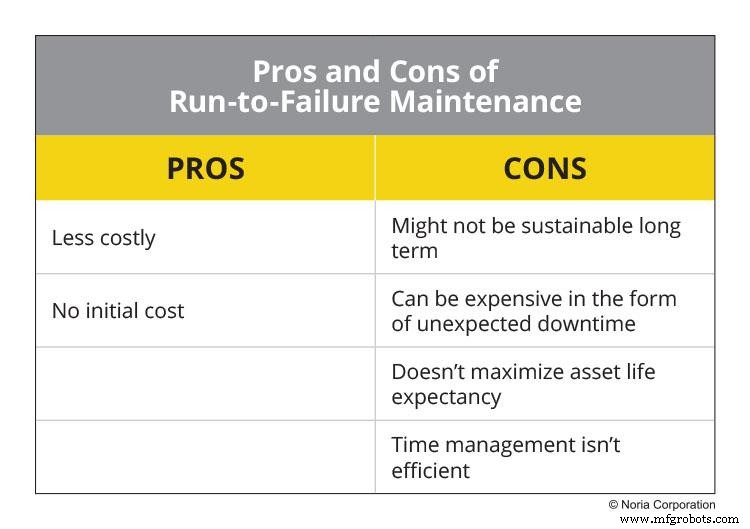
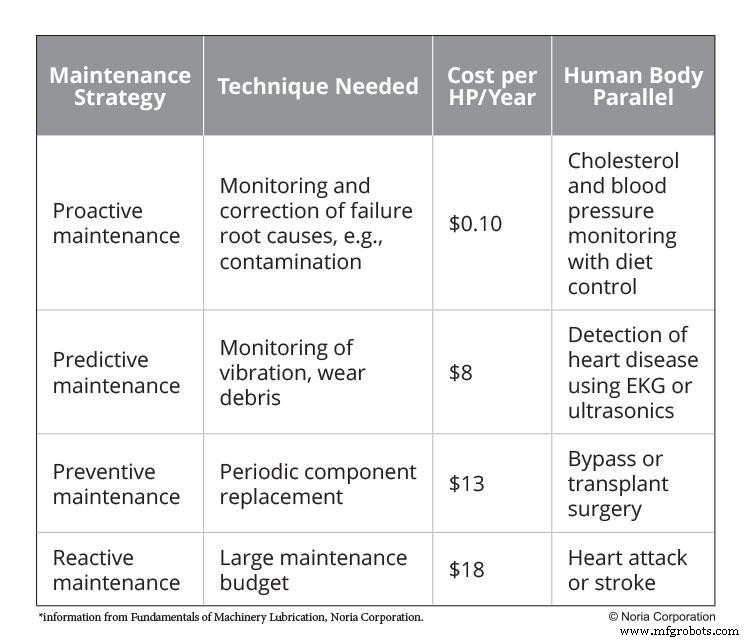
Machine Maintenance and the Human Body Parallel
Maintenance concepts can be visualized through a human‑body analogy. For example, compare a power‑generation asset to a heart: just as a heart relies on regular checks to stay healthy, machinery needs routine inspections and predictive data to stay operational.
Types of Maintenance Triggers
Triggers define when maintenance actions are initiated. They are crucial across all maintenance strategies, from reactive to predictive.
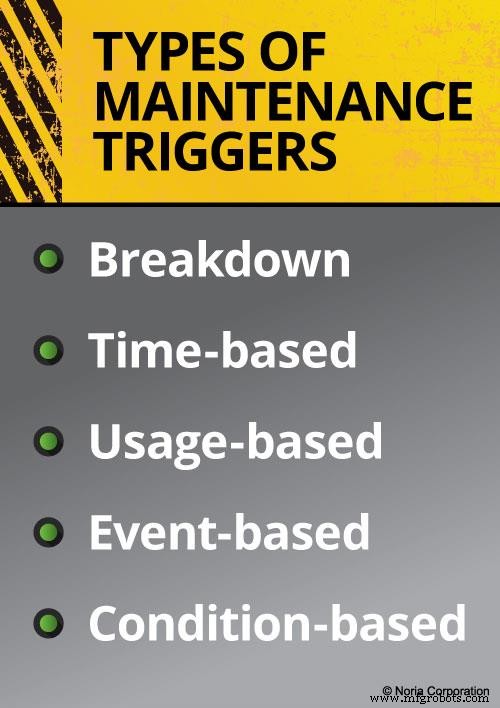
- Breakdown Triggers – Activate after a failure occurs, scheduling repair work. Ideal for low‑cost, easily replaceable equipment and when spare parts inventory is robust.
- Time‑Based Triggers – Use preset intervals (e.g., every 14 days) to schedule routine tasks such as lubrication or inspections. Common in both predictive and preventive programs.
- Usage‑Based Triggers – Trigger maintenance based on actual operating hours or cycles, mirroring practices like changing an oil filter every 5,000 miles.
- Event‑Based Triggers – Initiate post‑incident checks (e.g., after a flood or fire) to assess equipment integrity.
- Condition‑Based Triggers – Rely on sensor data (temperature, vibration, noise) to determine if maintenance is needed, offering a data‑driven, proactive approach.
Modern Maintenance Technology
Today's manufacturers rely on data‑rich solutions to elevate maintenance from routine tasks to strategic asset management. Condition‑based monitoring—through oil analysis, vibration, thermography, and motor current monitoring—enables early fault detection, extended machine life, and reduced downtime.
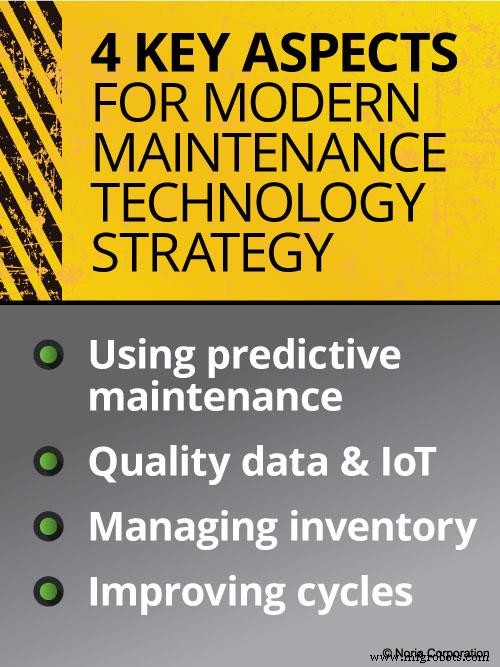
Integrating this data into a robust CMMS (Computerized Maintenance Management System) supports four pillars of modern maintenance strategy:
- Predictive Maintenance – Analyze real‑time data to schedule interventions before failures.
- Quality Data & IoT – Ensure the CMMS can ingest diverse sensor streams, whether embedded or self‑installed, and interface with an IIoT platform.
- Inventory Management – Track spare parts and reduce backlogs, turning reactive work into proactive schedules.
- Continuous Improvement Cycles – Use analytics to refine maintenance plans and achieve sustained efficiency gains.
Modern Maintenance Technology Trends
- Industrial Internet of Things (IIoT) – Low‑cost, wireless sensor networks that autonomously collect maintenance data, eliminating manual errors.
- Augmented Reality (AR) – Remote, hands‑on training and maintenance guidance that adapts to the technician’s skill level, increasingly used for complex equipment.
- Maintenance as a Service (MaaS) – On‑demand maintenance solutions that charge by usage, backed by cloud analytics and predictive insights. Early adopters like ThyssenKrupp Elevators and BMW are already offering MaaS for proactive problem prevention.
Equipment Maintenance and Repair
- Preventive vs. Predictive Maintenance: Choosing the Best Strategy for Your Factory
- Preventive vs. Predictive Maintenance: Mastering Equipment Reliability
- Preventive Maintenance: How Proactive Care Drives Reliability & Saves Costs
- Preventive Maintenance: A Comprehensive Guide to Reliability, Cost Savings, and Equipment Longevity
- Comparing Reactive, Preventive, and Predictive Maintenance: A Practical Guide
- Smart Equipment Care: Predictive Maintenance Strategies & Timelines
- Preventive Maintenance: A Path to Higher Asset Availability & Lower Costs
- Preventive Maintenance Software: Boost Asset Longevity & Reduce Downtime
- 5 Key Types of Industrial Maintenance to Boost Productivity
- Reactive, Preventive, and Predictive Maintenance: Choosing the Right Strategy