



Turning Industry 4.0 into Reality: From Shopfloor to Data Center Alignment
The Digital Shopfloor Alliance seeks to maximize Industry 4.0 ROI by providing guidelines and blueprints for effective deployment, validation, and evaluation.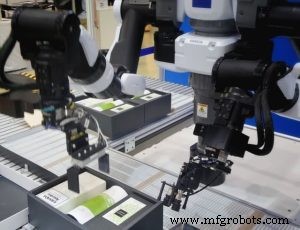
While Industry 4.0 holds great promise for developing a real-time, interconnected network of factories, suppliers, customers, and developers, its adoption has been sluggish. Bringing operations technology (OT) and information technology (IT) into alignment has been organizationally challenging, manufacturers have shown poor awareness about digital manufacturing solutions and their business value potential, and have been leery of the high costs associated with the deployment, maintenance, and operation of connected systems in the manufacturing shopfloors.
See also: Will Smart Factories Remove the Need for Humans?
To address this, some industry leaders have created a “Digital Shopfloor Alliance,” which aims at providing leading-edge and standards-based digital automation solutions, along with guidelines and blueprints for their effective deployment, validation, and evaluation. The organization’s goal is to help maximize Industry 4.0 ROI, getting the best business value out of industry 4.0 investments, keep integration time under control with well-established methods and framework for the deployment of digital solutions, and ensure future digital shopfloor extendibility by relying on “certified and standard-compliant components to safely operate your digital shopfloor operations.”
A recent ebook, The Digital Shopfloor: Industrial Automation in the Industry 4.0 Era, brought together by a team led by John Soldatos of Athens Information Technology, explores the issues and presents solutions based on the work of the alliance.
“The benefits of Industry 4.0 have been already proven in the scope of pilot and production deployments in a number of different use cases including flexibility in automation, predictive maintenance, zero-defect manufacturing and so on,” Soldatos and his co-authors explain. However, the advancement of Industry 4.0 initiatives has been held back by a number of issues, including the following:
- Knowledge gaps: “Manufacturers’ poor awareness about digital manufacturing solutions and their business value potential, as well as the lack of relevant internal knowledge.”
- Costs: The high costs associated with the deployment, maintenance, and operation of connected systems in the manufacturing shopfloors, “particularly challenging in the case of small and medium-sized enterprises, which “lack the equity capital needed to invest in Industry 4.0.”
- Required time investment: The time needed to implement connected systems “and the lack of a smooth and proven migration path from existing OT solutions.”
- Uncertain ROI: The uncertainty over the business benefits and impacts of Industry 4.0 technologies, “including the lack of proven methods for the techno-economic evaluation of Industry 4.0 systems.” This includes “the absence of a well-developed value chain needed to sustain the acceptance of these new technologies for digital automation.”
- Lock-in: “Manufacturers’ increased reliance on external integrators, consultants, and vendors.”
“The successful adoption of Industry 4.0 approaches “is not only a matter of deploying the right technology,” Soldatos and his co-authors explain. “Rather, it requires investments in a wide range of complementary assets, such as digital transformation strategies, new production processes that exploit the capabilities of digital platforms, training of workers in new processes, and many more.”
The authors propose the following measures to better prepare enterprises for the Industry 4.0 revolution ahead of us:
- Establish industrial “data spaces:” This will “provide the means for interoperable data exchanges between different platforms and stakeholders. As a characteristic example, industrial data spaces that allow supply chain stakeholders to exchange production orders and materials information without only minimal effort for integrating their enterprise systems with the industrial data space infrastructure.”
- Enhance machines and equipment with intelligence features such as artificial intelligence and machine learning: For example, “future machines will be able to identify and in several cases repair defect causes on-line i.e. without a need for stopping production.”
- Develop and establish open APIs for accessing capabilities and datasets: “Such APIs will greatly facilitate their integration and access in the scope of end-to-end applications. For example, they will provide the means for processes that span multiple stations and platforms within a factory.”
- Provide support for smart objects such as smart machines and industrial robots: “Smart objects feature semi-autonomous behavior and are able to operate as stand-alone systems in the shopfloor. Occasionally, they will be able to synchronize their state with the state of digital automation platforms that control the shop floors. Hence, they will be able to co-exist with digital platforms in order to perform collaborative tasks in the plant.”
- Implement strong security features, which will ensure secure operations for both IT and OT systems of the plant: “Strong security and data protection will be required as a result of the expanding scope of the digital automation platforms, but also as a result of their interconnection with other systems.”
Internet of Things Technology
- Is the Cloud Threatening Data Center Jobs? A Realistic Assessment
- Industry 4.0 for SMEs: Leveraging Cloud‑Based Data Monitoring to Boost Production Efficiency
- Maximizing Value from Big Data: Strategies for Manufacturing Success
- Digital Insurance: 5 Trends Revolutionizing How We Buy and Manage Coverage
- Internet of Things: From Buzzword to Reality—What It Means for Business
- Edge Computing: The New Heartbeat of the Cloud Era
- Bilfinger UK Drives Digital Transformation in the Process Industry
- Big Data Drives Innovation and Efficiency in Utilities
- The Benefits of Augmented Reality in Industry 4.0
- Harnessing Data: The Future of Manufacturing Efficiency