



Cisco 1G Bidirectional Transceivers: Boosting Service Provider and IoT Network Efficiency

Subscribe to Cisco Optics Blog by Email
Written by Kaushik Mittra, Product Manager, Transceiver Modules Group
As 5G, Industry 4.0, and IoT drive network traffic to new heights, operators face the dual challenge of meeting bandwidth demands while keeping capital and operating costs low. Cisco’s 1 Gbidirectional transceivers are engineered to meet that challenge, delivering higher fiber utilization and robust performance in even the harshest environments.

Cisco’s 1 Gbidirectional family offers three core capabilities that are critical for service‑provider and industrial deployments: single‑strand operation, industrial‑temperature tolerance, and proven compatibility with the full range of Cisco routers and switches. The following table summarizes the key specifications.
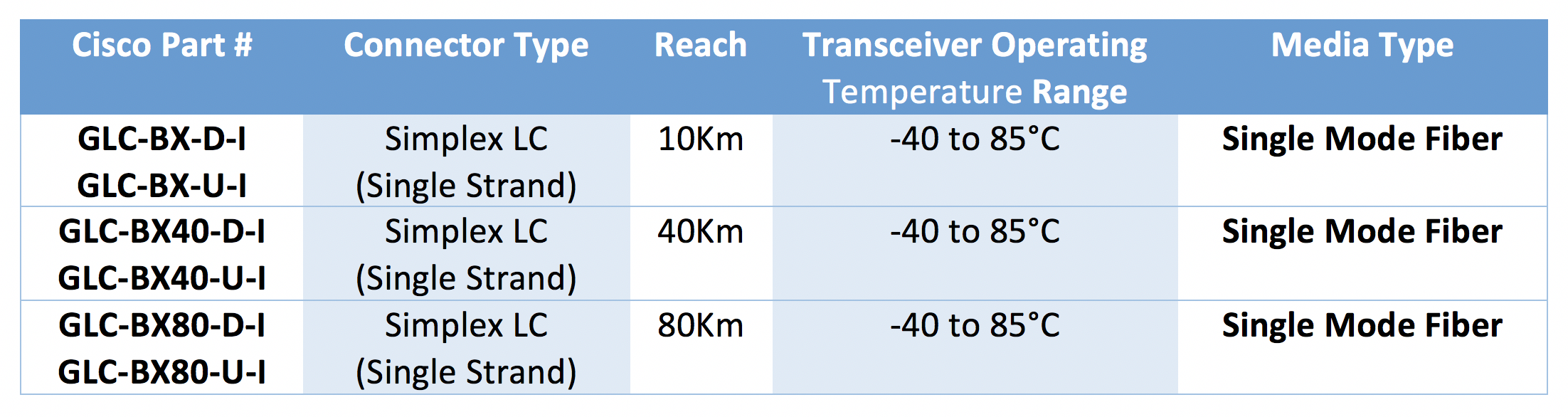
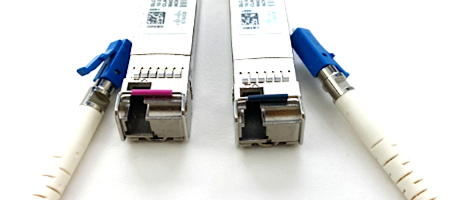
These transceivers provide two decisive advantages for network operators:
- They transmit and receive on a single fiber strand, effectively doubling fiber capacity.
- They are rated for an industrial temperature range of –40 °C to +85 °C, enabling deployment in outdoor cabinets, substations, and other exposed locations.
Enhancing Fiber Utilization and Resiliency for Service Providers
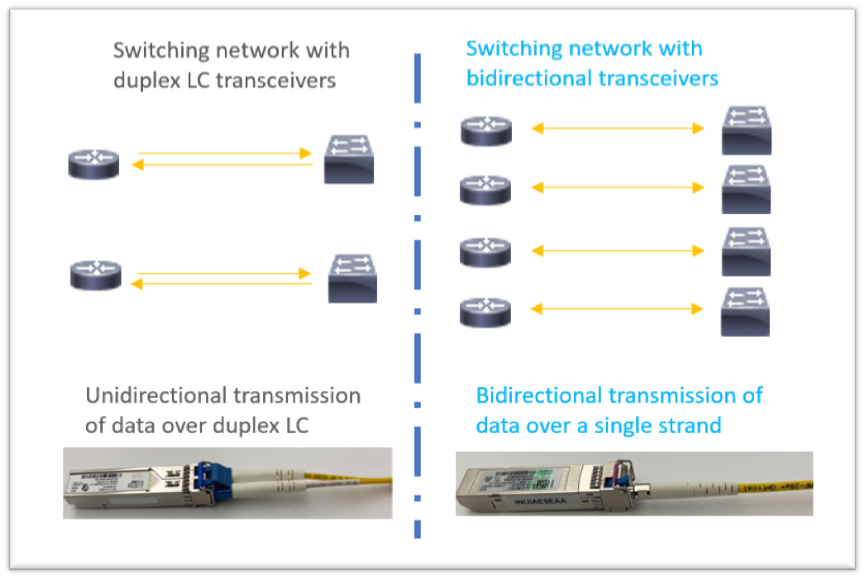
Bidirectional transceivers are a quick way to double the effective capacity of an existing fiber plant. Traditional 1 G SFP modules use a duplex LC connector and require two strands of fiber for a full link. The Cisco 1 Gbidirectional transceiver, by contrast, sends and receives data over the same strand, allowing a single pair of fibers to support two separate links. Figure 3 illustrates how this technology doubles the number of access devices that can be attached to a four‑fiber bundle.
Typical use cases include:
- Connecting the Cisco NCS 4200 core to a NID such as the NCS 520, where the bidirectional transceiver streamlines the back‑haul link.
- Extending the ASR 9000 edge router to a remote NCS 540 access router up to 80 km away, thanks to the robust design of the ASR 9000 v and the high‑performance transceiver.
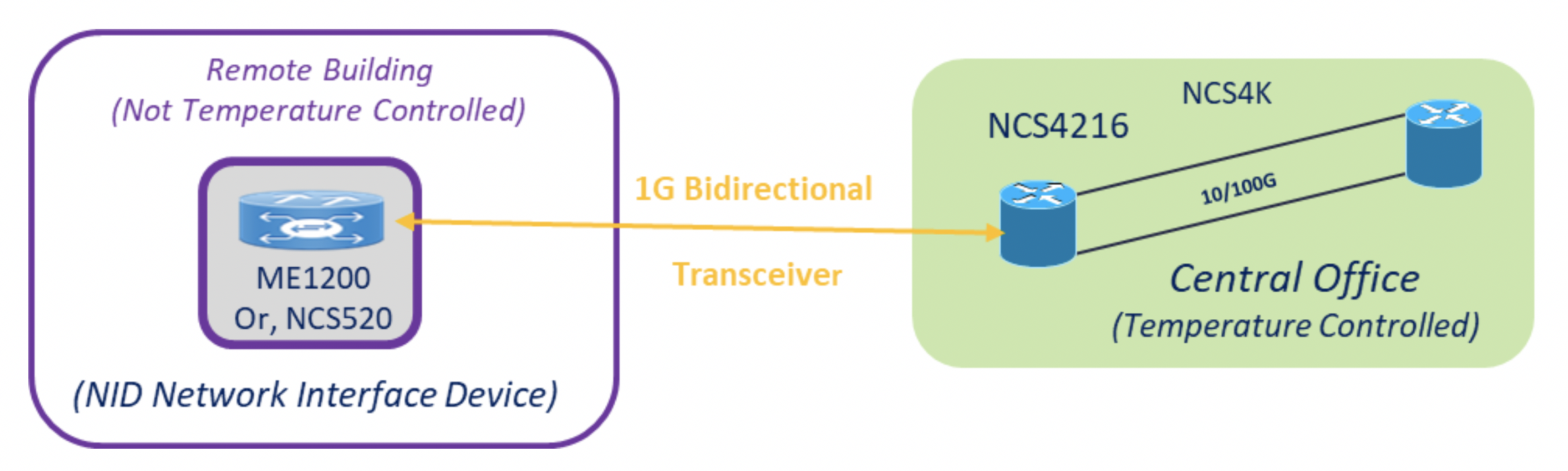
In addition to maximizing fiber usage, the spare fiber strand can be leveraged for a redundant, dual‑homing configuration, thereby improving overall network resiliency.
Industrial‑Grade Temperature Tolerance for IoT Deployments
IoT and industrial environments often expose network gear to extreme temperatures—think roadside cabinets that swing between –40 °C and +70 °C. Cisco’s 1 Gbidirectional transceivers feature a metal housing that remains reliable across this range, ensuring data integrity in power‑substation, utility, and transportation applications.
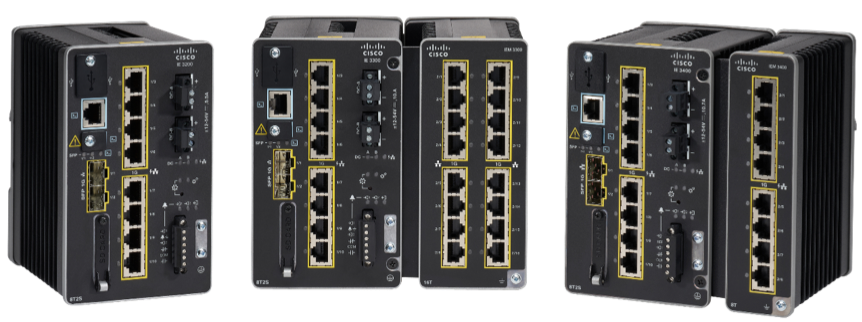
For example, the CGS 2500 and CGS 2520 Connected Grid Switches, designed for rugged deployments, pair seamlessly with the 1 Gbidirectional transceiver to deliver secure, high‑bandwidth communication in the energy and utility sectors.
In short, Cisco’s 1 Gbidirectional transceiver is a proven solution for mission‑critical service‑provider and IoT networks that require higher fiber efficiency and industrial‑grade durability. For a full list of Cisco platforms qualified with these industrial‑temperature transceivers, refer to the Cisco Optics Compatibility Matrix.
Internet of Things Technology
- Verizon and AT&T Deploy LTE‑M1 to Power Nationwide IoT Coverage
- How Quality of Service Enhances Reliability and Efficiency in LPWAN IoT Networks
- Bluetooth LE vs. ZigBee: Choosing the Right Low‑Power Protocol for IoT
- Link Labs Introduces Low‑Power, Long‑Range M2M Network for Diverse Industries
- How IoT Boosts Productivity, Longevity, and Maintenance for Industrial Robots
- IoT Cost Analysis: What Service Providers and Enterprises Can Learn from Cloud Pricing
- Memphis Goes Smart: Securing IoT, Visibility, and Control for a Resilient City
- Senet & SimplyCity Expand LoRaWAN IoT for Smart Farms, Industry, and Urban Sustainability
- Volvo Drives Innovation: Leveraging IoT & AI to Revolutionize Vehicle Connectivity and Maintenance
- How IoT and Emerging Tech Are Revolutionizing Healthcare: Key Benefits & Applications