



Overcoming the Three Key Challenges in IoT Solution Development
The Internet of Things (IoT) is reshaping business across sectors. Traditional manufacturers now fuse physical products with cloud‑based services, while digital companies tap sensor data to unlock new, data‑driven revenue streams. Emerging players are also entering the market, offering integrated hardware‑software solutions that leverage machine learning for predictive insights.
To enable rapid, cost‑effective development that all stakeholders can adopt, three core challenges must be addressed:
- Accelerated Application Development – Building user interfaces and end‑to‑end applications quickly while keeping costs low and time‑to‑market short.
- Heterogeneity Management – Handling the sheer volume of diverse, evolving devices and assets in an IoT ecosystem.
- Customizable Solutions – Delivering plug‑and‑play platforms that vendors can tailor for a wide range of use cases.
To illustrate these challenges, I’ll examine two real‑world use cases.
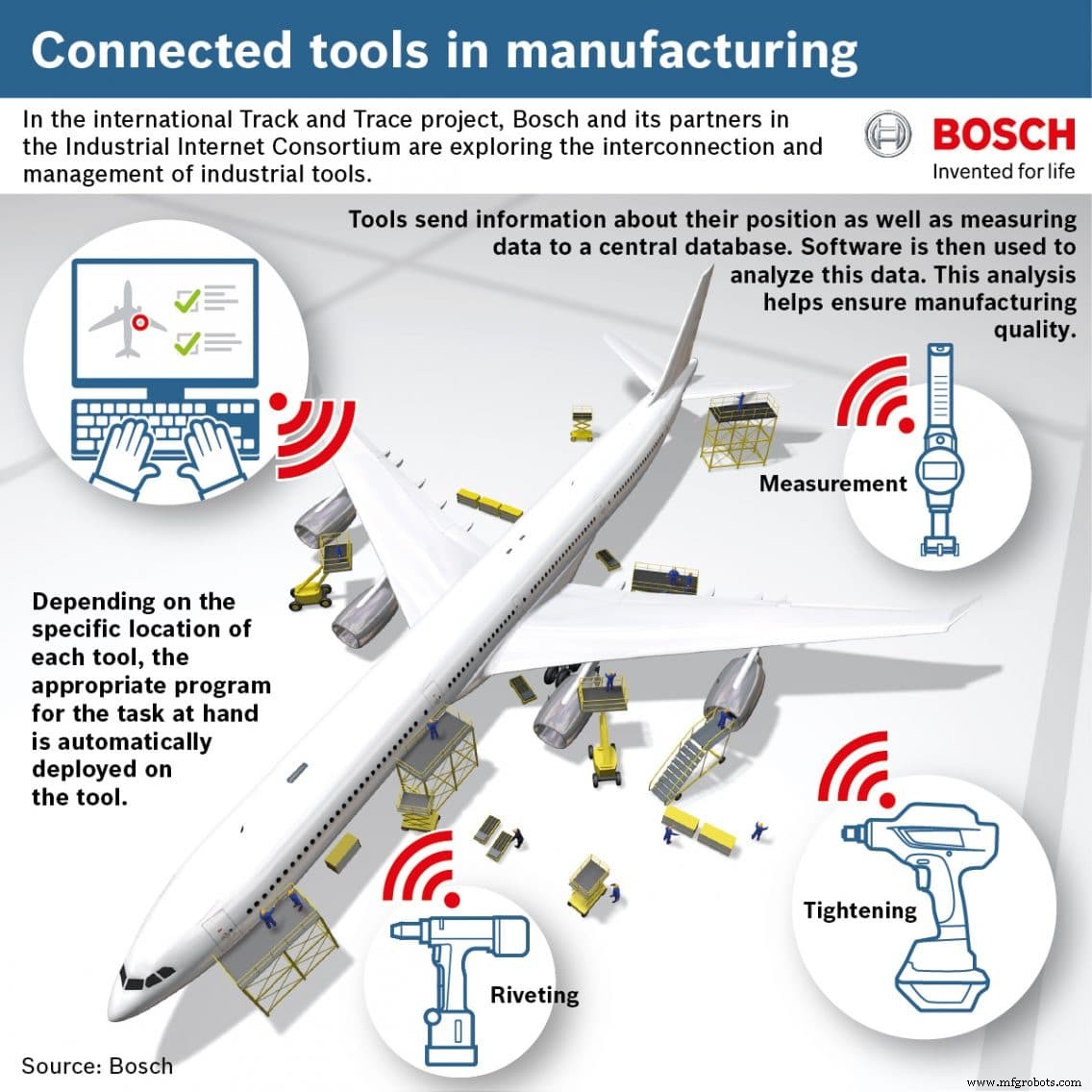
Use Case 1: Track & Trace
The Bosch‑Tech Mahindra‑Cisco partnership has created a testbed that connects industrial power tools—drills, welders, tightening rigs, and more—to the cloud. By combining wireless connectivity with indoor positioning, the solution boosts equipment effectiveness (OEE) and elevates production quality.
Use Case 2: Predictive Maintenance on Mining Conveyor Belts
Mining operations rely on conveyor belts that run continuously. By attaching vibration sensors to motors and gearboxes, the system collects data that machine‑learning models analyze to forecast failures—triggering alarms before downtime occurs.
Challenge 1: Accelerated Application Development
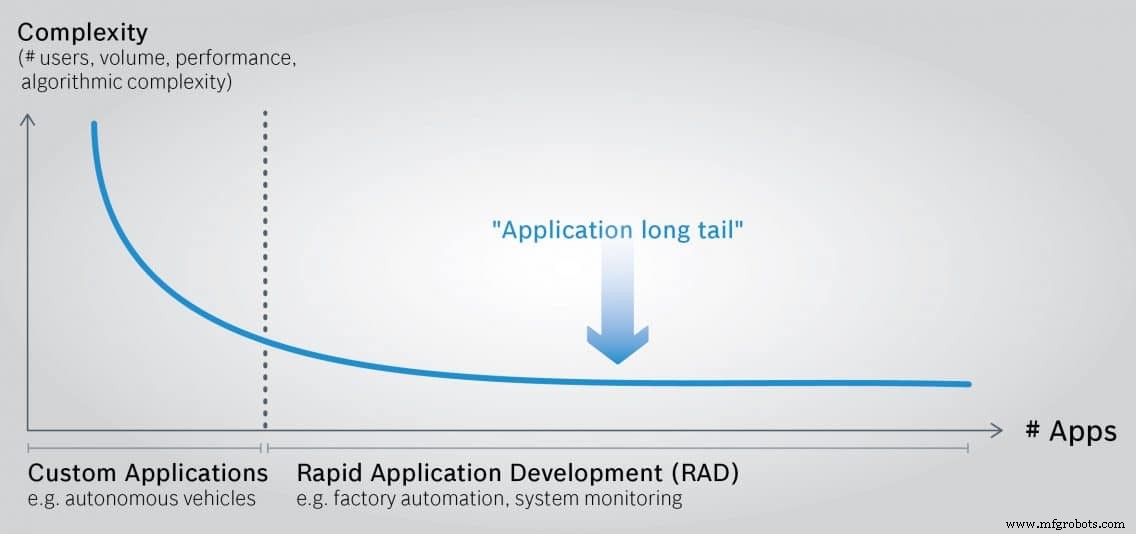
IoT projects evolve rapidly. Early prototypes often change as requirements mature, necessitating flexible, iterative development. I distinguish two project types:
- High‑complexity, high‑volume solutions – e.g., smart‑home platforms serving millions of households. These demand custom, performance‑optimized UIs and high data throughput, which come at a premium.
- Rapid, low‑complexity “long‑tail” applications – specialized tools used by small teams (e.g., plant operators). Building a bespoke UI for each niche use case becomes cost‑prohibitive, so reusable, modular components are essential.
Challenge 2: Managing Heterogeneity and Diversity
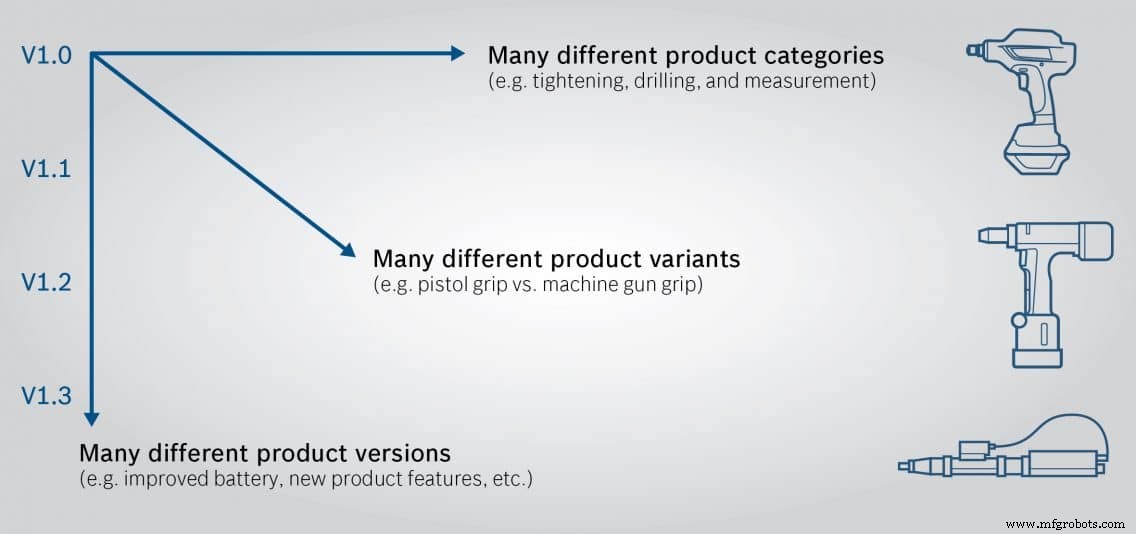
Manufacturers face a fragmented landscape: multiple product lines, numerous revisions, and evolving hardware specs. The Track & Trace project demonstrates this with three dimensions of heterogeneity—device type, firmware version, and connectivity protocol. Similarly, conveyor belt sensors vary widely (inductive, piezoelectric, magnetic), each with distinct accuracy and performance profiles.
Challenge 3: Building Customizable IoT Solutions
IoT offerings are shifting from bespoke prototypes to standardized, re‑usable platforms—much like ERP, CRM, or PLM systems. To remain competitive, vendors must provide solutions that customers can adapt without breaking the code base.
Track & Trace is sold across automotive and aerospace sectors. While the core functionality is consistent, clients often need to:
- Integrate proprietary tools not covered by the out‑of‑the‑box library.
- Align the system with unique manufacturing workflows—e.g., handling a tightening‑step anomaly.
From the customer’s viewpoint, the trade‑off is clear:
- COTS solution – Rapid deployment and lower upfront cost, but customization can inflate expenses and complexity.
- Build‑from‑scratch – Tailored to 100% of needs but requires significant investment in time and resources.
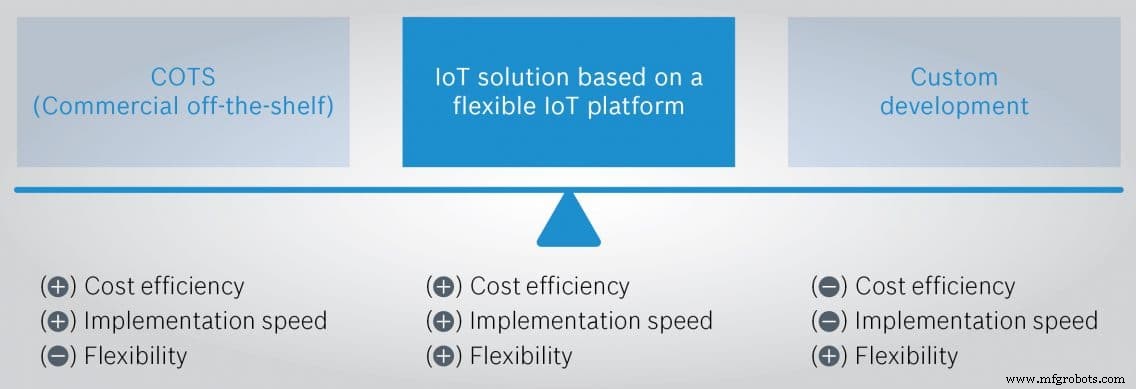
Today’s technology stack allows a hybrid approach: a flexible platform that balances standard functionality with rapid, low‑cost customization. For a deeper dive into the proven technology stack, download our IoT technology white paper.
Internet of Things Technology
- Link Labs’ Proven Approach to IoT Implementation
- Industrial IoT: A Practical Guide to Successful Implementation
- Fully‑Managed IoT Gateway Accelerates Development and Deployment
- Top 3 Challenges in Preparing IoT Data for Industrial Success
- How to Choose the Ideal IoT Development Partner: Key Challenges & Solutions
- Software Testing for IoT Devices: Key Challenges & Solutions
- Boosting Fleet Efficiency with IoT‑Based Monitoring Solutions
- How IoT Transforms Transportation: Key Applications & Benefits
- 5 Transformative IoT Applications Revolutionizing Education
- Mastering IoT Development: Solving Key Challenges for Seamless Connectivity and Security