



IoT Edge Computing: Bridging Devices and Cloud for Real‑Time Insights
The Internet of Things (IoT) is a rapidly evolving confluence of technologies, and industry stakeholders are examining how distributing compute resources to the network edge—tied together by an end‑to‑end architecture that bridges edge infrastructure and cloud services—can unlock powerful IoT applications.
In this context, “edge” refers to the physical network endpoint where an IoT device resides, while “fog” (a term coined by Cisco) describes the network architecture that connects these edge nodes to cloud services, both centralized and distributed. Though the terminology can be confusing at first, the core idea is simple: bring computing and analytics closer to where data is generated.
There are three main reasons why edge and fog computing are becoming essential for the IoT:
- Data volume: The sheer amount of data produced by billions of connected devices far exceeds what centralized cloud services can handle efficiently.
- Latency: Mission‑critical IoT applications—such as autonomous vehicles or industrial control systems—require sub‑millisecond response times that cannot be met if data must travel to a distant cloud.
- Cost: Transmitting terabytes of raw sensor data over wide‑area networks is neither cost‑effective nor energy efficient for network operators.
Earlier this week, 451 Research partnered with the OpenFog Consortium to publish a five‑year outlook for the fog computing market. The report defines the edge as IoT devices that generate sensor data and possess embedded compute, connectivity, and analytics capabilities—such as vehicles, manufacturing equipment, and smart medical devices—along with local data centers and mobile edge computing infrastructure.
According to 451’s analysis, the global market for fog solutions is projected to reach $18 billion by 2022, with the energy, utilities, transportation, healthcare, and industrial sectors leading adoption. Initial investments are expected to focus on hardware, followed by applications and services. At this stage, hardware remains the most mature component of the ecosystem.
Cisco, the originator of the “fog” term, offers the Edge Analytics Fabric System built on an open architecture. Cisco describes its value proposition as follows: “Your business operates physical assets that create data and complexity. Network and cloud connections are not available. Now you can connect, process and analyze your distributed data where it lives. Solve IT and OT challenges and make decisions in real time, creating value when you use all the data that’s important to your business.”
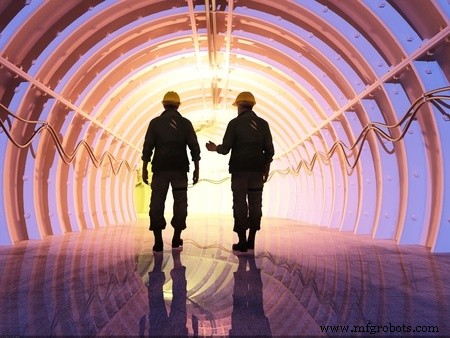
Consider a hypothetical mining scenario. Mining operations often occur in remote locations with limited cellular or satellite coverage. By deploying a virtualized radio access network and virtualized evolved packet core, equipment can communicate with each other and with operators on‑premise or in distant control centers. Predictive analytics performed at the edge can detect impending equipment failures and trigger automated interventions, reducing costly downtime and eliminating the need to ship terabytes of raw data back to a central data center.
Dell has also entered the edge hardware space with its Dell Edge Gateway. The company recently announced a dedicated IoT business unit and a $1 billion three‑year investment plan. The Dell Edge Gateway connects a wide range of wired and wireless devices, aggregates and analyzes inputs locally, and forwards only meaningful data to the cloud—saving bandwidth and reducing transport costs.
The OpenFog Consortium, a nonprofit organization that has established a reference architecture to promote interoperability across the evolving IoT ecosystem, is now collaborating with IEEE Standards Association to develop standardized fog computing specifications. OpenFog Board Chairman Helder Antunes, who also serves as Cisco’s senior director of Corporate Strategic Investments, described IEEE’s adoption of the reference architecture as a “huge milestone” that will enable the convergence of IT, communications, and operational technology.
“To truly be transformative, the Internet of Things must handle massive amounts of data in near real‑time for advanced use cases such as drones, self‑driving vehicles, and embedded AI. It also needs to be fully interoperable—from end‑user devices and sensors all the way to the cloud. Traditional architectures can’t meet the operational challenges of today’s advanced digital applications,” he wrote.
Many leading network operators are exploring edge and fog architectures, though specific plans are not yet public. A significant hurdle for operators is physical real estate: supporting high‑volume data streams from autonomous vehicles or smart infrastructure requires extensive hardware deployments. AT&T’s VP of Advanced Technology Realization, Alicia Abella, highlighted at the Fog World Congress that servers can be added to existing infrastructure sites, and suggested a future where the idle compute power of individual smartphones could be harnessed to meet edge computing demands.
Internet of Things Technology
- How IoT’s Surge is Driving the Shift to Edge Computing
- Why Edge Computing Is Essential for IoT Success
- Key Features of a Robust Edge Computing Solution for IoT
- Edge Computing: 5 Potential Pitfalls—and How to Overcome Them
- Unlock IoT Success with Edge Intelligence
- Harnessing Edge Computing for IoT, AI, and Emerging Technologies
- How Edge Computing Revolutionizes Commercial IoT Deployments
- 6 Compelling Reasons to Embrace Edge Computing
- Why Edge Computing is Essential for the IoT: Unlocking Real-Time Performance
- Harnessing IoT Edge Computing for Real‑Time Data Analysis