



Thread vs. ZigBee: A Technical Comparison for IoT Engineers
Thread and ZigBee share many core characteristics, yet they differ in key areas that influence design decisions.
- Both use mesh networking and the IEEE 802.15.4 MAC layer, enabling shared hardware support.
- They are open standards, targeting similar smart‑home and industrial IoT applications.
- Both operate on the global 2.4 GHz ISM band with comparable power envelopes.
Below is a focused comparison of the most critical distinctions and practical implications for engineers.
Thread vs. ZigBee: Primary Differences & Considerations
Network Layer
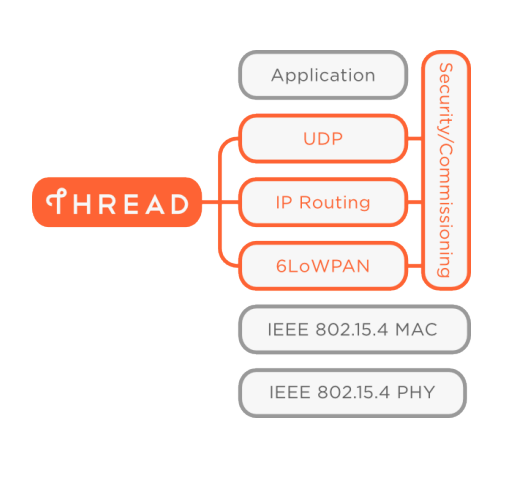
Thread, launched by Nest (Google), Samsung, and leading silicon vendors, adopts 6LoWPAN to provide each node with a native IPv6 address. Cloud services can address devices directly via an edge router that translates IPv6 traffic to the Thread mesh.
ZigBee attempted a similar IP approach with ZigBee IP, but adoption remains limited. Most ZigBee deployments rely on an edge router that must map addresses to specific nodes, adding an extra translation layer that can complicate cloud integration.
Application Layer
ZigBee defines a comprehensive application layer, exemplified by ZigBee Light Link for lighting control. While this offers tight integration for specific use cases, it can be heavyweight and restrictive for custom protocols.
Thread intentionally omits a proprietary application layer, providing a flexible IP‑based interface. This allows developers to implement diverse protocols—MQTT, CoAP, or custom payloads—without being constrained by a fixed stack.
Certification Process
Certification is managed by distinct bodies: the ZigBee Alliance for ZigBee and the Thread Group for Thread. Both require membership fees and compliance testing, though the exact costs and timelines vary. Engineers should factor in these overheads when selecting a platform.
Software Stack
Thread’s stack is streamlined, prioritizing low memory footprints and rapid boot times. ZigBee’s stack, by contrast, is larger and more feature‑rich, which can introduce latency and higher power draw—critical considerations for battery‑powered devices.
Conclusion
Choosing between Thread and ZigBee hinges on application requirements. ZigBee excels in established smart‑lighting ecosystems, whereas Thread offers modern IP integration and is rapidly gaining traction with industry leaders like Google and Samsung. For IoT engineers evaluating network options, understanding these nuances ensures optimal performance, scalability, and future‑proofing.
Questions about Thread or ZigBee? Reach out via @LinkLabsInc or contact us directly.
Internet of Things Technology
- Why Edge Computing Is Essential for IoT Success
- Why OSGi Is the Ideal Framework for Modern IoT Solutions
- MWCA 2017: U.S. Carriers Announce Bold IoT Innovations & Network Rollouts
- Fog vs. Cloud: Optimizing IoT Deployments for Speed and Scale
- Bluetooth Mesh: A Practical Protocol for Industrial IoT Connectivity
- Why ZigBee Is Ideal for Smart Lighting Solutions
- Bluetooth LE vs. ZigBee: Choosing the Right Low‑Power Protocol for IoT
- Top 5 Must‑Attend Breakout Sessions for Engineers at IoT World Forum 2014
- U.S. IoT Security Law Sets New Standards and Liability Requirements
- Augmented Reality: The IoT Solution That Empowers People