



How Smart IoT is Transforming the Oil & Gas Industry
Oil and gas companies face a relentless drive for higher production and lower costs. In this environment, the Internet of Things (IoT) offers a practical pathway to meet those goals. This article examines the monitoring methods historically used in the sector, how they are evolving, and the capabilities of today’s wireless IoT solutions.
Smart Oil & Gas Monitoring Approaches
Oil and gas operators have been early adopters of IoT. Their monitoring portfolio traditionally includes:
- Programmable Logic Controllers (PLCs) – wired systems that provide robust industrial communication. The trade‑off is the upfront cost and physical cabling required, which can become prohibitive for remote sites.
- Satellite Links – services such as Iridium and Inmarsat deliver global coverage but carry high recurring fees, which were historically acceptable given the sector’s margins.
- Manual Field Checks – human crews inspect wells and pipelines by hand. While simple to deploy, the labor intensity and travel costs are significant, especially in isolated locations.
Key considerations when choosing a monitoring strategy include:
- Cost – wired installations are typically the most expensive.
- Complexity – satellite architectures can involve multiple link layers.
- Labor – onsite monitoring demands substantial manpower.
Recent growth in the machine‑to‑machine (M2M) market has enabled many operators to replace legacy wired solutions with wireless IoT. A single well can now host dozens of sensors, and expansion to thousands is straightforward. However, because well monitoring remains highly complex, each deployment should be evaluated on its own merits.
IoT’s Impact on Oil & Gas Operations
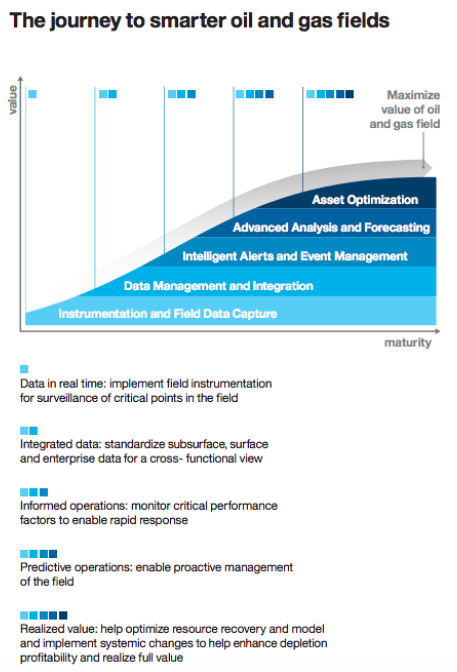
While IoT has not completely overhauled the industry, it has dramatically improved data collection, enabling more informed decisions. Connected wireless devices help operators:
- Optimize pumping schedules and energy use.
- Maintain pipelines and well integrity.
- Detect equipment failures and gas leaks early.
- Track pipe wear, temperature, and corrosion in refineries.
Wireless sensors reduce manual readings and increase data granularity, giving companies a richer dataset for analytics and operational refinement. For example, a new well can be monitored for temperature, pressure, flow, and chemical composition in real time, enabling on‑the‑fly adjustments that boost yield and reduce costs.
Oil & gas has a long history of industrial control systems. The shift from wired to wireless mirrors that evolution: increased connectivity, greater data capture, and smarter process control.
Ongoing Evolution
IoT will continue to refine oil and gas operations. Today’s affordable, high‑performance wireless modules give companies the flexibility to deploy more endpoints, collect more granular data, and apply advanced analytics. The result: better decision‑making and higher margins.

Internet of Things Technology
- Essential Types of Natural Gas Valves for the Oil & Gas Industry
- Bridging the Smart Home Skills Gap: Why Britain Lags Behind Europe
- From Dual Grids to Smart Systems: Japan’s Journey Toward a Unified, Resilient Power Future
- How IoT Drives Value in Industrial Automation for Oil & Gas
- Harnessing IoT to Transform Oil & Gas Operations
- How 3D Printing Revolutionized Manufacturing: A Journey Through Its Evolution
- Smart Gas Monitoring: Key Safety Benefits for the Oil & Gas Sector
- Asset Monitoring: Driving Efficiency in the Oil & Gas Sector
- Next-Gen Subsea Technology: Revolutionizing Oil & Gas Operations
- How 3D Vision Technology Revolutionizes Modern Automation