



From Dual Grids to Smart Systems: Japan’s Journey Toward a Unified, Resilient Power Future
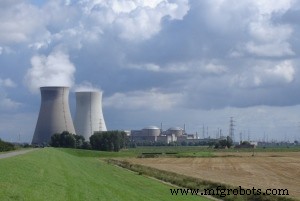
Japan’s power landscape is split between two legacy grids that have never been compatible: Osaka’s 60 Hz network and Tokyo’s 50 Hz grid, a relic of 19th‑century import decisions. This dual‑system reality has long posed a challenge for consistent, high‑quality electricity delivery.
Nick Boughton, sales manager at systems integrator Boulting Technology, outlines how Japan’s modernization journey—culminating in the convergence of these divergent grids—has paved the way for today’s smart grid solutions.
In the early 20th century, local grids worldwide expanded to meet industrial demand. By the 1960s, power networks had become vast, mature, and highly interconnected, enabling per‑user metering and more accurate billing. However, limited data processing meant that most consumers still faced fixed tariffs.
Simultaneously, growing demand occasionally outpaced supply, especially during peak periods, leading to voltage fluctuations. Between the 1970s and 1990s, many developed nations—including Japan—experienced frequent blackouts, brownouts, and power cuts.
Millennium Shift
The new millennium ushered in digital technologies that overcame many legacy constraints. Peak‑price disparities could now be resolved in real time, and tariff structures evolved to reflect actual consumption patterns.
Yet new challenges emerged: the intermittency of renewable generation, concerns over fossil‑fuel emissions, and a societal reluctance to embrace nuclear power. Consequently, renewables have been deployed on a large scale.
According to REN21’s Global Status Report, 19.3 % of global final energy consumption came from renewable sources, with modern renewables accounting for about 10.2 % of new capacity. Solar photovoltaic and hydropower remain the dominant contributors.
While renewables are vital to climate mitigation, their variability can reduce grid margins and risk blackouts on cloudy days. These risks, coupled with the need for a highly distributed network where power is generated and consumed locally, have driven the evolution of smart grids.
Investment Pathway
The first step toward a smart grid is infrastructure renewal—what China calls the “Strong Grid.” This phase builds a robust physical backbone. The next layer adds digital intelligence, turning the grid into a responsive, data‑driven system. Finally, business process transformation ensures that new capabilities translate into tangible value for stakeholders.

A fully realized smart grid offers state‑of‑the‑art features: state estimation for fault detection, self‑healing capabilities, and multiple routing options that enhance reliability, resilience, and flexibility.
Modern smart grids support bidirectional energy flow, enabling power from photovoltaics, fuel cells, and electric‑car batteries to travel both ways. This flexibility improves safety and reduces reliability issues through intelligent management.
Advanced algorithms analyze real‑time data to forecast generator demand, enabling proactive load shedding and preventing stability problems.
For most countries, smart grid evolution is inevitable—especially for developing economies investing in infrastructure or cities transitioning to smart city models. The benefits include steadier power quality for commercial and industrial users, and a more resilient grid overall.
Although a smart grid upgrade can mitigate many power‑quality concerns, Japan’s dual‑grid legacy means additional work remains before full compatibility is achieved.
Author: Nick Boughton, Sales Manager, Boulting Technology
Internet of Things Technology
- Achieving 100% Renewable Power with the IIC Microgrid Testbed
- IIC Launches Smart‑Grid Testbed to Accelerate Green Energy Adoption
- How Smart IoT is Transforming the Oil & Gas Industry
- ABB’s Award-Winning FACTS Solution Enhances Reliability & Cuts Emissions for Dallas‑Fort Worth Power Grid
- Smart Cities: Leveraging 5G, IoT, and Fiber for a Net‑Zero Future
- Global IoT Network Grid: Empowering Connectivity for Industry Transformation
- How 3D Printing Revolutionized Manufacturing: A Journey Through Its Evolution
- Tesla's Virtual Power Plant: Transforming the Global Energy Grid
- Fortifying the U.S. Electric Grid with Physics‑Based Cybersecurity
- How 3D Vision Technology Revolutionizes Modern Automation