



How AR & VR Are Redefining Plant Maintenance
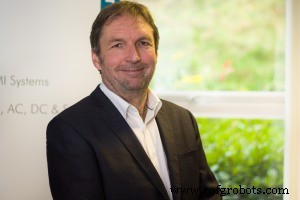 Nick Boughton of Boulting Technology
Virtual technology has been around for nearly fifty years, enriching fields like entertainment, education and design. In the last five years, Augmented Reality (AR) and Virtual Reality (VR) have begun to transform industrial settings. Nick Boughton, Digital Lead at systems integrator Boulting Technology, explains how AR and VR are reshaping plant maintenance.
Industry 4.0 technologies, along with the widespread networking of equipment such as programmable logic controllers (PLCs) and supervisory control and data acquisition (SCADA) systems, enable predictive maintenance. Sensors continuously gather data on every piece of equipment, allowing engineers to forecast when parts may require service or replacement and to intervene before failure occurs.
AR and VR elevate this approach by letting maintenance engineers use smartphones, smart glasses, or headsets to create a digital replica of a fault and, crucially, its solution.
VR takes it a step further by immersing the engineer in a fully virtual environment. With a headset, the technician can accelerate time, use real‑time data to pinpoint exactly when a system might fail, and plan repairs accordingly. This proactive maintenance ensures the correct replacement part is ordered well ahead of time.
A Helping Hand
The engineering skills gap is widening; between now and 2020, an estimated 182,000 engineering positions were expected to be vacant annually. This shortage means many engineers lack the expertise to address specific equipment faults until they complete internal training, which hampers productivity.
As AR technology matures, one of its most powerful uses will be remote support from off‑site suppliers like Boulting Technology. Instead of a phone call, the AR system lets suppliers visually guide customers through servicing or replacing a part, sharing relevant maintenance data and recommending the best course of action. This may even involve dispatching a Boulting engineer to assist on site.
With cloud‑based data becoming more accessible, this level of support dovetails with the growing servitisation trend, where end users subscribe to software‑as‑a‑service models for maintenance.
Training for the Future
AR and VR also hold promise for addressing the STEM skills shortage from a training perspective. Emerging engineers can apply theory to practice in a virtual plant environment without disrupting daily operations, while VR can be integrated into training rooms to let apprentices explore the plant digitally.
While challenges remain—primarily due to the complex nature of engineering systems and models—AR and VR are already making a substantial impact by granting access to scenarios that would otherwise be hard to visualize or unreachable. In the coming years, Boulting Technology aims for a more integrated blend of hardware and software solutions.
The author of this blog is Nick Boughton, Digital Lead at systems integrator Boulting Technology
Internet of Things Technology
- How Live TV Will Transform: The Computing‑Driven Future of Broadcast
- The Rapid Evolution of Automation in Distribution Centers
- Industry 4.0 in Maintenance: A Practical Guide to the Future of Asset Management
- The Future of Data Centers: Trends, Tech, and Sustainability
- Plant Maintenance Demystified: Best Practices for Modern Industries
- Future-Proofing FMCG Production: Innovative Maintenance Strategies
- Shaping Tomorrow: The Evolving Role of Maintenance Engineers in Modern Factories
- Zero Downtime: The Future of Predictive Maintenance
- Plant Maintenance: Keeping Factories Efficient and Safe
- Mastering Plant Maintenance: Proven Practices for Reliable Energy Production