



Industry 4.0 in Maintenance: A Practical Guide to the Future of Asset Management
Industry 4.0 has become a central theme in maintenance discussions—from blogs to boardrooms. Yet the conversation often feels laden with buzzwords and vague promises. In this article, we cut through the jargon to reveal what Industry 4.0 truly means, how it transforms maintenance, and how you can prepare today for tomorrow’s asset‑centric world.
Table of Contents
- What is Industry 4.0?
- Decoding the Industry 4.0 Vocabulary
- How Maintenance Leverages Industry 4.0
- Is Industry 4.0 a Dream or Reality for Maintenance?
- Unlocking Industry 4.0’s Potential in Maintenance
What is Industry 4.0?
Industry 4.0 represents the latest evolutionary step in manufacturing, building on the foundations laid by the previous three industrial revolutions. Each era—mechanization, mass production, digitalization—was driven by transformative technology that raised productivity benchmarks. Industry 4.0 elevates this trend by embedding smart systems, data analytics, and machine learning into the production fabric, enabling machines to communicate, self‑optimize, and predict failure before it occurs.
Industry 1.0

Mechanization powered by water and steam.
Industry 2.0

Mass production on electric assembly lines.
Industry 3.0

Digital control and computer‑based manufacturing.
Industry 4.0

Automation through smart, interconnected systems that use data and machine learning.
While Industry 3.0 introduced computers into the shop floor, Industry 4.0 turns those computers into autonomous decision‑makers. With real‑time data streams, predictive analytics, and autonomous machinery, this era promises higher efficiency and dramatically reduced waste.
Decoding the Industry 4.0 Vocabulary
Buzzwords can obfuscate rather than enlighten. Understanding the precise meaning of key terms helps you make informed decisions about technology investments.
Artificial Intelligence (AI)
AI is the umbrella term for systems that emulate human reasoning—speech recognition, decision‑making, and beyond. In practice, AI powers digital assistants, generative design tools, and autonomous quality inspection.
Machine Learning (ML)
ML is a subset of AI that enables systems to learn from data patterns. Think of Netflix’s recommendation engine or diagnostic algorithms that spot disease from X‑ray scans. ML transforms raw data into actionable insights.
Industrial Internet of Things (IIoT)
IIoT connects sensors, actuators, and software across the plant, creating a unified data ecosystem. Instead of siloed data collection, IIoT provides continuous, real‑time feeds that feed analytics platforms and maintenance systems.
The spotlight usually shines brightest on your maintenance team when something goes wrong…This backwards mindset is set to change with Industry 4.0.
Big Data
Big Data refers to massive, high‑velocity datasets that reveal patterns and causality. In manufacturing, analyzing thousands of sensor logs can uncover root causes of downtime, enabling targeted improvements.
How Maintenance Leverages Industry 4.0
Industry 4.0 reshapes asset management from reactive troubleshooting to proactive, data‑driven stewardship. Three critical areas illustrate this shift:
Predictive Maintenance (PdM)
PdM uses sensor data and ML models to forecast equipment failure before it happens. By scheduling repairs on demand, PdM reduces unplanned downtime, cuts safety incidents, and extends asset life.
Smart sensors monitor vibration, temperature, and other metrics. When thresholds are crossed, the data feeds into a CMMS, which automatically creates work orders and notifies technicians via mobile devices.
Cost Control
Efficiency gains are a primary driver of Industry 4.0 adoption. Advanced inventory analytics cut excess stock, while 3D printing enables on‑site spare part production, minimizing shipping delays and unplanned outages.
Demonstrating Value
Historically, maintenance success has been judged by reactive fixes. Industry 4.0 turns this on its head by quantifying the impact of each activity—linking sensor data, CMMS entries, production outputs, and financial metrics to prove how maintenance drives profitability.
Industry 4.0 is a big change, and change is never easy. That’s why implementing new technology starts with people.
Is Industry 4.0 a Dream or Reality for Maintenance?
Adopting Industry 4.0 is not a plug‑and‑play exercise. It requires aligning technology, processes, and culture. Here are practical steps your team can take now:
1. Master Preventive Maintenance
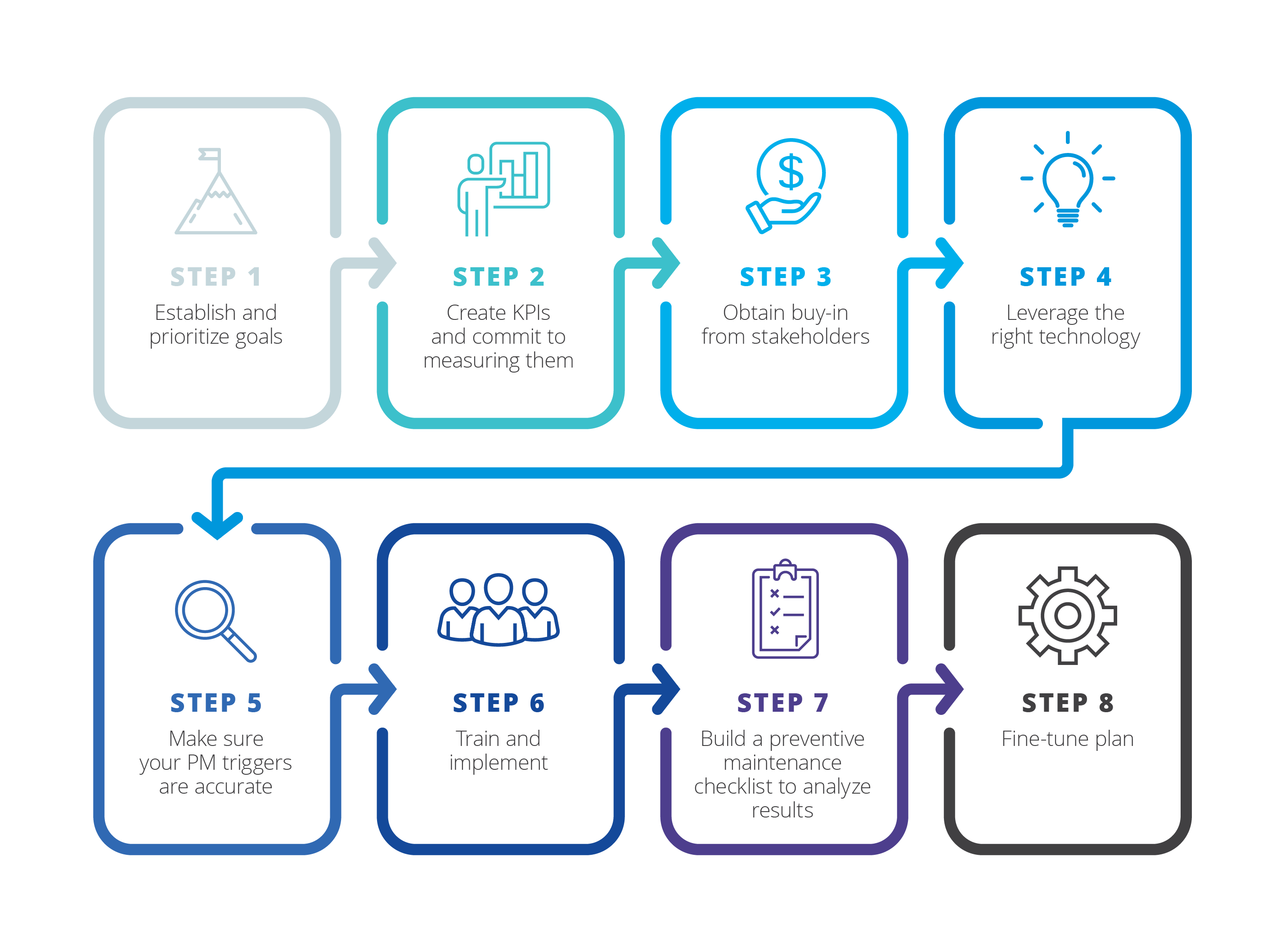
A robust preventive program creates a stable foundation for advanced analytics. By defining clear goals, implementing standardized work orders, and measuring KPIs such as mean time between failures, you set the stage for seamless Industry 4.0 integration.
2. Focus on High‑Quality Data
Data quality is the lifeblood of predictive analytics. Record not just the “what” and “when” of a failure, but also the “how,” “which parts,” and “time taken.” Standardized asset naming, digital records, and consistent reporting turn raw data into strategic intelligence.
3. Build a Reliability Culture
People are the cornerstone of transformation. Establish clear policies, formalize processes, and foster open communication. Recognize and reward staff who champion continuous improvement, and embed reliability into the organizational DNA.
4. Start Small with Predictive Maintenance
Begin with condition‑based monitoring on a select few critical assets. Use real‑time data to refine your models, then expand gradually. This iterative approach mitigates risk and builds institutional knowledge.
Unlocking Industry 4.0’s Potential in Maintenance
Realizing the full benefits of Industry 4.0 is a marathon, not a sprint. Success hinges on incremental, well‑executed changes that empower your maintenance workforce. By blending proven practices with data‑driven insights, you’ll transform reactive firefighting into proactive asset stewardship—and unlock lasting competitive advantage.
Equipment Maintenance and Repair
- The Rapid Evolution of Automation in Distribution Centers
- Industry 4.0: Materialise’s Blueprint for the Networked Factory
- Phil Pasma: Redefining Manufacturing for the Next Generation
- How AR & VR Are Redefining Plant Maintenance
- Predictive Maintenance: Driving a $28B Industry Revolution
- Future-Proofing FMCG Production: Innovative Maintenance Strategies
- Shaping Tomorrow: The Evolving Role of Maintenance Engineers in Modern Factories
- Master Maintenance Management: Boost Efficiency & Cut Costs
- Mastering Preventive Maintenance: A Comprehensive Expert Guide
- Zero Downtime: The Future of Predictive Maintenance