



Achieving 100% Renewable Power with the IIC Microgrid Testbed

The Industrial Internet Consortium (IIC) is turning its testbed initiative into tangible outcomes. In partnership with RTI, the Microgrid Testbed showcases how a fully renewable‑powered grid can be realized—surpassing the current 40% renewable ceiling—and demonstrates seamless integration with cloud‑based control platforms that enable utilities to orchestrate multiple microgrids from a single dashboard.
The Case for Microgrids
Solar and wind generation are growing rapidly, driven by the need to reduce emissions, enhance disaster resilience, and lower costs. However, the legacy electric transmission network was never designed to accommodate the surge of distributed energy resources (DERs) that produce variable power. A sudden cloud cover can reduce a solar array’s output in milliseconds, while wind speeds can plummet unexpectedly, requiring an immediate backup source. Traditional centralized plants can take up to fifteen minutes to ramp up—too slow to keep voltage and frequency within safe limits, risking a grid collapse.
Microgrids, confined to a defined area, combine DERs, energy storage (e.g., batteries), and localized control to operate independently of the main grid. This autonomy allows them to respond instantly to power fluctuations, providing an extra 15–30 minutes of buffer for utilities to bring additional generation online. They also enable the integration of intermittent renewables that would otherwise destabilize the system.
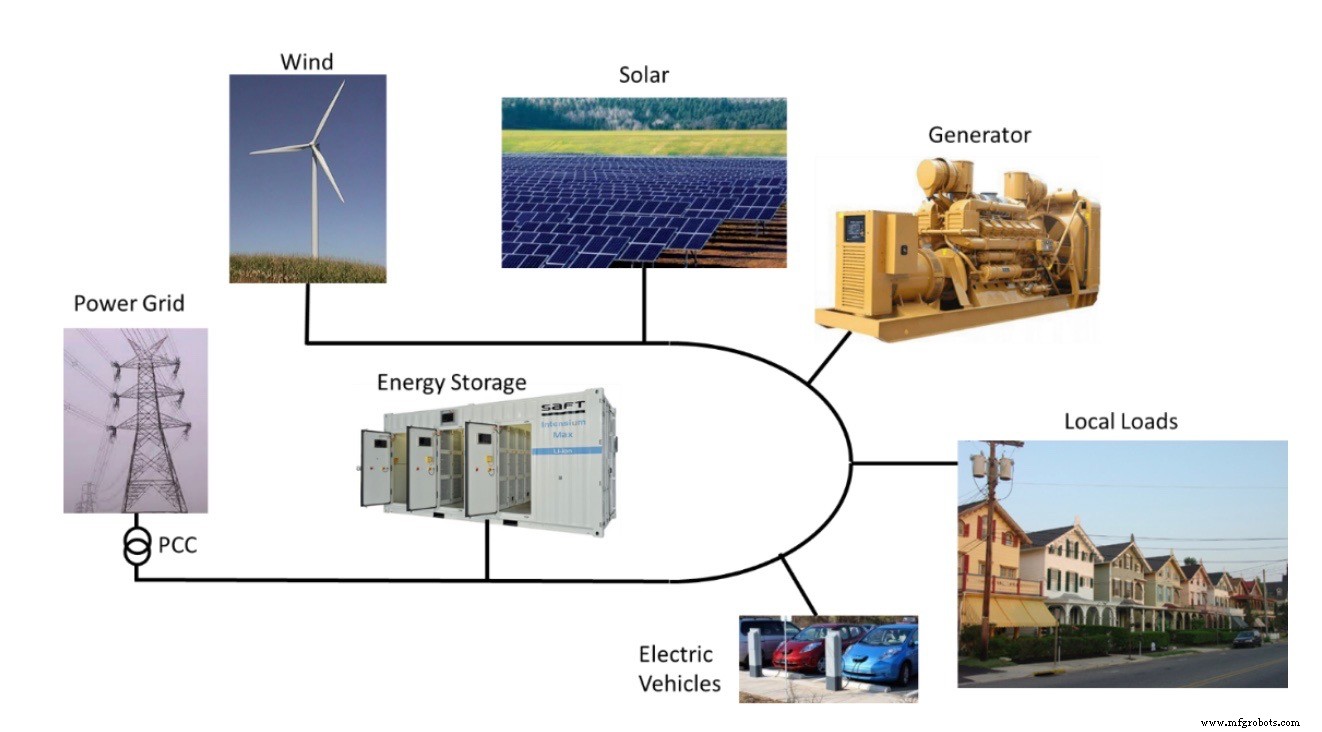
Figure 1. A microgrid that employs data communication and edge intelligence to automate local generation and balance load, facilitating the integration of solar and wind energy.
Renewable sources generate DC power, which must be converted to AC via inverters. Conventional inverter control relies on robust voltage and frequency references from the main grid—a signal that disappears in a microgrid or when DERs dominate. As a result, inverters can destabilize the grid if they “chase” each other’s signals. When DERs represent more than 20–40% of total generation, this instability becomes a critical challenge, especially for isolated islanded microgrids lacking a diesel backup.
Enabling 100% Renewable Energy
Utilities are migrating from proprietary communication protocols to Ethernet‑based IP networks. By adopting Time‑Sensitive Networking (TSN), the Microgrid Testbed delivers sub‑millisecond synchronized measurements of phase, frequency, and voltage across inverter nodes. Rather than depending on the traditional AC‑following method, the system shares real‑time metrics over the network, creating a virtual synchronization master that resolves the stability issue. This approach has proven that a microgrid can run entirely on renewable sources without sacrificing reliability.
Cloud‑Integrated Multi‑Microgrid Management
The architecture rests on three pillars: intelligent edge control, high‑performance peer‑to‑peer communication, and cloud‑based analytics that fuse third‑party data (e.g., weather forecasts) with grid telemetry. A tiered design connects the edge, microgrid control, and real‑time data bus to cloud dashboards, analytics engines, and utility back‑end systems, ensuring full visibility and control.
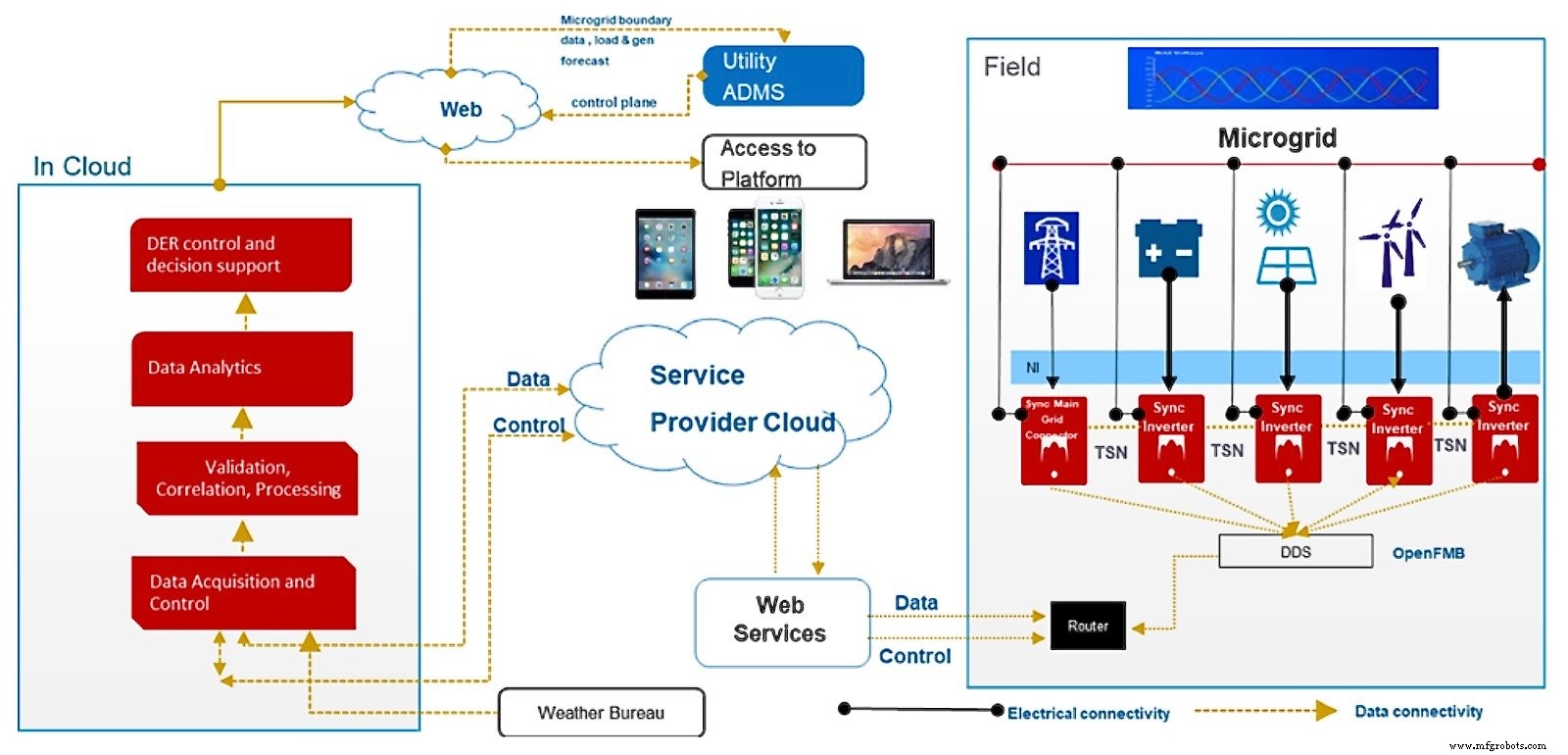
Figure 2. Deployed communication and control tiered architecture for microgrid and distribution grid management.
The cloud platform aggregates operating data, enriches it with external inputs, and applies predictive analytics to estimate generation and load. It also interfaces with the local balancing authority and the utility’s core systems, providing an integrated dashboard for distribution operators, microgrid managers, and occasionally, end‑users.
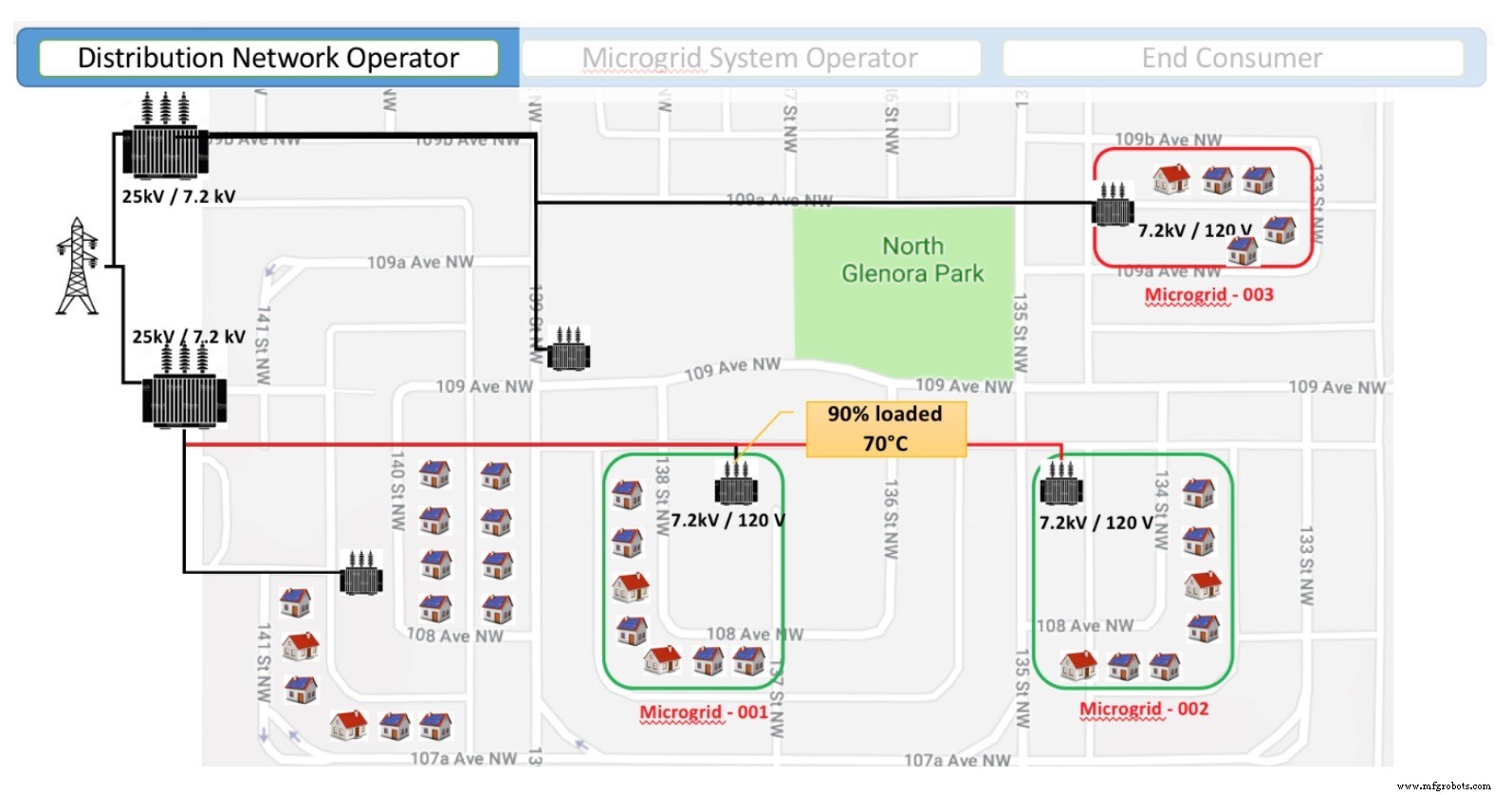
Figure 3. Distribution System Operator interface delivering full visibility and control over a distribution grid with DERs, controllable loads, and multiple microgrids.
Having proven 100% renewable operation and multi‑microgrid coordination in the lab, the next milestone is field deployment in partnership with a utility. Stay tuned for future updates.
For deeper insight, read the IIC white paper, “Synchronized and Business‑Ready Microgrid.”
Internet of Things Technology
- IIC and OpenFog Unite to Lead Distributed Computing for Industrial IoT
- IIC Launches Smart‑Grid Testbed to Accelerate Green Energy Adoption
- The Emerging Role of IoT in the Energy Sector: Key Use Cases and Benefits
- AIoT: Harnessing the Synergy of Artificial Intelligence and the Internet of Things
- From Dual Grids to Smart Systems: Japan’s Journey Toward a Unified, Resilient Power Future
- Global IoT Network Grid: Empowering Connectivity for Industry Transformation
- CAT‑M1 vs NB‑IoT: A Technical Breakdown of Coverage, Cost, and Power
- Boost IoT Performance with Metadata-Driven Data Insights
- Fortifying the U.S. Electric Grid with Physics‑Based Cybersecurity
- Motoman HP3JC: Compact High-Speed Power for Efficient Manufacturing