



Industry 4.0 and the Industrial Internet Consortium Align to Drive IIoT Innovation

In 2015, the Industrial Internet Consortium (IIC) and Germany’s Platform Industrie 4.0 faced significant confusion and tension. Some perceived the IIC as the U.S. counterpart to Germany’s initiative, while others feared a “land‑grab” situation. The overlap between the IIC and the Object Management Group (OMG) – which oversees both the IIC and the DDS standard – further fueled uncertainty. Over time, industry stakeholders clarified that the two organizations serve distinct, complementary purposes.
By 2016, with a growing number of companies engaging in both ecosystems, members began collaborative discussions. Joint Task Groups were formed to identify synergies and reduce market fragmentation. The consensus was clear: the IIC offers a high‑level, cross‑industry view of the Industrial Internet of Things (IIoT), whereas Industrie 4.0 delivers deep, manufacturing‑specific insights.
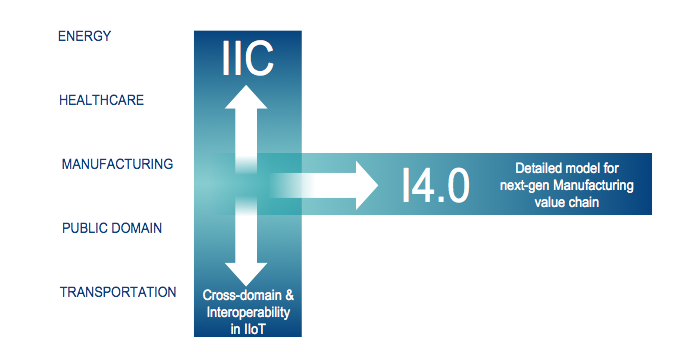
Figure 1. IIC covers broad IIoT concerns across sectors; Platform Industrie 4.0 focuses intensively on manufacturing processes.
In February 2018, the joint architecture task group released the first IIC/Industry 4.0 white paper, Architecture Alignment and Interoperability. The document presents a detailed mapping between the IIC’s Industrial Internet Reference Architecture (IIRA) and Industry 4.0’s Reference Architecture Model (RAMI 4.0). Despite the extensive negotiation required, both parties expressed satisfaction with the outcome: the architectures are complementary rather than redundant.
While the IIRA emphasizes wide‑ranging IIoT system characteristics—security, safety, scalability, and interoperability—the RAMI 4.0 dives deeply into the manufacturing value chain and product development lifecycle. A side‑by‑side comparison (see Figure 2) highlights how each framework addresses specific industry needs.
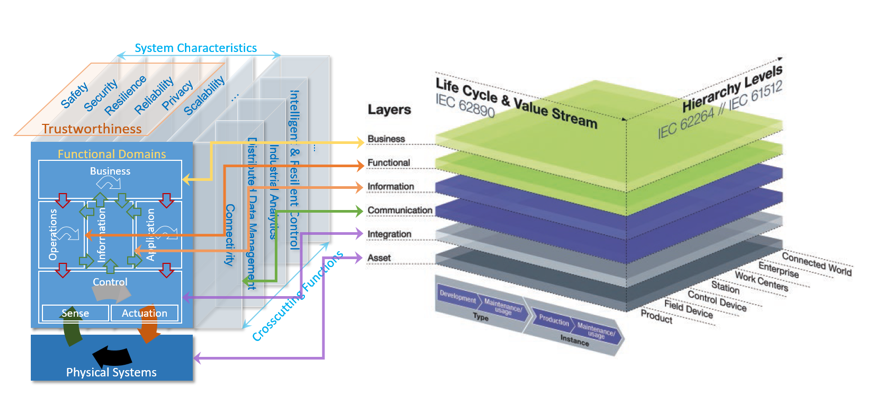
Figure 2. Functional mapping between IIRA and RAMI 4.0.
The white paper also tackles a key divergence: connectivity versus communications. RAMI 4.0 designates OPC‑UA as a core communication standard, particularly suited to device interoperability in manufacturing. The IIC, through its Industrial Internet Connectivity Framework, refrains from endorsing a single standard but recommends four core technologies—DDS, OneM2M, Web Services, and OPC‑UA—to meet the diverse connectivity needs of IIoT systems. Figure 3 illustrates this connectivity stack and provides guidance on selecting the most appropriate standard for a given application.
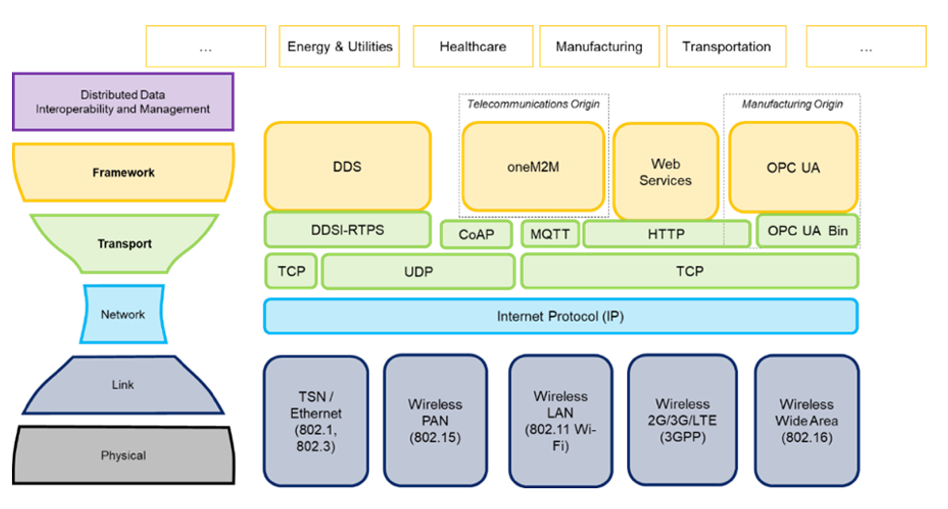
Figure 3. IIC’s IIoT connectivity stack.
Ongoing work continues within the joint task groups, and additional outputs are anticipated from other collaborative teams. The most important takeaway: the initial divide has been reconciled, paving the way for a unified, market‑driven approach to IIoT.
Internet of Things Technology
- IIC and OpenFog Unite to Lead Distributed Computing for Industrial IoT
- The Tempest and the Digital Grid: How Smart Technology Cuts Outage Times
- From Sports Glory to Factory Excellence: How Team Chemistry Fuels Industrie 4.0
- How 5G Fuels IoT: Current State, Opportunities, and Key Challenges
- How Smartphones Are Shaping the Future of Connected Cars
- AIoT: How Artificial Intelligence Amplifies the Internet of Things
- AT&T Foundry: Accelerating Innovation Through Pragmatic Prototyping
- Condition‑Based Maintenance: Core Principles and Key Advantages
- Gartner Forecasts AI’s Next Chapter: Opportunities, Risks, and Adoption Hurdles
- 5G: Preparing for Exponential Data Growth in Telecom