



How Smartphones Are Shaping the Future of Connected Cars
For many of us, the smartphone has become the primary gateway to communication, entertainment, news, and commerce. According to Marco Dallabora, senior director of the Mobile Business Unit at Micron Semiconductor Italia, the smartphone remains the most frequently used digital device in daily life.
It functions as a hub that connects to wearables, speakers, home‑security systems, and even vehicles, while storing gigabytes of personal data that tailor the experience. This blend of ubiquity and personalization gives the smartphone its immense influence.
So why should the driving experience be any different? Automakers have long pursued personalization. Since BMW introduced Apple iPod connectivity in 2004, manufacturers have integrated a personalized “smartphone experience” into the car. By 2016, in‑car connectivity through smartphone integration had become standard in new vehicles, with systems such as Ford’s Sync App Link, BMW ConnectedDrive, and Mercedes me.
Personalization: Beyond Entertainment
Smartphones bring more than music and navigation to the automotive arena. Imagine entering a rental or shared car that, after a quick sync, automatically applies your seat position, climate settings, preferred maps, contacts, frequent destinations, and even restaurant recommendations. The vehicle instantly becomes a reflection of your individual preferences.
Real‑time data flow can also enhance driver convenience. While parking‑locator apps exist, tighter integration into the car’s navigation system could provide live recommendations and directions to the nearest available spots, reducing search time and frustration.
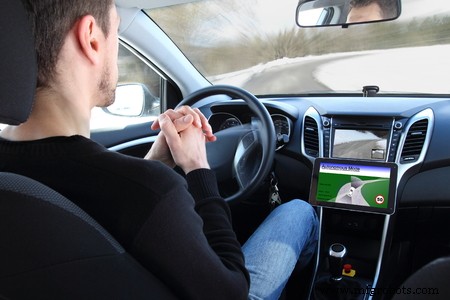 Personalized smartphone data can support advanced driver assistance systems. Dedicated applications leverage the phone’s sensors, computing power, and connectivity to offer real‑time feedback on braking, cornering, acceleration, and speed‑limit compliance. A “driver score” derived from these metrics could encourage safer driving and enable insurers to offer customized policies. Rideshare companies like Uber and Lyft could also use such data to rank drivers more effectively.
Equipping Cars and Smartphones with Advanced Memory
Achieving true connected‑car personalization demands close collaboration between the vehicle’s internal platform and smartphone applications, underpinned by standardized data formats to deliver a consistent user experience across brands.
Manufacturers recognize that memory is a critical enabler for this integration. The vehicle’s electronic systems—ADAS, HUD, dashboard instrumentation, navigation, infotainment, and powertrain—depend on ample, fast memory to store code, data, and parameters.
 Smartphones must also evolve. As app developers push for richer, more personalized experiences, the mobile device must handle increased data volume, demanding larger memory capacities and higher write/read speeds. Continuous file caching and frequent read/write operations stress both the phone’s storage and the vehicle’s interface.
The rollout of 5G—offering throughput far beyond 4G—will accelerate data exchange between smartphone and car, amplifying the need for faster, higher‑capacity memory. With autonomous driving on the horizon, higher‑resolution camera sensors, richer multimedia, and more in‑vehicle sensors, the demand for sophisticated memory solutions will only grow.
In short, innovation in automotive and mobile technology is relentless. Ensuring that vehicles employ advanced, high‑performance memory and storage systems will be essential to deliver the next generation of driver experience.
The author of this blog is Marco Dallabora, senior director – Mobile Business Unit, Micron Semiconductor Italia
Internet of Things Technology
- HIMSS19: Shaping the Future of Connected Healthcare
- The Internet of Things and 5G: Driving the Future of Connected Vehicles
- How Connected Cars Are Revolutionizing Vehicle Safety and Maintenance
- How 5G Is Transforming Connected Cars: Speed, Safety, and Smart Features
- Who’s in Charge of the Connected Car? Insights from the Driver’s Perspective
- Securing the 20th Anniversary of the Internet of Things: Protecting Our Hyperconnected Future
- Connected Manufacturing: What It Is & Its Key Benefits
- Connected Cars: Transforming Driving into a Smarter, Safer Experience
- Transforming Asset Management: Harnessing IoT and Connected Assets for Efficiency
- Should You Coat Your Pump? Weighing the Benefits and Drawbacks