



How 5G Is Transforming Connected Cars: Speed, Safety, and Smart Features
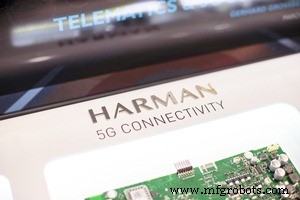
As autonomous driving advances, vehicles must be equipped with a suite of sensors that emulate human vision, hearing, touch, and situational awareness. These sensors produce vast amounts of data that must be exchanged with other cars and road‑infrastructure networks in real time.
Simultaneously, each vehicle must process incoming data from neighboring vehicles, road sensors, and cloud services. Timely, low‑latency communication is essential for split‑second decisions that safeguard passengers, explains Vishnu Sundaram, VP of the Telematics Business Unit at HARMAN International.
The Need for Speed
According to Gartner, the connected‑car market will grow from 60 million units in 2020 to 220 million in the next four years, demanding bandwidth well beyond 1 Gbps for a reliable user experience. This shift moves the focus from merely handling device connectivity to managing the colossal data volume, necessitating a move from 4G to 5G. Field trials have shown data rates exceeding 70 Gbps and latency reductions of 10–50× compared to 4G, with a network capacity 1,000× greater.
What 5G Brings to the Consumer
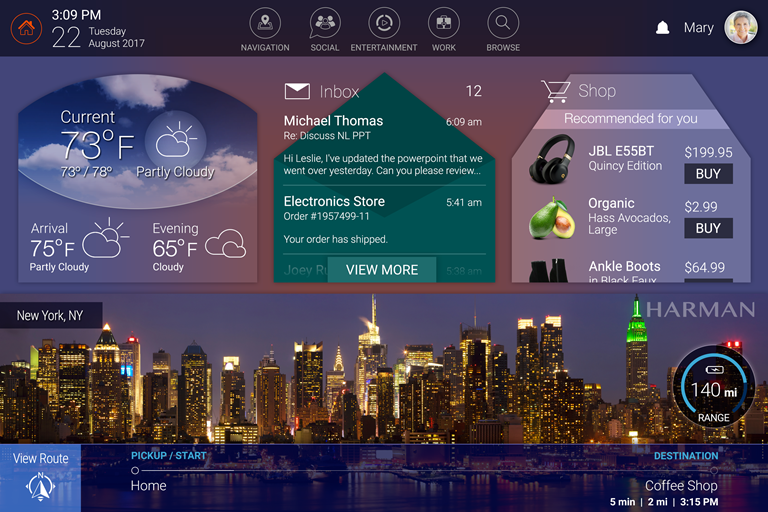
5G will power telematics that enhance safety, traffic management, and in‑car augmented reality. HARMAN is developing 5G‑enabled solutions that enable vehicles to share real‑time information with smart‑city command centres and emergency teams, while also improving traffic flow, road safety, and in‑vehicle entertainment.
Decongestion
Recent studies show UK drivers spend an average of one day a year stuck in rush‑hour traffic—three days in London—resulting in a cost of £1,168 (€1,323.23) per driver for wasted fuel and time.
5G will enable next‑generation telematics such as:
- Optimised‑speed guidance at traffic lights, advising drivers on speed adjustments to prevent stoppages and congestion.
- Signal‑violation alerts that warn drivers of impending traffic light violations or temporary speed‑limit changes due to roadwork.
- Emergency‑trajectory alignment, where vehicles near an incident share geographic data with peers and infrastructure, enabling dynamic rerouting to mitigate congestion.
Receiving such data well ahead of line of sight improves vehicle efficiency, saves time, and fosters a calmer driving environment.
Road Safety
Thatcham Research reports that 15,000 people are killed or seriously injured on UK roads annually. 5G‑enabled connected‑car systems will allow data sharing that enhances advanced driver assistance systems (ADAS) with features such as collision warnings, emergency braking, and abnormal‑vehicle detection.
Future ADAS functions that rely on 5G could include: warnings for loss of control in wet, snowy, or icy conditions; alerts for driver drowsiness leading to braking or steering loss; “Do not pass” advisories for unsafe overtaking; and vulnerable‑road‑user warnings that notify drivers of potential hazards.

5G will bring science‑fiction to reality: augmented reality can let drivers “see through” a large vehicle ahead, using real‑time video and navigation to reveal the road beyond.
Convenience
With 5G, front and rear passengers can enjoy next‑generation immersive experiences, high‑definition video streaming, and online gaming. The network will continuously monitor fuel levels, factoring in destination and traffic conditions to optimize refuelling strategies.
Remote vehicle analytics will diagnose real‑time issues and collect anonymised performance data to refine usage patterns. Ultra‑reliable connectivity will support over‑the‑air software updates, reducing the need for dealer visits.
Conclusion
The rollout of 5G will not only elevate current automotive systems but also future‑proof autonomous vehicles. Only through advanced data networks can we process and share the information necessary for vehicles to act safely and correctly.
The author of this blog is Vishnu Sundaram, VP, Telematics Business Unit, HARMAN International
Internet of Things Technology
- Molybdenum Compounds: Key Industrial Applications and Benefits
- How Smartphones Are Shaping the Future of Connected Cars
- How eSIMs are Transforming Mobile Operators: Growth Opportunities & Revenue Models
- Safety First: How Europeans View Future Connected Cars
- The Future of Drones: Capabilities, Opportunities, and Risks
- Connected Cars: Transforming Driving into a Smarter, Safer Experience
- How 5G Adoption Enhances IoT Security: What You Need to Know
- IoT in 2020: How Advancements Are Shaping Our Future
- Key Manufacturing Trends: How Connected Cars Are Shaping the Future
- Why Does My Car Leak Oil When Packed? Common Causes Explained