



Safety First: How Europeans View Future Connected Cars
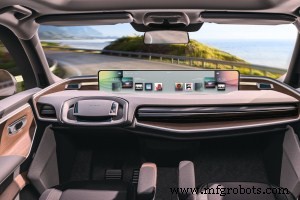
A recent European survey commissioned by Clarion and conducted by YouGov surveyed over 6,000 adults across France, Germany, Italy and the UK. According to Sebastien Brame, Senior Manager at Faurecia Clarion Electronics, the results underscore that safety remains the paramount concern for the connected car of tomorrow.
Overall, 40% of respondents identified safety as the top priority, while 25% placed eco‑friendliness next. Nearly half (49%) of participants highlighted the ability to predict hazards as the most significant future innovation, a sentiment amplified in France where 56% shared this view. Additionally, 36% said future cars should alert drivers to nearby accidents.
Raising Awareness About Connected Cars
The survey reveals that while Europeans appreciate connected‑car benefits, many lack full understanding of the underlying technologies. 64% of respondents expressed enthusiasm for the concept, with Italians leading at 83%. In the UK, 55% were positive and 30% remained neutral. Yet, almost half (49%) remain uncomfortable with the idea of driverless vehicles, signalling a perception gap that industry players must address as the market matures.
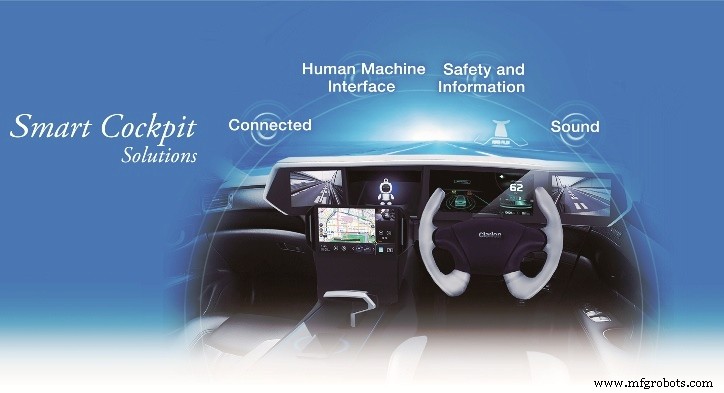
Although fully autonomous cars are not yet common on European roads, many current models already incorporate safety‑enhancing features. Technologies such as V2X (vehicle‑to‑anything) connectivity enable real‑time communication with other vehicles, infrastructure, and pedestrians to preempt hazards. Driver‑assist systems—like Nissan’s Leaf automated parking—illustrate how AI can reduce human error and improve pedestrian detection in blind spots.
Green Cars in the Future
Environmental impact emerged as the second most critical factor for future vehicles, with roughly a quarter of respondents across all surveyed countries ranking it above cost‑efficiency (14%). Younger drivers (18‑24) are especially eco‑conscious, with about one third in France and the UK equating environmental performance with safety in their car‑choice criteria.
Car sharing, however, remains a niche benefit, with only 5% of respondents citing it among the top three advantages of future cars—though its appeal is slightly higher in larger cities such as London and Paris.
Personalising Car Interiors for Each Driver

The survey indicates limited interest in highly personalized interior features. Only 34% of respondents listed comfort as a top concern, and a mere 9% believed a future car should match the comfort of home. Adaptable interiors that respond to individual driver needs attracted just 13% of participants.
As automotive technology evolves, the next generation of smart interiors is expected to become the norm, offering drivers an optimized experience tailored to their preferences.
Evolution, Not Revolution
Progress toward fully autonomous vehicles is incremental, and public perception will shift in tandem with technological maturity. While intelligent features already enhance safety and ease of use, the industry must continue investing in education to showcase tangible benefits. Safety will remain the cornerstone of future cars, alongside eco‑performance and personalized comfort.
The author is Sebastien Brame, Senior Manager at Faurecia Clarion Electronics.
Internet of Things Technology
- Data for All: How Democratizing Patient Data Shapes the Future of Healthcare
- Mastering IEC Power Standards for Smart Home Appliance Design
- What 3D Printing Needs to Evolve: Top 3 Industry Demands Revealed at AMUG
- How 5G Is Transforming Connected Cars: Speed, Safety, and Smart Features
- 5G’s Top Five Challenges: Navigating Spectrum, Cost, Coverage, Devices, and Security
- Future of Healthcare: Overcoming Challenges in Internet of Medical Things (IoMT)
- Industrial IoT & AR/VR: Safeguarding Workers in a Post‑COVID World
- 8 IoT Trends Forecasted for 2017: Expert Insights
- Connected Cars: Transforming Driving into a Smarter, Safer Experience
- DataOps: Revolutionizing Healthcare Automation for Cost Efficiency and Revenue Growth