



Mastering IEC Power Standards for Smart Home Appliance Design
What IEC Power Standards Must Smart Appliance Designers Know
The smart appliance sector is accelerating at an unprecedented pace. Statista projects the market to generate $38.4 billion in revenue this year, with 262 million households expected to adopt smart appliances by 2025. From smart refrigerators and ovens to intelligent thermostats and pressure cookers, the product portfolio is expanding faster than ever.

Figure 1. (Left) Smart fridge with hi‑def display. (Right) Smart washer and dryer with Wi‑Fi connectivity.
As households integrate IoT into everyday life—from smart doorbells to AI‑driven thermostats—designers must ensure their devices meet the rigorous safety requirements that govern modern appliances.
Smart Household Appliances: Beyond Traditional Devices
Unlike legacy appliances, today’s smart units feature graphical interfaces, wireless connectivity, and embedded AI. They operate in a networked environment, exchanging data with cloud services, other devices, and mobile apps. This added complexity means they cannot be treated as mere “smart gadgets”; they belong to a distinct category governed by IEC 60335‑1.
Key distinctions include:
- Usage context: Televisions in living rooms versus refrigerators in kitchens.
- Interaction model: User‑initiated commands versus autonomous AI decisions.
- Connectivity: Heavy reliance on data links and multi‑interface communication.
Safety Standards for Household Appliances
IEC 60335‑1 is the global benchmark for household appliance safety, extending its scope to cover internet‑connected, electronically controlled products. It complements, rather than replaces, related standards such as IEC 60950 (IT equipment) and IEC 62368‑1 (IT & AV). Importantly, IEC 62368‑1 introduces Hazard‑Based Safety Engineering (HBSE), which identifies potential energy hazards and mandates preventive measures whose effectiveness must be verified.
Harmonizing Standards Across Regions
In North America, IEC 60335‑1 underpins the tri‑national standard comprising Mexico’s NMX‑J‑531/1‑ANCE, the U.S. UL 60335‑1, and Canada’s CSA‑C22.2 No. 60335‑1. However, the U.S. does not recognize all 100+ UL part 2 standards, whereas the European EN 60335‑1 does. This discrepancy underscores the importance of early compliance planning.
Comparing IEC Power Standards: IEC 60950, IEC 62368, and IEC 60335
While all three standards address power supply safety, IEC 60335 typically imposes stricter requirements. The table below highlights key differences in leakage, creepage, clearance, and isolation voltage for a typical 250 VAC–300 VAC working range.
Current Leakage
• IEC 60335: 0.75 mA (portable) / 3.5 mA (stationary)
• IEC 60950: 3.5 mA for all categories
Creepage
• IEC 60335: 8.0 mm
• IEC 60950: 6.4 mm
Clearance
• IEC 60335: 3.5 mm
• IEC 60950: 4.0 mm
Isolation Voltage
• IEC 60950: Fixed 3 kV input‑to‑output; 500 V output‑to‑ground
• IEC 60335: 2.4 kV + (Working Voltage × 2.4) for input‑to‑output; no explicit maximum output‑to‑ground
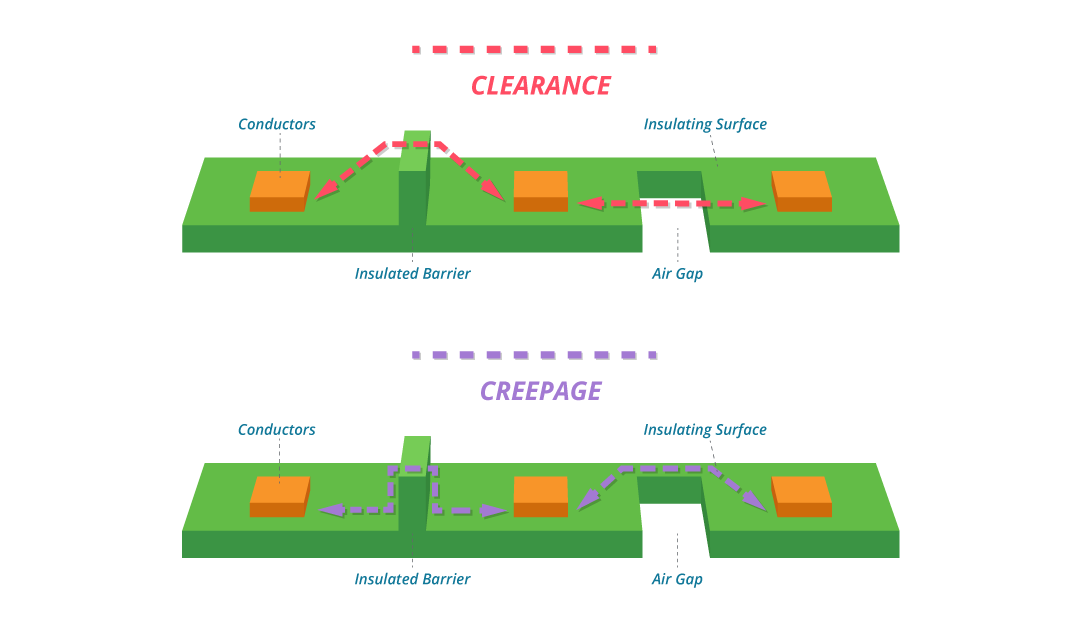
Figure 2. (Top) Example of clearance distance. (Bottom) Example of creepage distance.
Meeting IEC 60335‑1 with CUI Power Supplies
Choosing a power supply that satisfies IEC 60335‑1 is critical for market success. CUI’s portfolio is engineered to meet—or exceed—these stringent requirements.
- PBO‑3C/5C/10C Series (3‑10 W): Ultra‑compact SIP‑mounted AC‑DC supplies, ideal for space‑constrained, low‑power applications.
- PSK‑3D/5D/10D/15D/20D/25D Series (3‑25 W): Encapsulated board‑mount units with 85‑305 VAC input, wide temperature range, and tight form factor.
- VOF‑100C/120C/180C/200C/225C/350C Series (100‑350 W): Open‑mount AC‑DC supplies that reduce standby consumption and are certified to IEC 62368, 60335, and 61558.
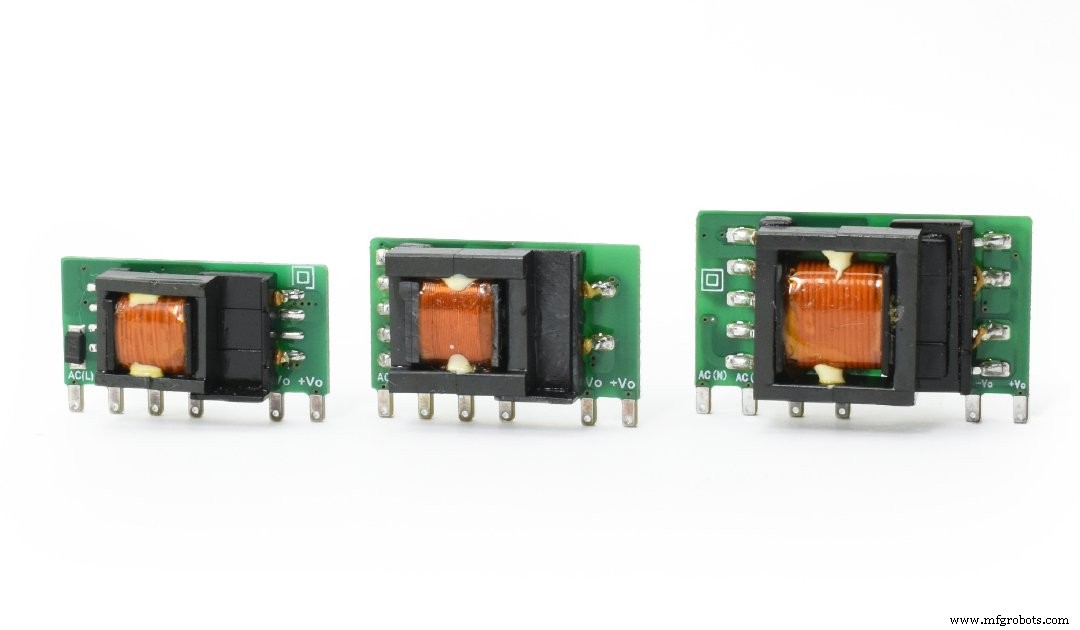
Figure 3. (Left) PBO‑3C, (Middle) PBO‑5C, (Right) PBO‑10C.
CUI’s website offers a suite of tools—specification checkers, application notes, and instructional videos—to help engineers locate the right IEC 60335‑1‑qualified supply for their product.
Industry Articles are a form of content that allows industry partners to share useful news, messages, and technology with All About Circuits readers in a way editorial content is not well suited to. All Industry Articles are subject to strict editorial guidelines with the intention of offering readers useful news, technical expertise, or stories. The viewpoints and opinions expressed in Industry Articles are those of the partner and not necessarily those of All About Circuits or its writers.
Internet of Things Technology
- Why No Universal IoT Security Standard? Understanding the Complex Landscape
- Why Smart Buildings Struggle: The Missing Standards That Hold Them Back
- Wi‑Fi: The Cornerstone of Smart Everything
- Safety First: How Europeans View Future Connected Cars
- Rethinking Smart Manufacturing for the New Normal: Data‑Driven Strategies for Resilience
- Fortifying Smart Devices for the Future of Work
- Maximizing ROI in Smart Manufacturing: Payback & Data-Driven Success
- Enterprise RPA: Driving Efficiency and Transformation
- Why 5‑Axis Machining Is In Demand: Trends, Benefits, and Future Outlook
- Essential Safety Standards for Mobile Industrial Robots