



Who’s in Charge of the Connected Car? Insights from the Driver’s Perspective
Feeling annoyed when others comment on your driving? Whether it’s about speed or lane changes, unsolicited advice can be distracting.
Nick Booth notes that such interruptions not only raise stress levels but also pose safety risks by diverting attention from the task of operating a vehicle.
The problem intensifies when the source is a vehicle equipped with Advanced Driver Assistance Systems (ADAS). These systems can overstep their intended role, providing unsolicited guidance that may be perceived as condescending.
Unintended Guidance
When a vehicle’s system dictates driving limits, it can feel like a form of indirect condescension. Developers program responses for a wide range of scenarios, but the system’s guidance may not always align with the driver’s skill or intent.
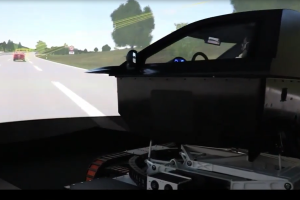
In Norfolk, UK, Ansible Motion has developed the Delta Driver-in-the-Loop (DIL) simulator to evaluate how drivers respond to the latest ADAS features in upcoming vehicle models.
For instance, how do drivers react when their vehicle initiates emergency braking?
The simulation draws on a real incident on the A14 dual carriageway: an experienced driver in a new German model detected a vehicle crossing in front of them. Traveling at 70 mph, the system misinterpreted the situation as a collision threat and engaged emergency braking—a response that could have caused a rear‑end collision if a vehicle were behind.
Historical Context
While the incident itself helped mitigate a potential collision, reproducing such scenarios in real life would be prohibitively time‑consuming. The DIL simulator accelerates this process by recreating thousands of situations virtually.
The DIL revealed that the handover between automated and human control requires more time than initially expected, indicating a brief period of adjustment for both parties.

"The car needs to make sure the driver is ready in plenty of time," says Kia Cammaerts, founder and director of Ansible Motion. The simulator measures the time drivers take to re‑engage and monitors alertness cues.
Automated vehicles excel at platooning, maintaining close, synchronized spacing within a convoy by exchanging real‑time data—a coordination level that human drivers cannot achieve consistently.
The simulator evaluates how drivers react—often by braking—in such scenarios to establish a safe following distance.
The DIL also explores how drivers and vehicles respond to unexpected obstacles, such as branches or animals on the road. It tests whether autonomous intervention is beneficial or distracting during these events.
The simulator examines whether vehicles adhere to design constraints in challenging environments, such as forests, and how they adapt when confronted with unconventional scenarios.
The author is freelance technology writer, Nick Booth
Internet of Things Technology
- HIMSS19: Shaping the Future of Connected Healthcare
- Enhancing Insight into the Internet of Things: Leveraging Data Visualization and Graph Databases
- Augmented Reality: Transforming Connected Field Service
- How Smartphones Are Shaping the Future of Connected Cars
- How 5G Is Transforming Connected Cars: Speed, Safety, and Smart Features
- Investing in the Internet of Things: Unlocking Growth and Value
- Securing the 20th Anniversary of the Internet of Things: Protecting Our Hyperconnected Future
- Connected Cars: Transforming Driving into a Smarter, Safer Experience
- Key Manufacturing Trends: How Connected Cars Are Shaping the Future
- Automation in Action: How Manufacturers Leverage Robotics for Success