



COM‑HPC Adopts IPMI to Boost Edge Server QoS and Remote Management
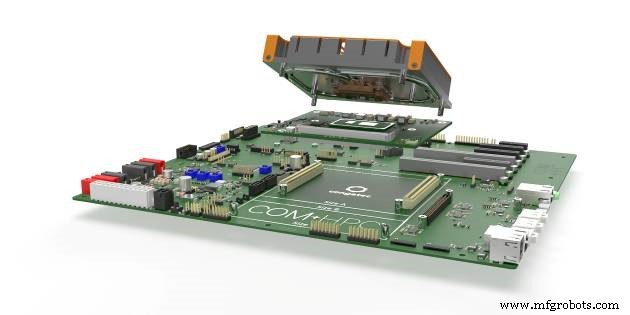
In 2023, PICMG released the COM‑HPC interface specification to streamline remote management for embedded systems. By integrating IPMI, edge server engineers can reset, monitor, and update devices from afar—just as if they were on‑site—thereby boosting reliability and service quality.
Remote management—often including out‑of‑band access—is a staple for IT professionals. It enables real‑time monitoring, patch deployment, and troubleshooting without the need to physically access server rooms.
Many service providers already remote‑control on‑premises servers or host them in the cloud. The new COM‑HPC spec extends these capabilities to edge and gateway platforms, bridging the gap between business‑grade IT and industrial‑grade operational technology (OT) in the era of digital transformation and IIoT.
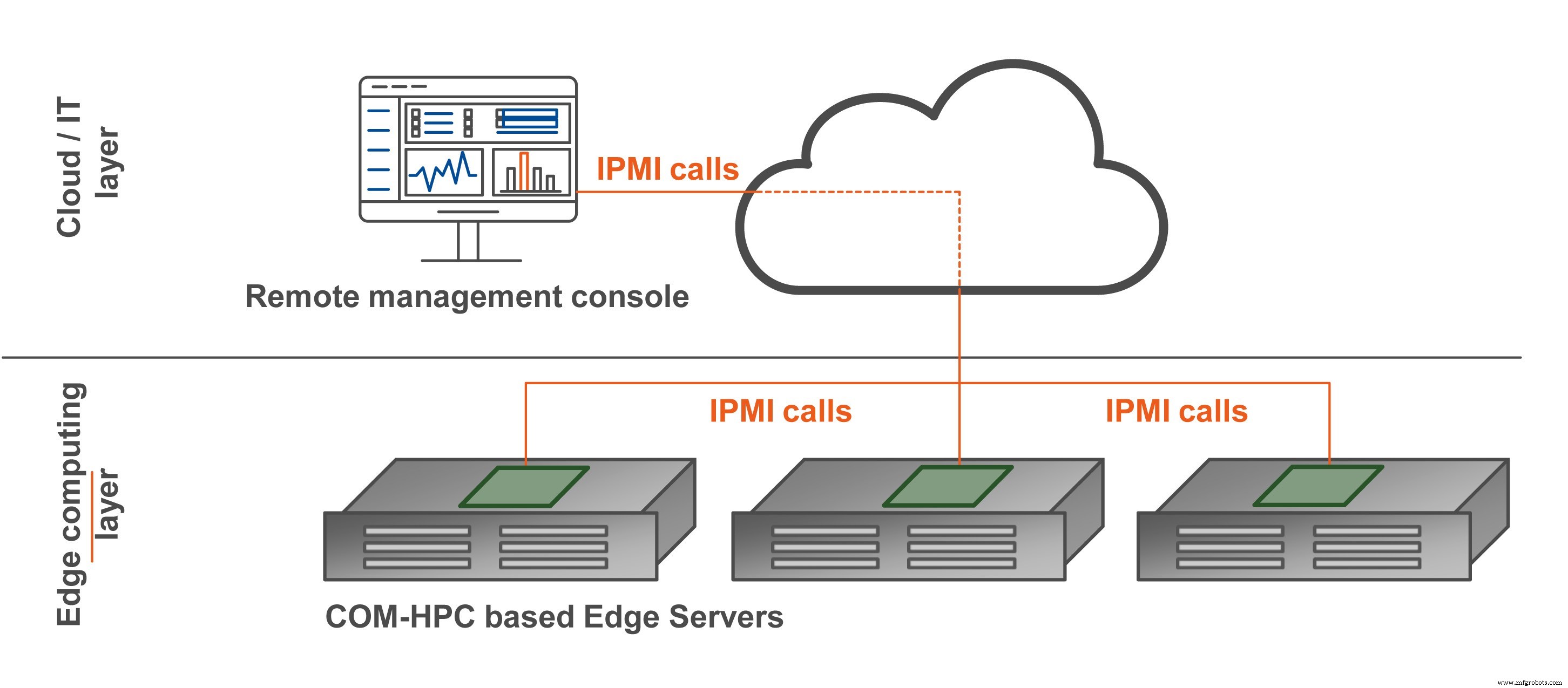
Designers of COM‑HPC modules seek flexible, role‑specific management. To meet this demand, PICMG introduced a COM‑HPC sub‑spec that reuses the well‑established Intelligent Platform Management Interface (IPMI) while also leveraging the modern Redfish RESTful API.
Longevity and Stability Matter
IPMI, introduced in 1998 and refined in 2001 and 2004, has become the de‑facto standard for hardware monitoring and control. Its enduring design and broad industry adoption give COM‑HPC confidence in delivering robust remote management.
The specification defines protocols, interfaces, and an architecture that standardizes low‑level hardware description and message exchange with a board management controller (BMC).
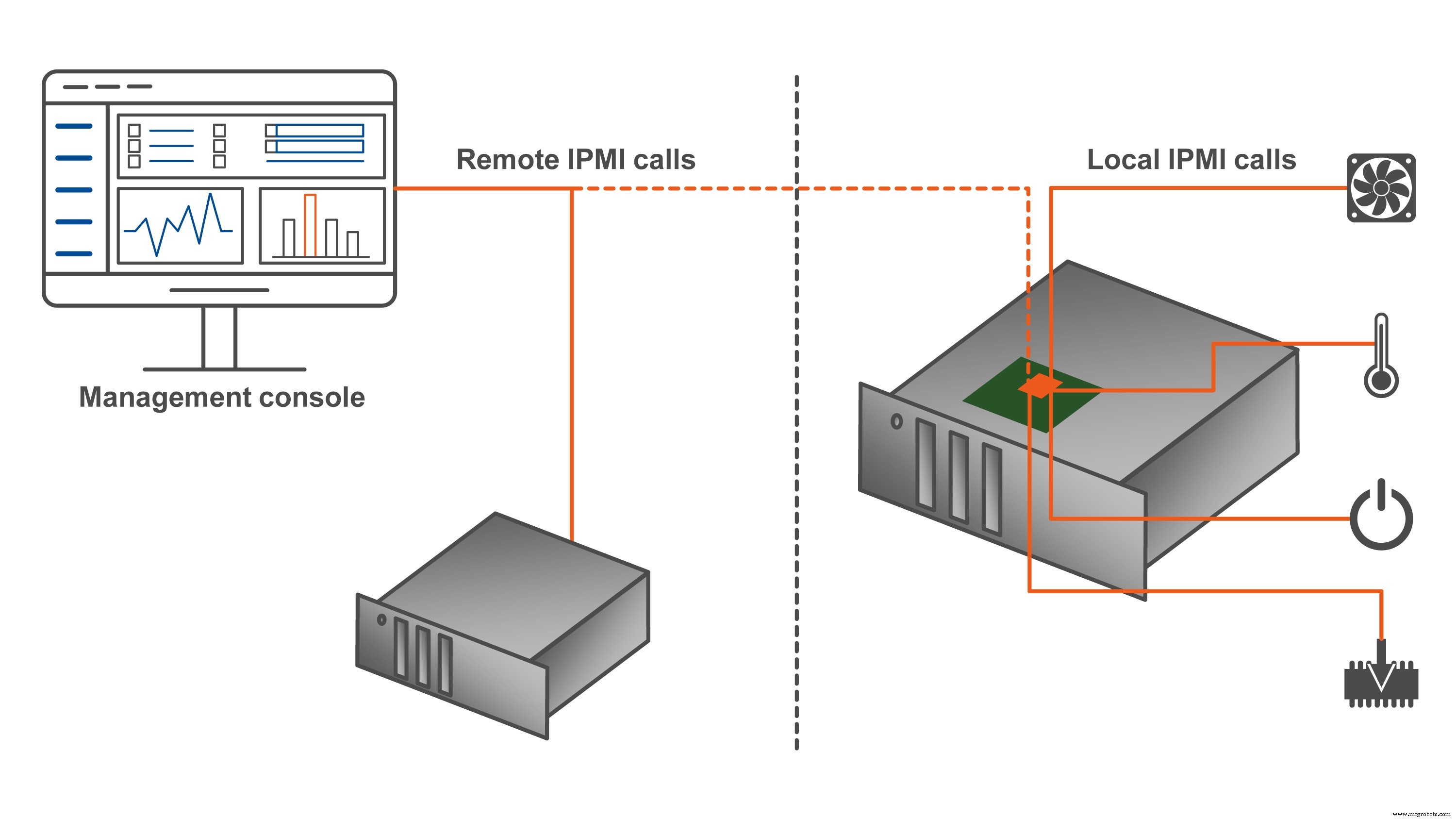
IPMI messages allow a BMC to query sensor data, adjust cooling, trigger reboots, or read power supplies—offloading these duties from the host OS and ensuring management remains functional even when the host is down.
Its simple command set and extensible framework have fostered widespread adoption and allowed industry groups to add custom Network Functions (NetFn) and commands to support emerging technologies.
Many Remote Management Options
For COM‑HPC modules, the Embedded EEPROM (EEEP) stores vendor, memory, and networking information. To avoid duplication, the sub‑spec recommends that an IPMI FRU be populated from the EEEP, ensuring consistent metadata across devices.
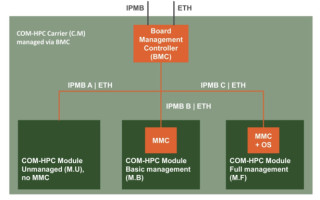
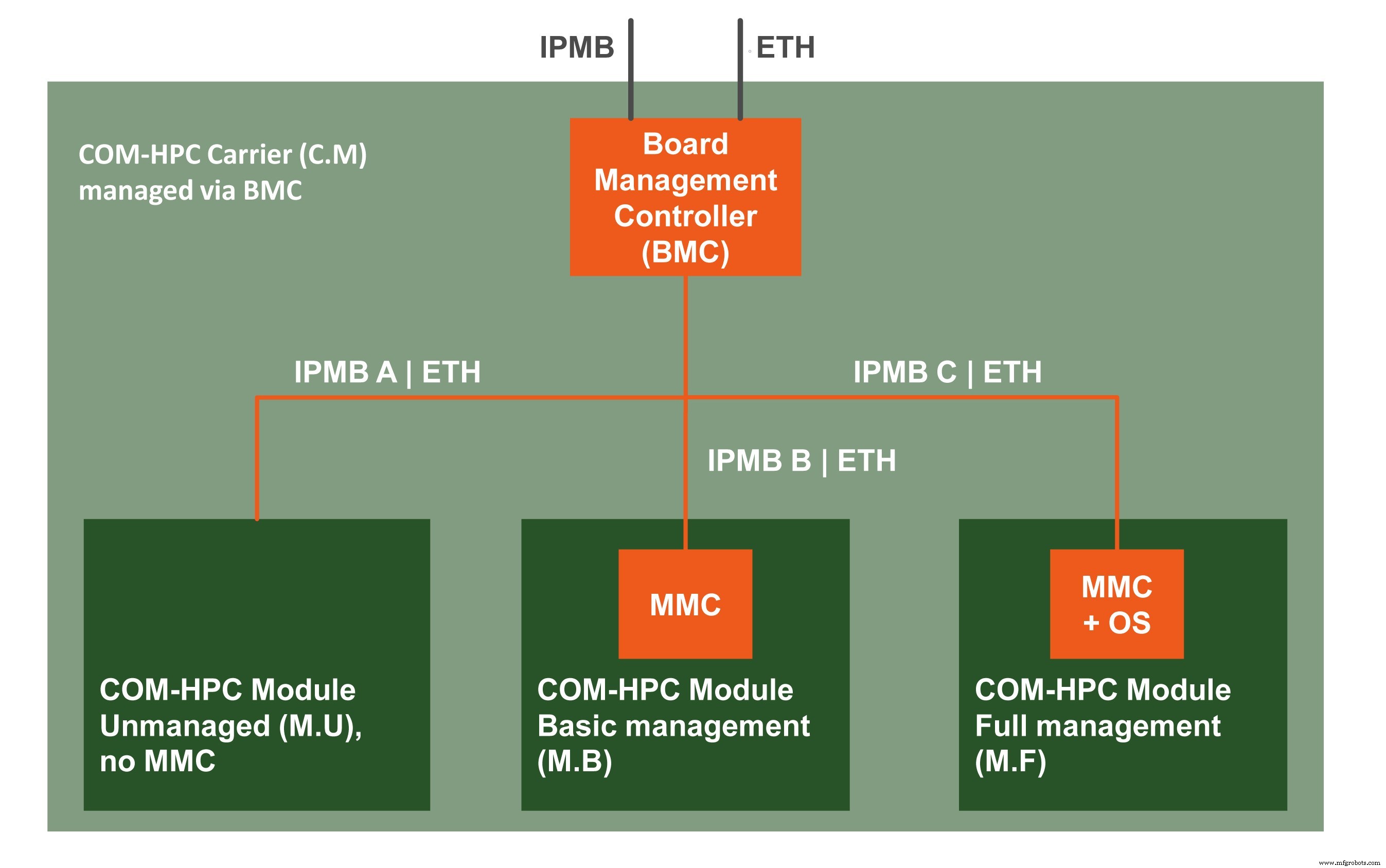
The spec acknowledges varying maturity levels of IPMI support across modules and carrier boards—unmanaged (M.U, C.U), basic managed (M.B, C.M), and fully managed (M.F). Despite these differences, all components remain interoperable, allowing designers to mix and match as needed.
Flexible Management and Control of Platforms
Recognizing that a one‑size‑fits‑all approach is inadequate, PICMG offers multiple design permutations. A single carrier board with up to four modules can host independent full management on each module, or a unified IPMI implementation on the carrier can deliver custom functionality regardless of module management status (Figure 3).
Access to system resources directly correlates with IPMI power. The COM‑HPC spec introduces dedicated interfaces—IPMB, a separate PCI Express lane, I2C, USB, and power‑button controls—so that administrators can remotely manage nearly every platform aspect via the BMC.
Typical use cases include:
- Using I2C to read EEEP data.
- Emulating USB devices such as keyboards, mice, or storage.
- Controlling power on/off and boot delay through dedicated controls.
These capabilities lay the groundwork for full IPMI platform management, enabling module vendors and partners to develop BMC and MMC solutions—often leveraging SP‑X or open‑source firmware like OpenBMC (Figure 4).
OpenBMC, a Linux distribution built on Yocto, OpenEmbedded, systemd, and D‑Bus, offers full IPMI 2.0 compliance, DCMI support, and a suite of host‑management functions—power, cooling, LEDs, inventory, events, and watchdog. Its interface ecosystem spans Remote KVM, SSH‑based SOL, web UI, REST, and D‑Bus, while providing hardware simulation, automated testing, and multi‑image update support.
Conclusion
By embedding proven IPMI and Redfish technologies, the new PICMG COM‑HPC specification equips system builders with a reliable, extensible foundation for edge server remote management—accelerating adoption and driving quality of service across the edge.
Internet of Things Technology
- Why Edge Computing Is Essential for IoT Success
- How Quality of Service Enhances Reliability and Efficiency in LPWAN IoT Networks
- ITTIA Unveils Edge‑Optimized Database for Microcontrollers, Enhancing Real‑Time Data Management
- Choosing the Right EAM Solution: 4 Essential Criteria
- Mastering Digital Asset Management: A Comprehensive Strategy for Data‑Driven Asset Excellence
- Leverage AI for Smarter Inventory Management and Unlock $1.1 Trillion in Cash
- Edge Computing: Accelerating AI Deployment at the Network Perimeter
- Key Edge AI Trends of 2022
- Microsoft Unveils Azure Edge Zones to Power 5G‑Enabled IoT & AI Workloads
- 10 Proven Strategies to Optimize Work Order Management for Business Success