



Reducing Standby Power in Smart Home Devices with Power Integrations’ LinkSwitch‑TNZ
In today’s connected world, keeping devices awake yet energy‑efficient is a growing challenge. Power Integrations has tackled this with its new LinkSwitch‑TNZ family of switching power‑supply ICs, designed to slash standby consumption in smart home appliances while meeting stringent regulatory limits.
Standby Power: A Growing Energy Concern
Modern smartphones, smart switches, and appliances are increasingly powered continuously, even when idle. Studies show that devices in standby mode can account for 10% of household energy use, with 80–90% of the day spent in this state. For example, smoke detectors must remain connected to the mains by regulation, yet their duty cycle is minimal. In Europe, the EC 1275 standard caps standby consumption at 500 mW for appliances.
LinkSwitch‑TNZ: Integrated Zero‑Cross & X‑Capacitor Management
Adnaan Lokhandwala, Senior Product Marketing Manager at Power Integrations, explains that traditional solutions use discrete AC‑zero‑crossing circuits and bleed resistors across X‑capacitors, both of which add losses during standby. LinkSwitch‑TNZ embeds lossless zero‑cross detection and optional X‑capacitor discharge directly into the switcher, delivering superior light‑load efficiencies.
The IC employs a simple, non‑isolated back‑converter, eliminating the need for custom transformers in many smart‑home applications where isolation is provided by the device casing.
Zero‑Cross Detection: Reducing In‑rush Current and Enhancing Longevity
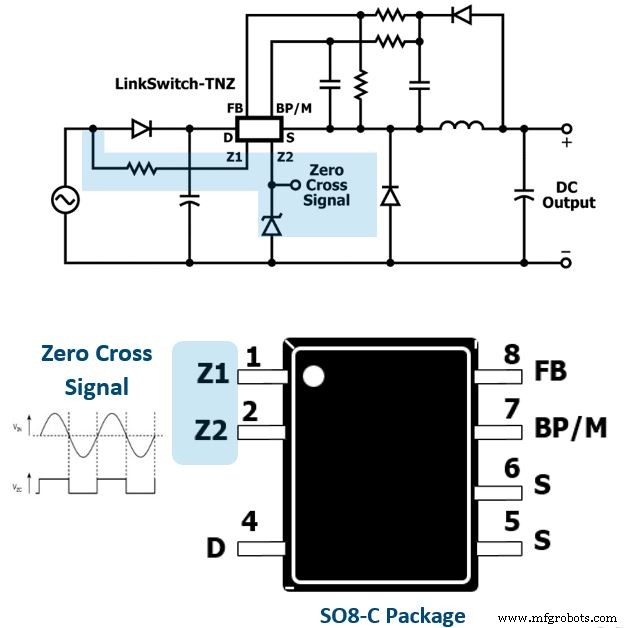
Figure 1: LinkSwitch‑TNZ Family – Power Conversion Adds Zero‑Cross Detection and X‑Capacitor Discharge (Source: Power Integrations)
Zero‑cross detection synchronises relay or TRIAC activation with the AC waveform’s zero‑point, dramatically cutting in‑rush current and extending relay life. This precision also minimizes leakage current that can inadvertently energise LEDs or cause ghosting.
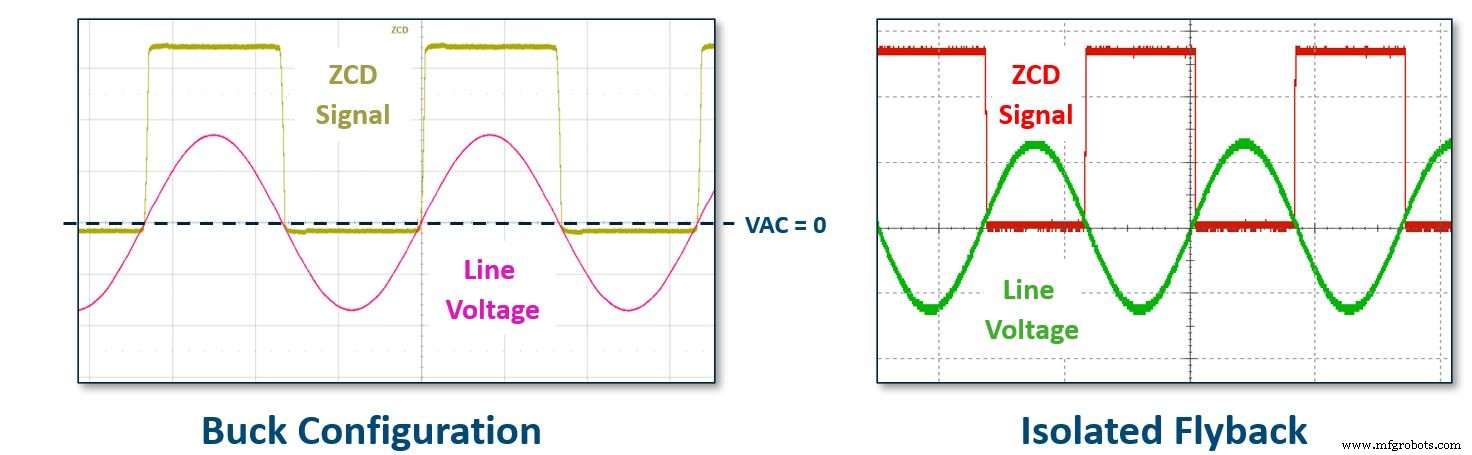
Figure 2: Zero‑cross detection provides a logic signal when VAC passes through 0 V, synchronising turn‑on of the power supply via relay or TRIAC.
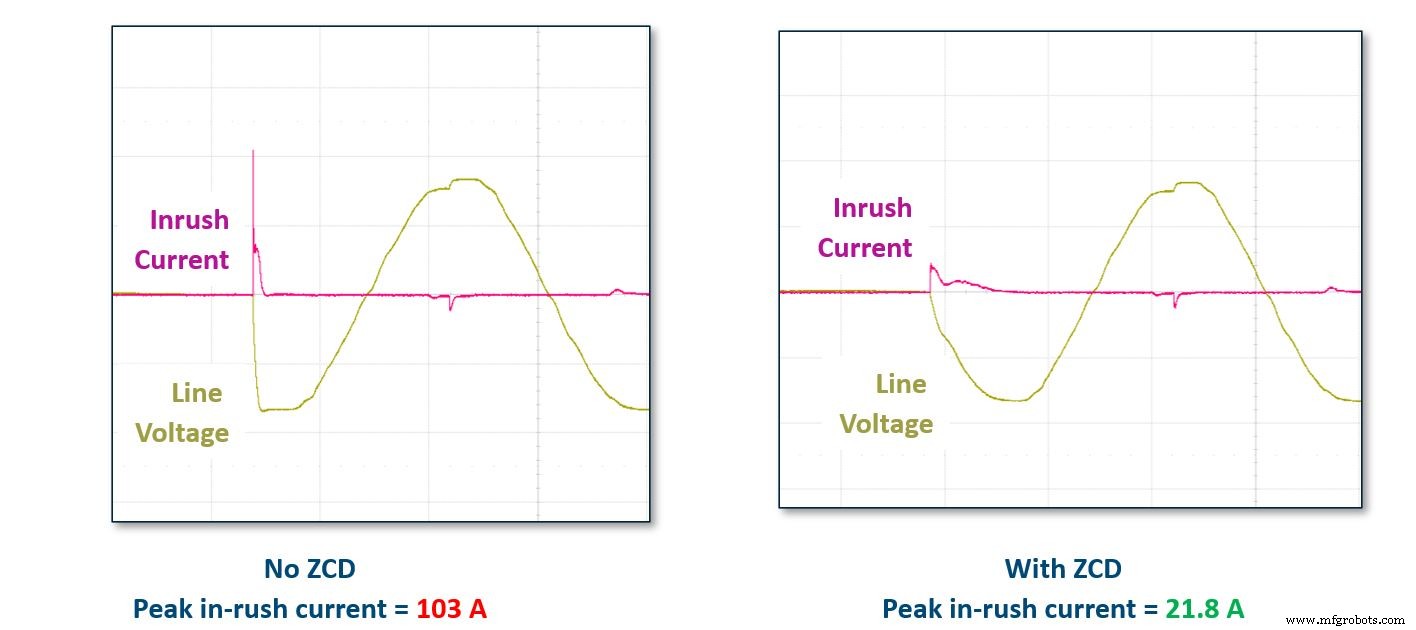
Figure 3: Zero‑Cross Detection Dramatically Reduces In‑rush Current in Relay‑Switched Applications.
Managing X‑Capacitor Discharge for High‑Power Devices
In higher‑power designs, X‑capacitors filter EMI/RFI but require discharge to avoid leakage. LinkSwitch‑TNZ can optionally handle this function on‑chip, reducing component count and improving standby efficiency.
Smart Switches Without a Neutral Wire
Many homes lack a neutral connection, yet modern smart switches need a stable power source. By integrating relay drivers, zero‑cross circuitry, and wireless connectivity, LinkSwitch‑TNZ enables two‑wire operation, simplifying retrofit projects.
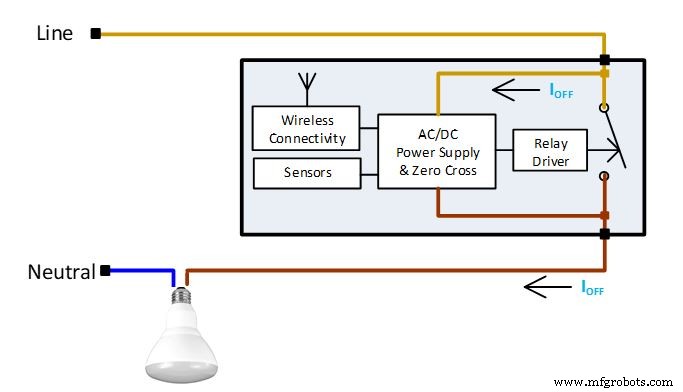
Figure 4: Supporting No‑Neutral Smart Switches.
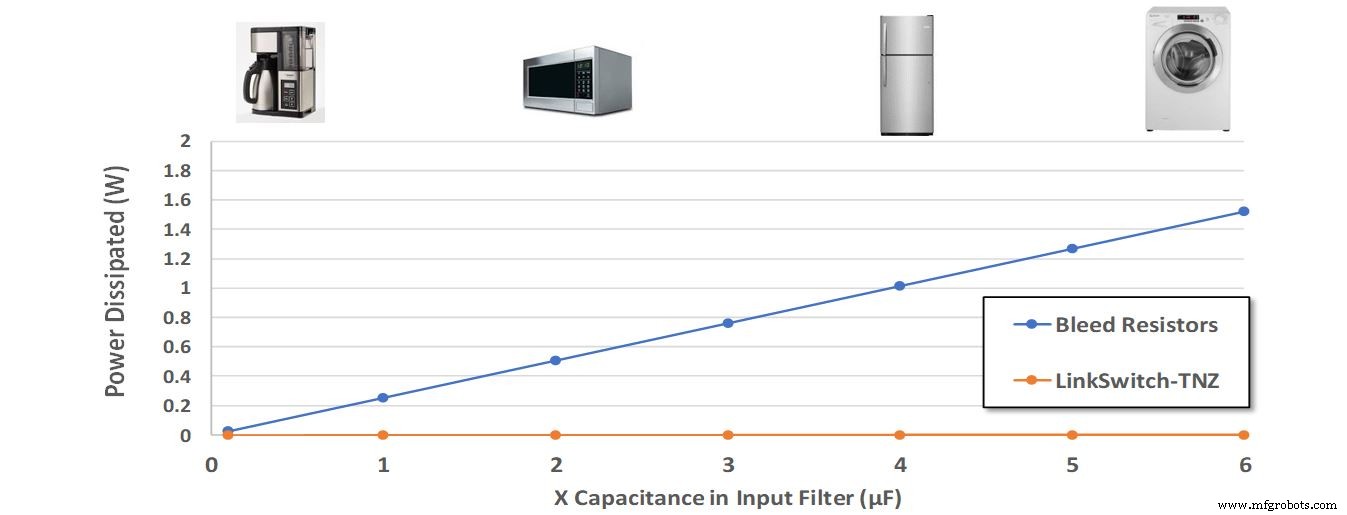
Figure 5: Reducing Standby Power in Home Appliances with Active X‑capacitor Discharge.
Performance Highlights
• ±3% regulation on line and load
• No‑load consumption <30 mW (external bias)
• Standby current <100 µA
• Meets EC 1275 standby limit of 0.5 W
These metrics demonstrate how LinkSwitch‑TNZ not only satisfies regulatory standards but also delivers tangible energy savings for consumers.
Reference Design: Power Integrations has published a reference design for an intelligent dimmer switch based on Nordic’s BLE module, illustrating the IC’s versatility.
For more technical details, consult the original article on Power Electronics News.
Conclusion
As the IoT ecosystem expands, reducing standby power becomes critical for sustainability and compliance. Power Integrations’ LinkSwitch‑TNZ offers a streamlined, efficient solution that integrates zero‑cross detection and X‑capacitor discharge, paving the way for smarter, greener homes.
Internet of Things Technology
- Power Sources: AC and DC Explained
- Bulldozer Technology: Design, Manufacturing, and Future Innovations
- Reducing Standby Power in Smart Home Devices with Power Integrations’ LinkSwitch‑TNZ
- Choosing the Right Device for Bluetooth Mesh: A Practical Guide to Hardware, Software, and App Requirements
- Device Attestation: How GlobalPlatform Builds Trust in IoT
- Prevent Business Downtime: Install Reliable Generators to Minimize Power Outage Disruptions
- Reliable Arduino-Based Device Tester for Power Blough-R Products
- What Happens When Your Primary Generator Fails: Risks & Mitigation
- Wind Power: Converting Air Movement into Clean Electricity
- Powering Wearable Sensors with Human Motion: A Breakthrough in Energy Harvesting