



Miniature Detect Switches Power the Next Generation of IoT Devices
Miniature detector switches are becoming essential components in smart devices, offering compact size, robust performance, and versatile design options.
Electronic Products, in partnership with EDN, has launched its back‑to‑basics electronic component series featuring electromechanical switches. Our interview with Roger Bohannan, global segment leader for C&K’s medical portfolio, is a must‑read.
Since 2014, IoT technology has propelled smart devices into everyday life, transforming passive gadgets into interactive, connected solutions. Whether at home or on the road, these devices provide advanced control, simplifying our lives while adding functionality. They rely on innovative electromechanical controls, and as device footprints shrink, so must the enabling components.
According to Markets and Markets, the IoT segment is projected to reach $1,463.2 billion by 2027, up from $250.7 billion in 2019, growing at a compound annual growth rate (CAGR) of 24.9% during the forecast period. The global smart‑home market is expected to grow from $78.3 billion in 2020 to $135.3 billion by 2025, at a CAGR of 11.6% during the same period. Drivers include rising internet penetration, remote home monitoring, demand for energy savings, expanding smart‑home gadgets, and growing concerns over safety, security and convenience.
Market trends and challenges
The potential for IoT applications is limitless. Remote monitoring and data analytics give OEMs a 360° view of assets, enabling products that better meet consumer needs. While overall demand for IoT devices dipped during the COVID‑19 pandemic, new categories—especially those improving health and quality of life—continue to emerge.
Miniaturization remains a core trend. PCB space constraints demand small detect switches to replace conventional snap switches, which are too large for palm‑sized devices. Consequently, roughly 80 % of smart‑home IoT applications rely on detect switches as a core component.
Manufacturers also push for higher functionality and data collection within shrinking footprints, driving further miniaturization and design flexibility.
What is a detect switch?
A detect switch, also called a detector switch, is a micro‑miniature electromechanical device that senses movement or activation on its actuator. When powered, a low‑current signal (in milliamps to microamps) flows through its contacts, allowing other IoT devices to trigger additional actions.
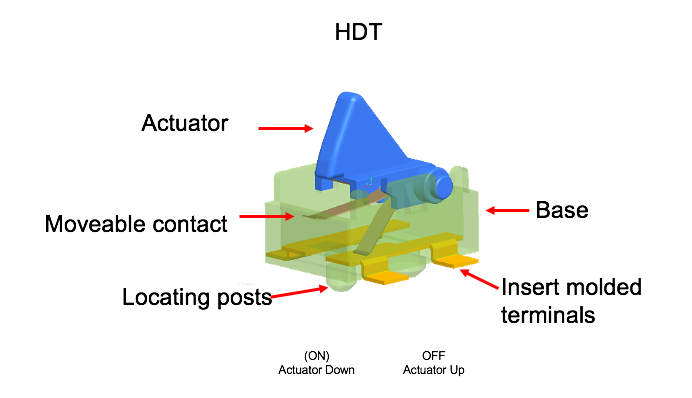
Figure 1: Structure view of a detect switch. Source: C&K
Detect switches provide a flexible solution for engineers needing minute detection with a moving‑contact device. They are highly robust, operating for thousands of cycles without damage, and offer a range of travel distances in a small package that meets tight PCB footprint requirements.
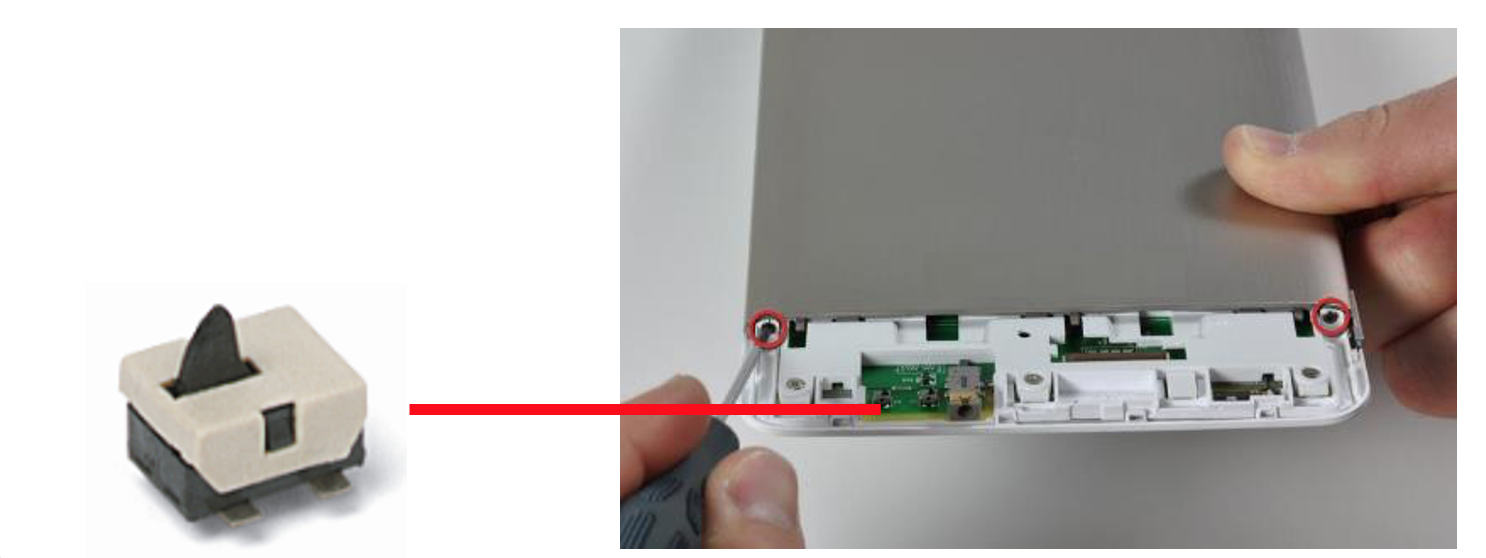
Figure 2: A micro‑miniature surface‑mount detect switch on a PCB. Source: C&K
Originating from the traditional snap switch, the detect switch offers a smaller alternative to the larger snap‑action switch that handles milliamps to amps of current. Snap switches are limited by size, especially for handheld and IoT devices. Miniature detect switches save up to 50 % of space compared to comparable snap‑action switches, making them ideal for IoT applications.
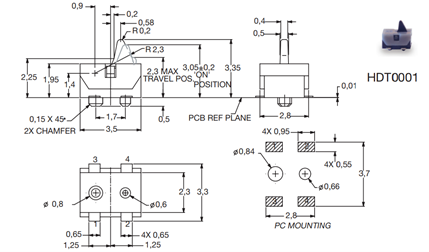
Figure 3: Schematic of the HDT0001 detect switch. Source: C&K
Detect switches operate on low‑current signal levels (DC voltage), consuming minimal electrical energy—perfect for battery‑powered devices. No UL/ENEC certification is required.
Their miniature footprint and flexible installation allow designers to place detect switches in almost any orientation—flat, vertical, or upside‑down—making them truly plug‑and‑play.
With a high percentage of detect switches using surface‑mount termination, robotic pick‑and‑place and soldering can be employed for fast, clean assembly, reducing contamination from manual handling.
How to specify a detect switch
Choosing the right detect switch depends on application needs. Key specifications include:
- Size: From standard (~13 mm) to low‑profile (~6 mm) and ultra‑miniature (~2 mm) models.
- Operating life: 100,000 to 1 million cycles.
- Environmental conditions: Standard to IP‑sealed versions for harsh environments.
- Operating force: 35 g to 50 g.
- Actuation type: Push‑fin, push‑horizontal, push‑vertical, and push‑lever‑angular.
- Actuator length: 1.4 mm to 2.67 mm.
- Actuation direction: Vertical or horizontal, top or side, right‑angle or left.
- Travel range: 1.05 mm to 3.14 mm.
- Termination style: SMT, through‑hole, panel, snap‑in/chassis, or screw‑mount options.
- Operating temperature range: –40 °C to 85 °C.
Detect switches are typically single‑pole, normally open or normally closed. If not process sealed, flux penetration during soldering must be considered.
Key applications
Detect switches are widely used in smart‑home devices such as:
- Cleaning robots: detecting dust‑box presence and wheel direction.
- Smart door and window locks: sensing forced‑on position from the inside.
- Earbuds: enabling charging when docked and detecting dock position.
- Security cameras: detecting lens rotation limits.
- Security gates: indicating open or closed status.
- Smoke detectors: anti‑tampering detection for panels.
They also find use in digital cameras (cover open/close, zoom, lens attachment), and utility meters for anti‑tampering by detecting cover removal.
Serving all electronic designs
To meet these industry challenges, manufacturers like C&K provide a wide array of detect switches. Their small, reliable form factors and extensive options enable designers to create innovative IoT devices that fit any footprint.
—Edward Mork, Product Line Manager, C&K.
>> This article was originally published on our sister site, EDN.
Internet of Things Technology
- Understanding Electrical Switches: Types, Functions, and Applications
- FusionHD: Intelligent Flash Memory for Next‑Gen IoT
- High‑Performance PMICs Power Always‑On Wearables and IoT Devices
- C&K Launches NanoT: The Smallest Tactile Switch for Ultra‑Compact IoT Devices
- IoT’s Global Impact: Driving Economic Growth, Conservation, Health, and Education
- Software Testing for IoT Devices: Key Challenges & Solutions
- Secure Your Smart Devices: Best Practices for IoT Safety
- Urgent: Malware Targets Windows 7 IoT Devices After Support Ends
- IoT Devices Set to Outpace Non-Connected Tech, Reaching 30B by 2029
- Mastering IoT Development: Solving Key Challenges for Seamless Connectivity and Security