



Engineering Beyond the Cubicle: Why RTI Field Applications Engineers Thrive

Ever wondered what it’s like to step out of the office and work on groundbreaking projects—autonomous vehicles, surgical robots, smart‑grid energy, or industrial IoT? If so, an RTI Field Applications Engineer (FAE) role might be your next career move.
- Are you an engineer eager to move beyond the cubicle?
- Do you want to tackle diverse, high‑impact applications?
- Are you curious about autonomous driving, medical robotics, or space exploration?
- Would you like to shape the future of smart‑grid distribution?
- Do you aim to drive Industrial IoT solutions that solve real‑world challenges?
Answering “yes” to any of these prompts could make you an ideal candidate for RTI’s FAE team. My name is Bert Farabaugh, and I’ve been an FAE at RTI since 2003. I’ve partnered with industry leaders such as GE Healthcare, Joy Mining, the U.S. Army Corps of Engineers, and Lockheed Martin on projects ranging from patient monitoring to national defense systems.
Throughout my career, I’ve seen how robust, distributed network applications unlock solutions to complex problems. Each client’s challenge is unique—whether it’s integrating a new sensor network into a mining fleet or configuring a real‑time data stream for a military aircraft.
FAEs engage with customers from the first handshake, evaluating network and system requirements, and then architecting scalable, high‑performance solutions using RTI’s Data‑Distribution Service (DDS). We create custom demonstrations, host seminars, and produce technical articles to showcase the value of data‑centric infrastructure.
What Does an FAE Do?
FAEs wear many hats. The role starts with assessing a customer’s distributed application, a phase I find most exciting because it introduces me to new technologies and challenges. Once we’ve mapped their needs to DDS and RTI’s suite, we guide them toward a fully scalable solution. The work is deeply collaborative, spanning from field installations to post‑deployment support.
Life of an FAE at RTI (According to Our FAEs)
 Meet a few of our exceptional FAEs
Below are reflections from our team—each offering a unique glimpse into the FAE experience at RTI.
I love the fact that our product is such a horizontal technology. In one 48‑hour period, I was in a mine on top of an autonomous truck as big as my house, and at a NASA lab working with a team on flying drones. Tomorrow I’ll be on‑site at a microgrid working to integrate renewable energy into the power grid. Most of my “typical” weeks are extraordinary. I can’t imagine another job where I’d be able to explore and participate in all of these cutting‑edge technologies.
- John Breitenbach, Regional FAE Manager (Mid‑Atlantic US)
We go in, understand the customer’s problems, and map those problems to DDS and RTI product features. If they need more help, our Services team steps in! All of this helps them succeed and turns what was discussed in early meetings into reality. Finally, we revisit after the project completes to celebrate the finished product. That sense of closure is incredibly rewarding.
- Sara Granados, Lead FAE (Europe)
Good people, good work and good benefits. RTI has a strong culture dedicated to customer success and works toward that goal as a cross‑functional team. The variety of work is incredible, from working with engineers developing flying autonomous taxis to engineers building the next version of cancer radiotherapy machines. RTI also provides some of the best benefits in the industry, including flexible hours needed to succeed as an FAE.
- Hasnat Ashiq, Senior FAE (Northwest US)
What I like most about being an FAE at RTI is that I’m provided with everything necessary to succeed. People at RTI do their jobs (quite well) and don’t need to tell me how to do my job (as well as I can). This is actually unlike every other job that I’ve had, FAE or engineering.
- Patrick Keliher, Senior FAE (South Central US)
Before becoming an FAE, I was a software engineer working on a long‑deployed system for a major A&D vendor. The routine led to burnout. As an RTI FAE, I now encounter a variety of new, exciting programs, and no two days are the same. I see cool designs become reality and know that products using our technology change people’s lives every day.
- Rob Proctor, Senior FAE (Southeast US)
The greatest advantage of being an FAE is staying technically relevant and respected in the engineering community. As an RTI FAE you:
- Master a broad array of programming languages, architectures, and toolchains.
- Explore military and commercial applications with evolving solutions.
- Impress engineering managers and their teams.
- Become an expert in one of the fastest‑growing software technologies.
- Rich Rejmaniak, Senior FAE (Mid‑Atlantic US)
In my first months, I’ve spoken to customers using Connext DDS for everything from aircraft to ships, audio equipment to racing cars. Every application has broadened my knowledge of RTI technology, programming languages, open standards, and networking. Our customers push technical boundaries; we must push ours to help them. That’s what makes this job fun!
- Paul TIngey, Senior FAE (Europe)
What I like most about being an FAE is the fieldwork. You can get out of the office, talk to people, and dive into interesting projects. I also love selling a great product—RTI’s suite works, and demos are always exciting.
- Dave Seltz, Regional FAE Manager (Northeast US)
It’s All About the People
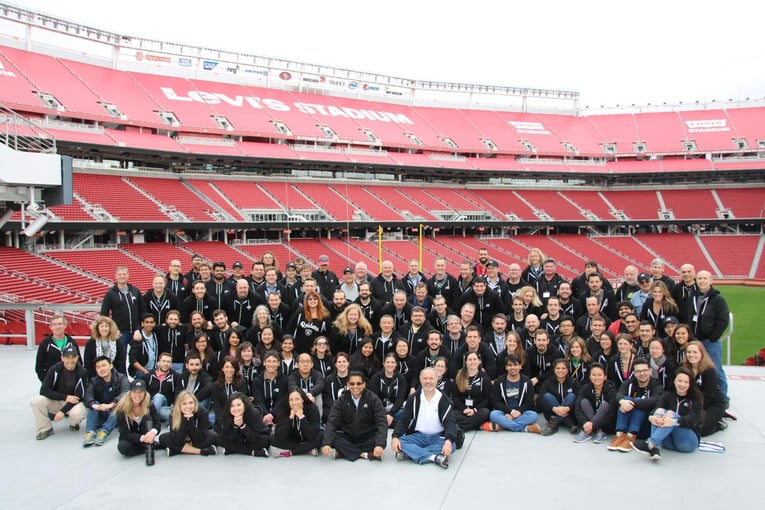
Beyond the technology, the people at RTI are why I’ve stayed for 14 years. Our core values shape every day:
- Realize employee and company potential.
- Deliver extraordinary customer value.
- Operate a profitable business with uncompromising ethics.
- Collaborate as a team.
- Pursue excellence actively.
- Strive to make the world better.
When everyone shares this journey, the difference is palpable. These values are lived daily and reflected in our work.
If you’re ready for a challenging FAE role and answered “yes” to the questions above, visit our Careers Page and apply now. For any questions about the FAE role or life at RTI, feel free to reach out directly to me at bertf@rti.com.
Internet of Things Technology
- Tungsten in Modern Warfare: Key Military Applications
- How AI Is Transforming Global Supply Chains
- Phthalocyanine Pigments: Applications, Industries, and Why Quality Matters
- Applications of Basic Dyes Across Industries
- Pigment Blue: Key Applications, Benefits, and Why Industry Leaders Rely on Trusted Manufacturers
- VR’s Proven ROI: Transforming Engineering Design, Training, and Collaboration
- The Evolution of PLCs: From 1960s Relay Systems to Modern Automation
- How Analytics-Driven Product Engineering Enhances Design and Performance
- 5 Transformative IoT Applications Revolutionizing Education
- Shaping Tomorrow: The Evolving Role of Maintenance Engineers in Modern Factories