



Tungsten in Alloy Design: Applications in Steel, Carbide, and Heavy Materials
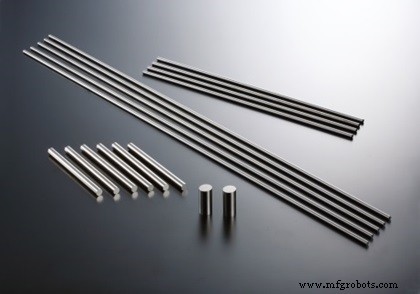
Applications of Tungsten in Alloy Design and Manufacturing
Tungsten (W, atomic number 74) ranks among the heaviest metals and boasts the highest melting point after carbon. Its superior high‑temperature strength, minimal thermal expansion, and exceptional conductivity make it indispensable in advanced alloy development. This article explores tungsten’s pivotal role across various alloy systems.
Steel
In steel alloys, tungsten’s high hardness and density—comparable to gold—enhance strength, hardness, and wear resistance. It is a critical alloying element in numerous steel grades.
Typical tungsten‑containing steels comprise high‑speed steel, tungsten steel, and tungsten‑cobalt magnetic steel, which offer elevated magnetization and coercivity. These alloys underpin tooling such as drill bits, milling cutters, and precision dies.
Cemented Carbide
Tungsten carbide, with hardness rivaling diamond, provides outstanding wear resistance and thermal stability. It is produced by powder metallurgy, sintering tungsten carbide powder with a metal binder in a vacuum or hydrogen reduction furnace.
Common carbide systems include tungsten‑cobalt, tungsten‑cobalt‑titanium carbide, tungsten‑cobalt‑titanium carbide‑tantalum carbide (niobium), and steel‑bonded carbide. These materials are essential for cutting tools, mining equipment, and wire‑drawing dies.
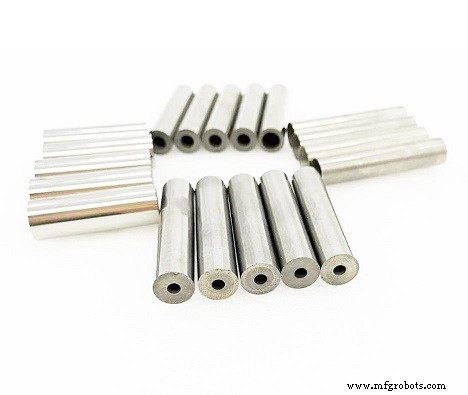
High‑Temperature, Wear‑Resistant Alloys
Because of its ultra‑high melting point and inherent hardness, tungsten is a cornerstone in alloys designed for extreme environments. Tungsten‑chromium, tungsten‑cobalt, and tungsten‑carbon alloys are engineered for components such as aero‑engine valves and turbine blades.
Alloys combining tungsten with other refractory metals—tantalum, niobium, molybdenum, and rhenium—deliver exceptional thermal stability and are employed in aerospace rocket nozzles and engine parts.
Tungsten Heavy Alloys
Leveraging tungsten’s density and hardness, heavy alloys are formulated in compositions such as W‑Ni‑Fe, W‑Ni‑Cu, W‑Co, W‑WC‑Cu, and W‑Ag. These alloys offer high specific weight, excellent strength, gamma‑ray absorption, high thermal conductivity, low thermal expansion, and good electrical conductivity.
Applications span aerospace, defense, oil‑drilling, electrical instrumentation, and medical fields, including armor plating, radiators, hydraulic balancing, knife switches, circuit breakers, and spot‑welding electrodes.
Conclusion
We hope this overview clarifies the diverse applications of tungsten in alloy technology. For deeper technical insights, visit Advanced Refractory Metals (ARM), headquartered in Lake Forest, California, a global leader in tungsten products such as powder, wire, and crucibles.
Metal
- Tungsten in Modern Warfare: Key Military Applications
- Tungsten Crucibles: Features, Manufacturing Processes, and Key Industrial Applications
- Tungsten Carbide: Properties, Applications, and Industrial Impact
- 4 Key Applications of Hafnium: From Electronics to Aerospace
- Top Applications of Tungsten: From High‑Strength Alloys to Advanced Electronics
- Molybdenum and Its Alloys: Key Applications in Material Processing
- Silicon Carbide: Transforming Industry Through High‑Performance Applications
- Nano Tungsten Carbide – A Platinum‑Like Catalyst
- Key Applications of Beryllium Alloys in Modern Technology
- How Tungsten Carbide Cutting Tools Are Made: From Mining to Coating