



How Tungsten Carbide Cutting Tools Are Made: From Mining to Coating
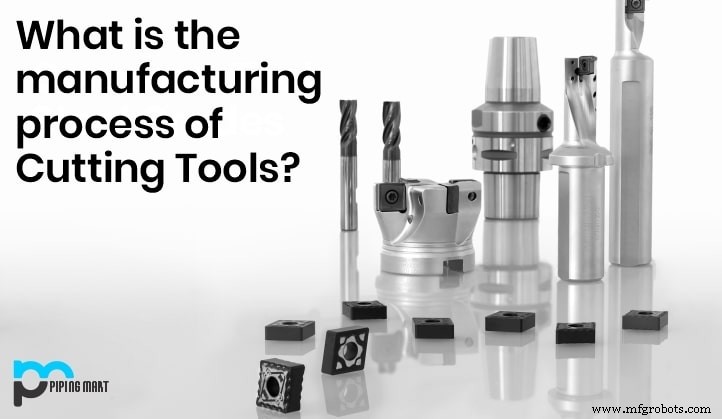
A cutting tool is any device that removes material from a workpiece through shear deformation. Depending on the operation, tools may employ a single cutting edge—such as in spinning or forming—or multiple edges, as seen in milling, drilling, and grinding. Even an abrasive grain can act as a microscopic single‑point cutter, shearing material at high precision.
For metal‑cutting applications the tool material must out‑toughen the workpiece and withstand the heat and forces generated during cutting. This requires a precisely engineered geometry, with clearance angles that allow the edge to contact the workpiece without dragging the rest of the tool. Automation of cutting speeds and feeds is essential to maximize tool life and maintain consistent performance.
Tungsten carbide—often simply called “carbide”—is the industry standard for high‑performance cutting tools. Its unique combination of tungsten and carbon delivers superior hardness, heat resistance, and wear durability, enabling faster cutting speeds, higher feeds, and longer tool life.
The manufacturing journey of tungsten carbide cutting tools begins with the extraction of tungsten ore and culminates in advanced surface coatings that protect the edge under extreme conditions. Below is a detailed walkthrough of each stage.
Mining
Tungsten ore is mined from various deposits worldwide. The ore undergoes crushing, grinding, and chemical treatment to produce tungsten oxide. In a high‑temperature reaction (above 1200 °C), the oxide is carburized—mixed with graphite—so that oxygen is eliminated and carbon bonds with tungsten, forming tungsten carbide.
Mixing
The resulting tungsten carbide powder typically ranges from 0.5 µm to 10 µm in size. It is blended with powdered cobalt, which acts as a binder, and optionally with secondary carbides such as titanium, tantalum, or niobium to tailor the mechanical properties. After thorough mixing, the material is dried in a spray dryer—a stainless‑steel chamber that removes any residual solvent.
Heating (Sintering)
Pressing the dried mixture into molds yields green compacts that are then sintered in a furnace on a graphite or molybdenum substrate. Sintering temperatures of 1100–1300 °C are applied under a low‑pressure hydrogen‑air atmosphere to promote densification while minimizing oxidation. Once cooled, the components undergo a quality‑control test, followed by grinding or polishing to achieve the required dimensions and a sharp cutting edge.
Coating
To extend tool life under aggressive cutting conditions, surface coatings are applied using either Chemical Vapor Deposition (CVD) or Physical Vapor Deposition (PVD). These techniques deposit thin films that enhance hardness, reduce friction, and resist high temperatures.
Chemical Vapor Deposition (CVD)
CVD coatings typically range from 5 to 20 µm in thickness. Milling and drilling inserts often receive 5–8 µm layers, which improve surface finish and edge toughness for demanding applications.
Physical Vapor Deposition (PVD)
PVD layers are usually 2–4 µm thick, but some manufacturers apply multiple layers to achieve specific performance goals. PVD is especially effective for cutting high‑temperature alloys such as nickel, cobalt, titanium, and various stainless steels.
By continuously refining the tungsten carbide tool design and advancing coating technologies, manufacturers meet the industry's demands for higher feeds, faster speeds, longer machine life, and lower operating costs.
Metal
- Tungsten in Alloy Design: Applications in Steel, Carbide, and Heavy Materials
- The Aluminum Extrusion Process: From Billet to Finished Profile
- Dual Durometer Explained: Why It Matters in Polyurethane Manufacturing
- Additive Manufacturing Explained: From Design to Finished Part
- The Modern Manufacturing Process: Key Techniques and Innovations
- What to Expect from Additive Manufacturing: A Comprehensive Guide
- Understanding the Soap Manufacturing Process: From Fats to Saponification
- Exploring the Four Core Types of Manufacturing Processes
- Understanding Carbide Cutting Tools: Features, Uses, and Benefits
- The Complete Manufacturing Process of Electronic Cables