



Maintaining Hardness in High‑Speed Steel (HSS): Techniques & Insights
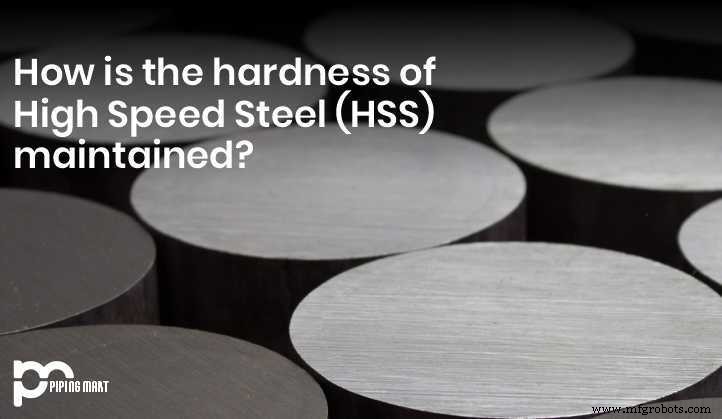
High‑speed steel (HSS) is a high‑performance alloy prized for its ability to retain hardness at elevated temperatures. Unlike traditional high‑carbon steels that soften when heated, HSS incorporates alloying elements such as tungsten, molybdenum, chromium, vanadium, and cobalt, allowing it to maintain a Rockwell C hardness above 60 even after repeated machining.
Applications
HSS is the workhorse of modern cutting technology. It is the material of choice for drills, taps, milling cutters, reamers, saw blades, planers, jointers, and shape‑forming tools. Its exceptional toughness and wear resistance also make it suitable for hand tools—log splitters, hand planes, and even kitchen knives—where a sharp, long‑lasting edge is essential.
Alloy Variations
The performance of HSS stems from its multi‑component alloy system Fe–C–X, where X denotes the alloying elements. Typical compositions exceed 7 % combined tungsten and molybdenum and contain 0.60 % carbon. Common designations include UNS T120xx for tungsten‑rich grades (e.g., T1, T15) and UNS M113xx for molybdenum‑rich grades (e.g., M2, M48). ASTM lists seven tungsten and 17 molybdenum grades, each engineered for specific hardness, toughness, and heat‑resistance requirements.
Heat‑Treating to Preserve Hardness
Heat treatment is the cornerstone of HSS performance. The process involves two key steps:
- Hardening (Quenching) – The alloy is heated to a high temperature (typically 1100–1150 °C) and then rapidly cooled, forming martensite and locking in a high hardness state.
- Tempering – The quenched tool is reheated to a lower temperature (often 200–350 °C) and held to relieve internal stresses. Tempering must be carefully controlled; exceeding the target temperature will cause the steel to “soften” (toughen), reducing its hardness and cutting ability.
When used or sharpened, it is crucial not to expose HSS to temperatures above its tempering range. Over‑heating during machining or grinding can cause a loss of hardness and premature wear.
Metal
- How Stainless Steel Is Made: From Raw Materials to Finished Products
- Create a Weathered Look: A Safe Guide to Rusting Metal
- Benefits of High-Speed Dynamic Balanced Cutting Tools
- Steel Shortage Threatens Manufacturing: Key Impacts & Solutions
- The Steel-Making Process Explained: From Iron Ore to Alloy
- High-Speed Steel vs Tungsten Steel: Key Differences Explained
- High‑Speed Steel vs. Tungsten Steel: Key Differences Explained
- Selecting the Optimal Sawing Speed for Band Saws: A Practical Guide
- Control Hydraulic Motor Speed with PWM & Remote Control: A Practical Guide
- The Production of Structural Steel in the U.S.: A Comprehensive Overview