



Tungsten Crucibles: Features, Manufacturing Processes, and Key Industrial Applications
Understanding Tungsten Crucibles
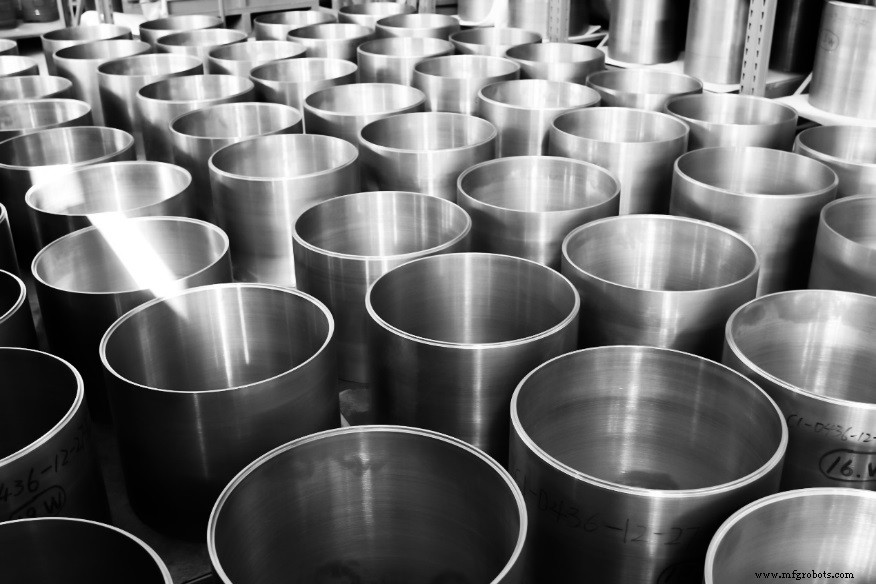
Tungsten crucibles are precision vessels made from high‑purity tungsten, a metal renowned for its extraordinary thermal resilience. They play a pivotal role in processes that demand temperatures above 2,000 °C, such as sapphire crystal growth, quartz glass melting, and rare‑earth metallurgy.
Manufacturing Techniques
Current production relies on three primary methods, each influencing the crucible’s performance envelope:
- Sintering – Powdered tungsten is compacted and fused under high pressure, yielding dense, crack‑free components ideal for extreme temperatures.
- Stamping – Sheets or plates are mechanically formed, suitable for large‑scale production of standard‑size crucibles.
- Spinning – A rotating metal blank is shaped under controlled tension, producing thin‑walled crucibles with superior dimensional stability.
Given tungsten’s high melting (3,430 °C) and boiling points, meticulous control of temperature, atmosphere, and tooling is essential to preserve material integrity and minimize waste.
Key Features & Applications
• Ultra‑high melting point (3410 °C) ensures reliable performance at temperatures above 2000 °C.
• Exceptional strength and corrosion resistance in oxidizing and reducing environments.
• Low thermal expansion (<1 µm/°C) maintains dimensional accuracy during rapid temperature swings.
• High thermal conductivity facilitates uniform heat distribution, critical for crystal growth and glass melting.
These attributes make tungsten crucibles indispensable in:
- Sapphire single‑crystal furnaces – where precise geometry and smooth walls prevent crystal sticking and enhance yield.
- Quartz glass melting – where refractory integrity is paramount to avoid contamination.
- Rare‑earth smelting – where corrosive melts require robust containment.
Why Choose Tungsten?
In high‑temperature industries, tungsten crucibles outperform alternatives due to a combination of:
- Superior thermal conductivity for rapid, uniform heating.
- Excellent hardening capability resisting wear under prolonged operation.
- Consistent dimensional stability ensuring repeatable process control.
- Robust corrosion resistance against aggressive molten metals.
Conclusion
Understanding the nuanced manufacturing methods and inherent strengths of tungsten crucibles enables engineers to select the right component for demanding industrial tasks. For further insights into tungsten and other refractory metals, visit Advanced Refractory Metals (ARM), a leading global supplier headquartered in Lake Forest, California.
Metal
- Tungsten Recycling: Strategies, Technologies, and Economic Benefits
- Tungsten Needle: Design, Properties, and Applications
- Tungsten–Copper Alloys: Key Properties, Manufacturing, and Applications
- Tungsten–Nickel–Iron Alloys: Properties, Applications, and Processing
- Tungsten in Modern Warfare: Key Military Applications
- Tungsten–Nickel–Copper Alloys: Key Properties & Industry Applications
- Top Applications of Tungsten: From High‑Strength Alloys to Advanced Electronics
- High‑Performance Tungsten Crucibles for Rare‑Earth Melting – Longevity & Purity
- Tungsten in Alloy Design: Applications in Steel, Carbide, and Heavy Materials
- Advanced Tungsten Wire Applications in Modern Medical Devices