



Tungsten Needle: Design, Properties, and Applications
Tungsten Needle: Design, Properties, and Applications
\nThe tungsten needle is a high‑performance component used in welding, testing, and precision machining. It typically measures 20 mm–150 mm in length and 0.5 mm–10 mm in diameter, offering a silvery‑white, slender profile that can be tailored to the task at hand.
\n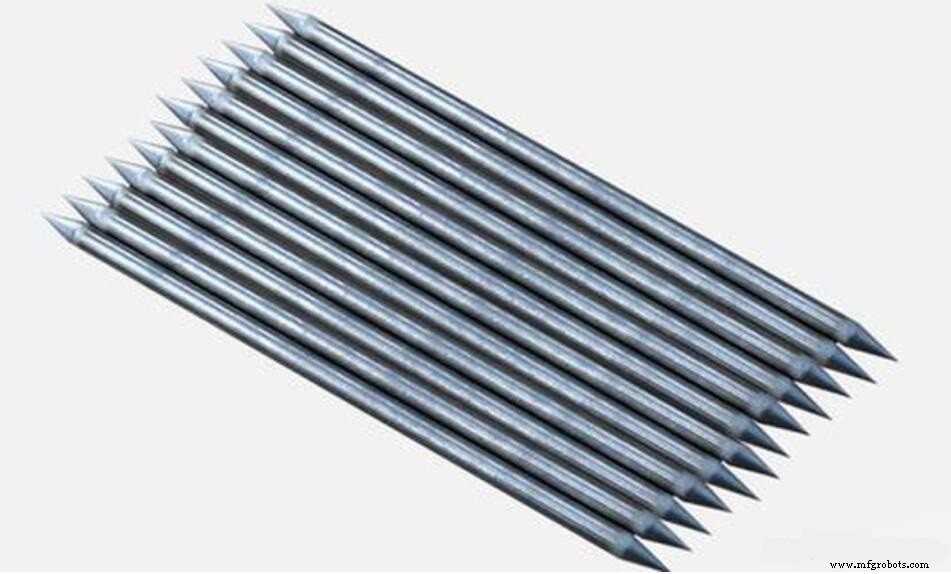 \n
\n\n
Key Properties
\nTungsten needles are made from pure tungsten or tungsten alloys, inheriting the material’s renowned characteristics: high density, a melting point above 3,400 °C, exceptional hardness, and outstanding electrical conductivity. These traits make them ideal for high‑heat and high‑current environments, though the fine tip can be susceptible to bending or fracture under excessive force.
\nTypes of Tungsten Needle
\nThere are two primary styles:
\n- \n
- Round‑rod needles – Cylindrical, single‑ended electrodes used mainly for argon‑arc welding. They generate a stable arc that melts filler metal with the workpiece. \n
- Pointed‑tip needles – One or both ends are sharpened, making them suitable as probes for digital four‑probe testers, metal surface engraving, and other precision tasks. \n
Production Processes
\nManufacturers employ either metal‑injection molding or wire‑drawing techniques:
\n- \n
- Metal‑injection molding – Powdered tungsten is blended with a binder, granulated, injected into a mold, debindered, and sintered to achieve the final shape. \n
- Wire‑drawing – Hot tungsten is stretched to the desired diameter, then cut and cooled, producing a continuous rod that can be cut to length. \n
Common Applications
\nTungsten needles find use in:
\n- \n
- Argon‑arc welding electrodes \n
- Instrument probes (digital four‑probe testers, surface inspectors) \n
- Metal engraving and fine cutting \n
- Handling single particles in laboratory settings \n
- Blowing crystal embryos and glass \n
Conclusion
\nUnderstanding the design, properties, and manufacturing of tungsten needles empowers engineers and technicians to select the right tool for high‑performance tasks. For further insights into tungsten and other refractory metals, visit Advanced Refractory Metals (ARM), a leading supplier based in Lake Forest, California.
Metal
- Tungsten Recycling: Strategies, Technologies, and Economic Benefits
- Submicron Tungsten Powder – Enhanced Performance & Applications
- Barruecopardo Tungsten Mine: Spain’s Historic Open‑Pit Operation
- Tungsten Wire History: From Edison’s Carbon Filaments to Modern AKS Alloys
- Hypodermic Syringe: Design, History, and Manufacturing Excellence
- Tungsten: Key Properties and Industrial Applications
- High-Performance Tungsten Pickled Sheet for Extreme Temperature Applications
- High-Temperature Tungsten Ground Rod for Superior Stability
- Pure Tungsten (W): High-Temperature Metal for Industrial Applications
- High-Temperature Tungsten Bright Sheet – Exceptional Thermal Stability and Precision Dimensions