



Physical and Chemical Properties of Tungsten – Key Insights for Industry
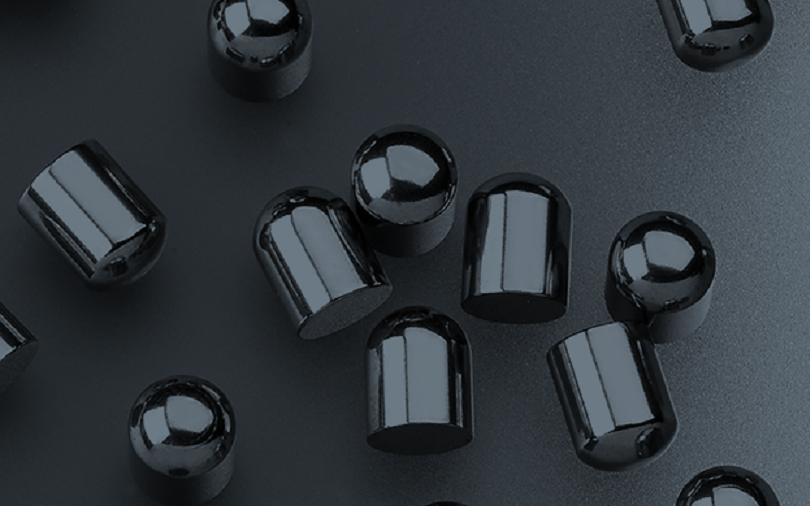
Physical & Chemical Properties of Tungsten
Tungsten is a strategic material prized for its outstanding physical and chemical characteristics. Its alloys serve as critical components in armor‑piercing munitions, satellite gyros, rocket nozzles, and nuclear reactor shielding. In this article, we examine tungsten’s essential physical and chemical traits.
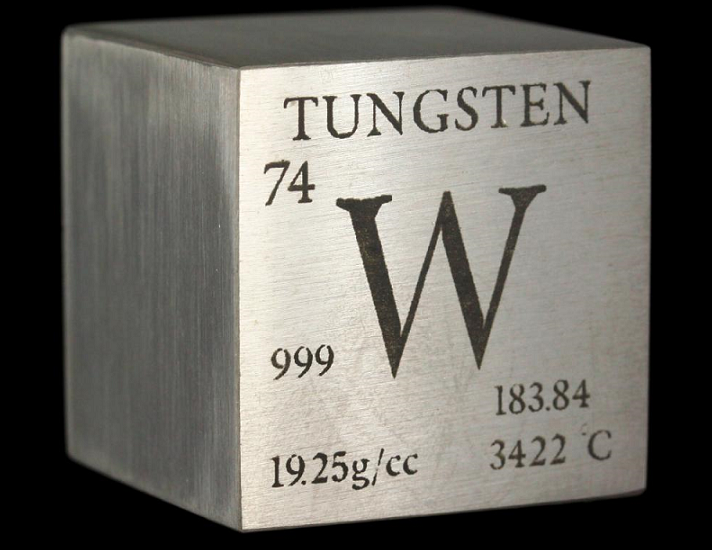
Properties of Tungsten
1. Physical Properties
Tungsten (W) is a rare, silver‑white metal in group VIB of the periodic table. It shares a steel‑like appearance but boasts an extraordinarily high melting point of 3,410 °C and a boiling point of 5,927 °C. Its atomic number is 74, relative atomic mass 183.85, and atomic volume 9.53 cm³ mol⁻¹. With a density of 19.35 g cm⁻³—2.5 times that of steel and comparable to gold—tungsten offers remarkable mass density. The metal exhibits good electrical conductivity and an elastic modulus of 35,000–38,000 MPa for wire forms.
W possesses two crystal structures: α (body‑centered cubic) with lattice constant a = 3.16524 nm, and β, stable only in the presence of oxygen below 630 °C, with a = 5.046 nm. Above 630 °C, β converts irreversibly to α.
2. Chemical Properties
Tungsten is chemically inert at room temperature, resisting reaction with air and water. It remains unaffected by hydrochloric, sulfuric, nitric, hydrofluoric acids, and aqua regia unless heated. Between 80 °C and 100 °C, only hydrofluoric acid can etch tungsten; other acids exert minimal influence.
In its molten state, alkalis oxidize tungsten to tungstate, especially when oxidants such as NaNO₃, NaNO₂, KClO₃, or PbO₂ are present. Tungsten reacts with oxygen, fluorine, chlorine, bromine, iodine, carbon, nitrogen, and sulfur at elevated temperatures, forming compounds like tungsten carbide—a hard, wear‑resistant material—while it does not combine with hydrogen.
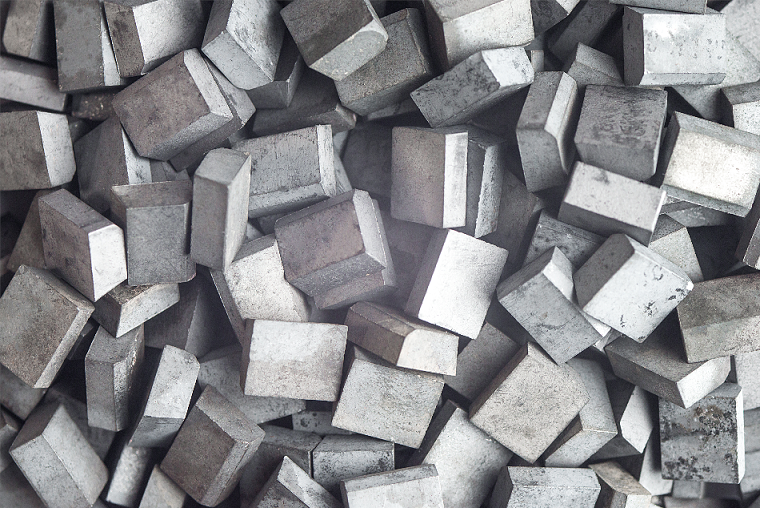
Tungsten Carbide
Tungsten hosts 27 synthetic radioisotopes. The most stable, ¹⁸¹W, has a half‑life of 121.2 days; ¹⁸⁵W and ¹⁸⁸W have half‑lives of 75.1 days and 69.4 days, respectively, while ¹⁷⁸W lasts 21.6 days. Remaining isotopes decay in under 24 hours, many within 8 minutes.
Conclusion
Thank you for reading. We hope this overview enhances your understanding of tungsten’s physical and chemical properties. For deeper insights into tungsten and other refractory metals, visit Advanced Refractory Metals (ARM).
Headquartered in Lake Forest, California, ARM is a leading global supplier of high‑quality refractory metals—including tungsten, molybdenum, tantalum, rhenium, titanium, and zirconium—offering competitive pricing and expert support.
Metal
- Tungsten Flux: Key Properties & Industrial Applications
- Properties and Applications of Tungsten Alloy Counterweights
- Tungsten Diselenide (WSe₂): Structure, Properties, and Key Applications
- Tungsten Alloy Balls: Properties, Production, and Key Applications
- Tungsten–Copper Alloys: Key Properties, Manufacturing, and Applications
- Tungsten–Nickel–Copper Alloys: Key Properties & Industry Applications
- Tungsten Carbide: Properties, Applications, and Industrial Impact
- Titanium: Key Physical Properties and Industrial Significance
- Titanium: Key Chemical Properties and Corrosion Behavior
- How Nanoparticle Properties Drive Their Toxicity: A Comprehensive Review