



Tungsten Diselenide (WSe₂): Structure, Properties, and Key Applications
Tungsten Diselenide (WSe₂): Structure, Properties, and Key Applications
Tungsten diselenide (WSe₂) is a layered transition‑metal dichalcogenide renowned for its exceptional mechanical, electrical, optical, and magnetic characteristics. Its unique hexagonal crystal lattice and strong in‑plane covalent bonding combined with weak van der Waals interlayer interactions make it a versatile material for advanced technologies in aerospace, defense, biomedical devices, and more.
Molecular Structure
WSe₂ adopts a hexagonal, layered structure similar to molybdenum disulfide (MoS₂). Each tungsten atom sits in an octahedral coordination with six selenium atoms (bond length 2.526 Å). Each selenium atom bridges three tungsten atoms in a trigonal‑pyramidal arrangement (Se–Se distance 3.34 Å). The layers stack via van der Waals forces, enabling mechanical exfoliation to atomically thin sheets.
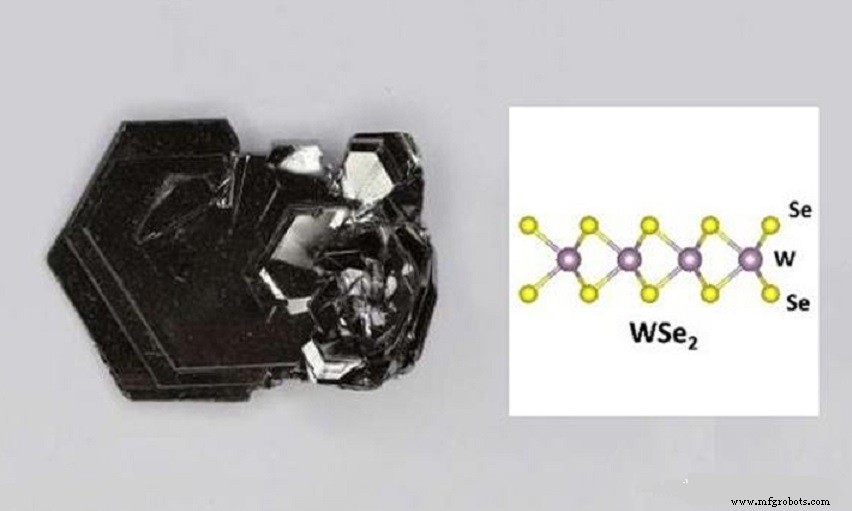
WSe₂ layered structure
Physical and Electronic Properties
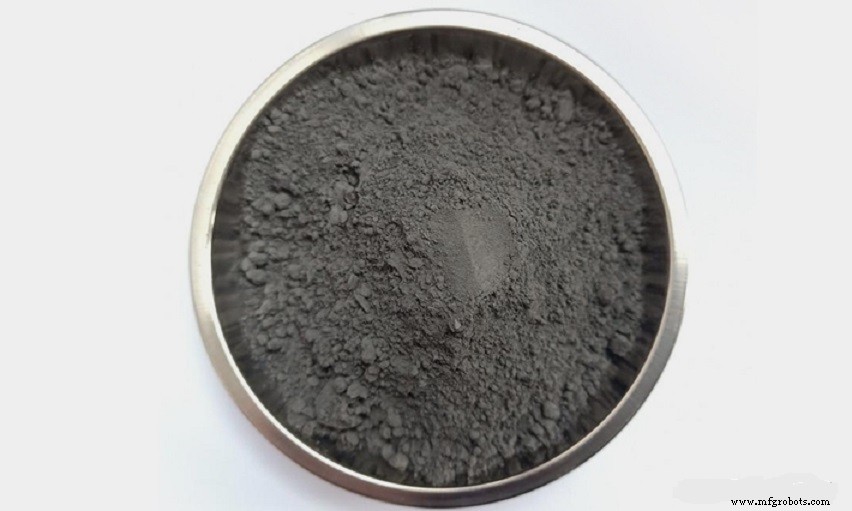
- Appearance: black or gray solid powder
- Molar mass: 341.76 g mol⁻¹
- Density: 9.32 g cm⁻³
- Thermal conductivity: ~10⁻⁵ × that of diamond, indicating poor heat dissipation
- Band gap: 1.35 eV (direct, suitable for optoelectronic devices)
- High quantum yield and optical absorption in the visible–near‑IR range
Synthesis Routes
The most common laboratory method combines magnetron sputtering with subsequent selenization:
- Deposit tungsten films of controlled thickness onto a substrate via magnetron sputtering.
- Anneal the films (or leave them unannealed) to adjust crystallinity.
- Pack the tungsten film and excess selenium powder in a quartz tube under vacuum.
- Heat in a tube furnace; selenium vapor reacts with tungsten to form crystalline WSe₂.
Key Applications
- Photovoltaics and ultrathin LEDs: The 1.35 eV band gap yields strong light absorption and efficient electroluminescence.
- Lubrication additives: Its layered structure confers a low coefficient of friction, comparable to MoS₂ and WS₂, making it ideal for high‑temperature lubricants.
- Electronics: High carrier mobility and mechanical flexibility enable flexible transistors and sensors.
- Energy storage: Intercalation of ions for supercapacitors and batteries.
Conclusion
WSe₂’s combination of a tunable band gap, robust mechanical properties, and chemical stability positions it as a leading candidate for next‑generation optoelectronic and tribological devices. For further details on tungsten and related refractory metals, consult Advanced Refractory Metals (ARM) in Lake Forest, California.
ARM offers a wide portfolio of high‑quality refractory metals—including molybdenum, tantalum, rhenium, tungsten, titanium, and zirconium—at competitive prices worldwide.
Metal
- W‑Ag Alloy: Key Properties and Industrial Applications
- Tungsten Flux: Key Properties & Industrial Applications
- Properties and Applications of Tungsten Alloy Counterweights
- Tungsten Alloy Balls: Properties, Production, and Key Applications
- Tungsten–Copper Alloys: Key Properties, Manufacturing, and Applications
- Tungsten–Nickel–Iron Alloys: Properties, Applications, and Processing
- Tungsten Carbide: Properties, Applications, and Industrial Impact
- Chromium: Essential Trace Element, Properties, and Practical Applications
- Cast Iron Explained: Definition, Properties, and Applications
- Aluminium: Key Properties & Common Uses Explained