



Tungsten Wire History: From Edison’s Carbon Filaments to Modern AKS Alloys
Tungsten Wire History
Woven from a forged tungsten bar, tungsten wire’s remarkable combination of a 3,422 °C melting point, high strength, and excellent electrical conductivity has made it indispensable in lighting, electronics, and high‑temperature industrial applications. This article traces its evolution from the first carbon filaments of the late 19th century to today’s advanced AKS (Al–K–Si) doped alloys.
Tungsten Wire History
Early Attempts: Carbon to Osmium and Tantalum
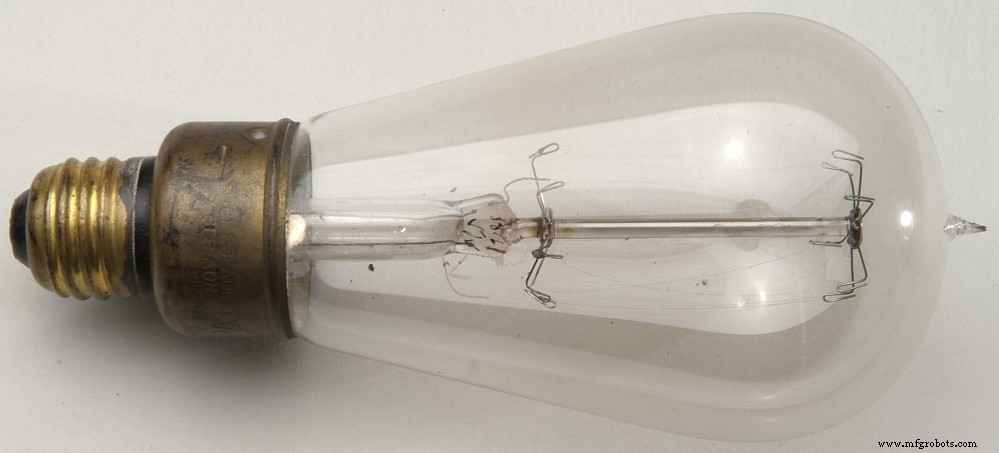
In 1878, Thomas Edison introduced the carbon‑filament incandescent lamp. Despite carbon’s high melting point of 3,550 °C, its low sublimation temperature caused rapid loss of filament mass, limiting bulb life to a few hundred hours. By 1897, the industry experimented with osmium and tantalum filaments, but the low melting points of these metals (~3,033 °C for Os and 3,017 °C for Ta) kept their operating temperatures and luminous efficiency sub‑optimal.
Birth of the Tungsten Filament (1903‑1904)
In 1903, Hungarian chemists A. Just and F. Hannaman patented the first tungsten filament. By 1904, they refined the process: a carbon‑free binder mixed with tungsten oxide was extruded into filaments and then reduced in a hydrogen atmosphere. Though the resulting wire was brittle, its superior light efficiency quickly displaced carbon, osmium, and tantalum filaments.
Challenges with Brittleness and the Move to Powder Metallurgy (1907‑1909)
Initial attempts to produce fine tungsten wire suffered from brittleness. In 1907, a low‑nickel tungsten alloy was developed via mechanical processing, yet it remained too fragile for practical use. The breakthrough came in 1909 when W. D. Coolidge at General Electric produced tungsten billets through powder metallurgy, enabling mechanical processing into ductile wires. However, these wires still exhibited noticeable brittleness once the bulb was lit.
Thorium Addition and the Rise of Spiral Filaments (1913‑1917)
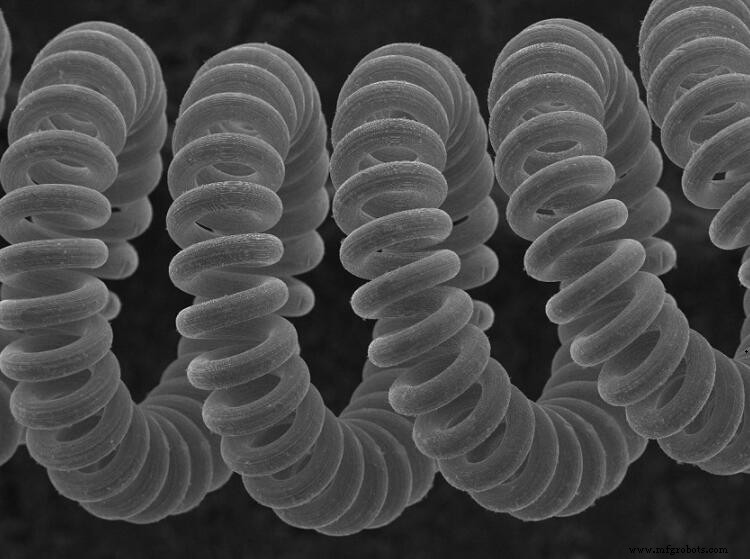
In 1913, G. Pintsch introduced thorium‑doped tungsten (1‑2 % ThO₂), significantly reducing filament sag. Initially, filaments were straight, so sag was negligible. The advent of spiral filaments in the same era increased filament mass and operating temperature, causing sagging in pure tungsten and early thorium‑doped versions. In 1917, A. Pacz invented a “non‑deformed” tungsten wire that remained stable at high temperatures, though it was still more brittle than the thorium‑doped variant, leading manufacturers to favor the latter for many years.
Development of AKS Doped Tungsten (Early 20th Century)
Continuous improvements in non‑sagging filament technology revealed that adding potassium, silicon, and aluminum compounds to tungsten oxide during processing produced filaments with excellent sag‑resistance at high temperatures. These are known as AKS (Al–K–Si) doped tungsten wires—now the industry standard for incandescent bulbs requiring high durability and consistent light output.
Conclusion
We hope this overview clarifies the technological milestones that have shaped tungsten wire from its rudimentary carbon beginnings to the sophisticated AKS alloys of today. For deeper insights into tungsten and other refractory metals, consider consulting Advanced Refractory Metals (ARM), a leading global supplier of high‑quality refractory alloys, including molybdenum, tantalum, rhenium, tungsten, titanium, and zirconium.
Metal
- Tungsten Recycling: Strategies, Technologies, and Economic Benefits
- Tungsten Needle: Design, Properties, and Applications
- Does Tungsten Wire Mesh React with Air? A Technical Overview
- Top Applications of Tungsten Wire in Modern Industry
- Barbed Wire Explained: History, Construction, and Modern Uses
- Pure Tungsten (W): High-Temperature Metal for Industrial Applications
- 5 Fascinating Facts About Tungsten: Naming, Melting Point, and More
- Why Tungsten Lamps Still Power Automotive Turn Signals
- Gold-Plated Tungsten Wire: Key Applications and Their Advantages
- Advanced Tungsten Wire Applications in Modern Medical Devices